Learn more about your pain

Pain in the arch: What causes it, and how is it relieved?
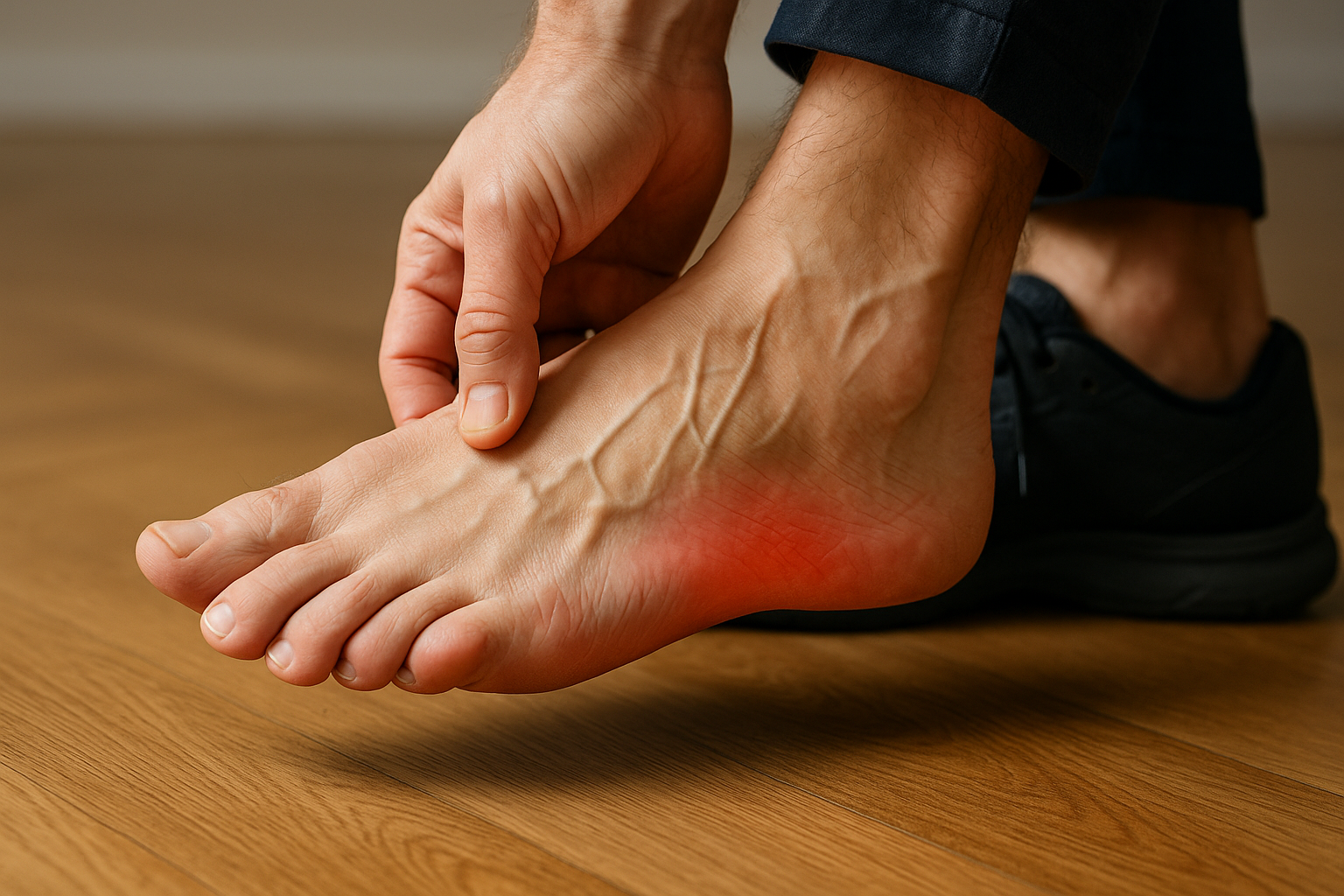
Many experience pain in the arch, and it is common for the discomfort to be felt in everyday life, especially after periods of prolonged standing or walks. The pain can be a source of frustration, as it can both disturb daily activities and make simple movements less comfortable. Some find that it is most bothersome with the first steps in the morning, while others experience that the discomfort grows during the day when the foot is exposed to persistent strain. It is not uncommon for the sensation that arises in the foot, especially under the arch, to raise questions about whether it is due to overuse after an active day or perhaps something related to the way the foot is loaded during certain activities. This type of pain can affect daily life, as it prevents one from fully enjoying both rest and movement, and it can contribute to concern about whether a more serious problem underlies the discomfort.The frequency of pain in the arch explains why many seek knowledge on the subject. Having a basic understanding of what the pain covers provides reassurance in everyday life, as it makes it easier to explain the symptoms and assess the situation based on an objective description. By looking more closely at how the pain is experienced and which everyday scenarios can intensify it, it is possible to assess both the extent of the discomfort and the adaptation options that may be considered for a more comfortable everyday life.What is pain in the arch?Pain in the arch refers to pain that is typically felt in the area under the foot where the arch is located. This pain can arise in connection with increased strain and can often be felt more pronounced after periods of inactivity, such as in the morning with the first steps. It is common for the pain to vary in intensity and to be felt differently depending on which activities load the foot. For some it may feel like a twinge of discomfort that slowly grows, while others experience a sharp sensation when the foot is exposed to pressure. Having knowledge of how the pain arises and when it typically manifests can help create a better understanding of what is happening precisely in the area under the foot and why what is experienced as pain in the arch becomes part of daily life.Causes of pain in the archPain in the arch is often linked to strain on the area under the foot. Frequent causes include prolonged standing or walking, sudden increases in activity level, and a load distribution where the arch bears more weight than normal. Tightness in the calf and muscle tension in the underside of the foot can also cause increased pressure on the arch tendon. In addition, body weight and footwear without sufficient support can make symptoms more pronounced.How the pain shows itself in everyday lifeThe pain can show itself as stiffness or a sharp sensation with the first steps in the morning or after longer rest. Many experience a pressing or burning sensation during strain, and pain may be worse after long periods of standing or walks. Pressure over the arch can cause local soreness, and muscle tension in the lower leg can be felt at the same time as the discomfort in the foot.How frequently is pain in the arch seen?In everyday life, many experience periods of discomfort in the arch, especially in connection with changes in activity patterns. People with jobs or leisure activities that involve a lot of standing or walking often mention that the discomfort occurs in phases. The occurrence varies according to strain, and symptoms can be intermediate-phase to persistent depending on daily habits.Factors in everyday life that can make pain worseChoosing unsupported footwear, hard surfaces, and prolonged lying or standing work tasks can make pain more pronounced. Suddenly increased strain, e.g. longer walks than normal, can lead to worsening. Muscle tension in the legs, such as calves and thighs, can increase the pressure against the arch and thereby affect the pain. Discomfort in the back, neck, or shoulders can also indirectly affect gait and thereby the load on the feet.Variations in pain patternThe pain can vary from brief stabbing sensations to more persistent, dull soreness. Some experience clear worsening with certain movements or activities, while others have a more constant bothersome feeling. Intensity and duration can shift from day to day and are affected by overall muscle tension in the leg and foot as well as the degree of daily strain.Worth paying attention to in everyday lifeWhen pain in the arch occurs regularly, it can be useful to pay attention to patterns rather than looking for isolated causes. The pain can be experienced differently from person to person, and certain daily conditions tend to affect how the discomfort develops over time. Prolonged standing periods, repeated strain during a workday, and one-sided use of the feet are often linked to changes in the pain experience.There are also relationships between the hardness of the surface, variation in daily movement patterns, and sensitivity in the arch. Some notice that uneven surfaces or frequent shifts between walking and standing activities make the pain experience more fluctuating. Over months, changes in weight, wear on footwear, or changes in gait may affect how the arch reacts to strain. Daily habits that affect load distribution Varied use of the feet at work and during leisure Gradual change in physical demands over time Changes in rest and recovery patterns Massage and relief can matter for the perceived tension in the foot and lower leg. Massage often affects blood circulation and muscle tone and can be experienced as a way to reduce stiffness. Relief can change how load is distributed, and it can be a factor that shows itself as changed symptoms over time. Some products at Reliefr are referred to in this connection as aids for home use, but the content here focuses on observations rather than concrete recommendations.It is also relevant to be aware of how daily patterns change over weeks and months. Periods of increased activity can occur in phases, and subsequent periods of less strain can give a different picture of the pain experience. Noting recurring patterns can provide a clearer picture of which conditions are linked to worsening or improvement.Frequently asked questionsHow can massage affect the experience of pain?Massage can be experienced as pain-relieving by reducing muscle tension and affecting local blood circulation. Many describe a feeling of less stiffness and greater mobility in the treated area after massage, which can change the overall pain experience.Can sleep and recovery play a role in pain in the arch?Sleep and recovery are often linked to the body's ability to handle strain. Sufficient rest can affect how fatigue and tension develop in muscles and tendons, and thereby how pain in the arch shows itself in everyday life.What can changes in activity patterns mean for the duration of discomfort?Changes in activity level can lead to variation in symptoms over time. Periods of increased strain can make the discomfort more persistent, while longer periods of less strain can change the way the pain is experienced, although this does not necessarily lead to a uniform development..
Learn more
Treatment of inflammation in the foot: Which methods relieve best?
Many experience pain and discomfort in the feet, and it is common to hear about inflammation as an underlying cause. At some point, even minor overuse or daily activity can trigger irritation in the foot’s tissue, which can lead to inflammation. This condition is often discussed, as many seek practical advice on how they themselves can relieve the discomfort at home. The focus is often on simpler methods that can create a sense of calm and ease the daily strain. When encountering situations where the foot hurts, it is important to have a basic understanding of what inflammation entails and how it can be felt in everyday life. By having knowledge of the general characteristics of inflammation, it becomes easier to assess which measures are relevant to achieve temporary relief of pain and swelling.What is inflammation in the foot?Inflammation in the foot refers to the body’s natural reaction to irritation or minor injuries in the foot’s tissue. This reaction can manifest itself through a range of symptoms, the most common of which are pain, swelling, and redness. The experience can vary from mild discomfort to significant pain, which can affect daily life in general, especially when the strain on the foot increases during longer periods of walking or standing. Many find that during periods of intensive activity or after an unexpected strain, they feel the effects of overexertion, which over time can develop into an inflammatory condition.Typically, inflammation in the foot occurs when the body’s defense mechanisms are activated to deal with irritation in the tissue. Such a reaction is often seen after periods of overuse, where even small injuries can cause an inflammatory process. This can be experienced as increased warmth in the affected area, which is also accompanied by painful sensations both during activity and at rest. Many who have experienced swelling or discomfort in the foot are interested in finding methods to relieve these symptoms and restore a more comfortable everyday life. A deeper understanding of what inflammation in the foot covers provides a reassuring framework for further considerations about self-care and everyday well-being.How inflammation in the foot shows itself in everyday lifeInflammation in the foot often shows itself as pain and stiffness, especially during strain. Many experience swelling and tenderness to the touch, and it can be felt both while walking and during longer periods of standing. For some, the pain can affect the walking pattern, which can lead to tension in the legs, back, and shoulders. The symptoms can vary from a diffuse soreness to sharp pain during certain movements, and the experience of discomfort is often linked to the activity level in daily life.Everyday situations that often cause worseningLong walks, many stairs, or periods of standing work can worsen the painful sensation in the foot. The use of shoes with insufficient support or sudden increases in activity can cause increased strain on the foot’s tissue. Repetitive movements in leisure activities or sports can also make symptoms more visible in daily life, especially when breaks and recovery are limited.What typically relieves pain and swellingCold compresses for shorter periods can reduce the feeling of warmth and lessen swelling. Elevation and compression are often used to reduce visible swelling in the foot and ankle and can make it easier to walk without severe soreness. Short-term rest from activities that strain the foot can create room for less pain in daily life and lower the level of tension in surrounding muscles.Massage and heat to reduce muscle tensionGentle massage of the foot’s soft tissue can improve blood flow and reduce muscle tension, which often gives a feeling of increased well-being. Heat can help loosen sore muscles in the foot, leg, and calf, and the combination of heat and massage is experienced by many as soothing after activity. Regular, gentle handling of tension in the foot can reduce recurring soreness in everyday life.Painkillers and temporary reliefPain-relieving preparations are commonly used to temporarily reduce pain until other relieving measures take effect. They can make it easier to stay active at a lower level and thereby avoid a sharp increase in muscle tension in the foot, leg, back, and neck. Information about the use of such products is widely available, but decisions regarding medication are best assessed in cooperation with a professional.Everyday factors that can affect the foot over timeIn daily life, there are several conditions that can slowly change the way the foot reacts to strain. The hardness of surfaces in everyday life, repeated movement patterns, and the condition of the shoe are often connected with how pain and discomfort develop. Temperature and moisture in the surroundings can also affect the sensation in the tissue and muscle tone, and poor sleep or increased stress can make the experience of pain more pronounced. The shoe’s fit and wear pattern can change the strain on areas of the foot Long periods of standing work or repetitive movements can increase the strain over time Frequent use of the same type of footwear without rotation can change the pressure distribution Changes in weight and posture affect how strain is distributed in the feet Habits that often matterRepeated daily habits can help determine how the foot feels after activity. Timely recovery between periods of strain and variation in daily movements are often associated with fewer recurring irritations. Many find that small changes in routines — for example, longer time in the same working position or frequent carrying of heavy objects — can make the condition more persistent.Overall considerations for daily well-beingIt can be useful to pay attention to patterns in pain and discomfort rather than isolated episodes. Notes on which activities typically take place before increased soreness, and whether symptoms vary throughout the day, can give perspective on which factors have an impact. At Reliefr, we see that many also notice how footwear changes over time, and how small repeated strains can alter the walking pattern. These observations can help to understand what affects well-being in everyday life.Over time, small shifts in strain or changes in daily routines can make a significant difference in how the foot reacts. A calm approach to following symptoms and patterns encourages a better understanding of what plays a role, without giving concrete instructions for action.Frequently asked questionsCan massage help with inflammation in the foot?Massage can improve local blood flow and reduce muscle tension, which is often experienced as relief. The effect can vary depending on the cause of the irritation and how long the symptoms have lasted.Can shoe choice affect how pain develops?The shoe’s fit and support can affect the pressure distribution in the foot’s tissue. Over time, repeated use of unsuitable footwear can change strain patterns and thereby play a role in the experience of pain.How quickly can one expect improvement with mild symptoms?For mild and short-term discomfort, changes in symptoms are often seen within a few weeks, but the time frame depends on individual conditions and which strains the foot is exposed to in everyday life.Which daily factors are worth observing to gain perspective?Notice repetitive movements, changes in footwear, variation in surfaces, and how pain changes throughout the day. These observations provide insight into which factors may be relevant over time.
Learn more
Exercises for heel spurs: How to relieve pain with exercise at home
Many experience pain in the heel, and for many this can be a challenge in everyday life. The pain can arise gradually and is felt especially during the first steps in the morning or after longer periods of inactivity. It is common to begin wondering whether a heel spur is the cause of these unpleasant sensations, and therefore many seek specific advice and exercises for heel spurs. This text provides a neutral and factual introduction to the topic, focusing on how the discomfort is typically experienced and what it involves. By gaining a better understanding of the issue, it becomes easier to notice the connection between everyday strain and the painful symptoms, which is often a first step toward a condition where one can work on relieving the discomfort through simple exercises and training at home. Some experience that slight changes in the daily routine and targeted exercises for heel spurs can help reduce the pain, so that it does not have to limit the activities one enjoys.What is a heel spur?A heel spur is a condition that arises due to overloading of the tissue under the heel. The condition is often felt as a sharp pain at the start of a period of activity, such as in the morning or after a long rest. Many who are physically active or over 40 experience this form of discomfort, which can be associated with repeated strain. Although the symptoms may subside somewhat when one is moving, the pain can return during prolonged walking or standing activities.Some of the typical features of a heel spur may include: Sharp pain during the first steps in the morning Discomfort during periods of prolonged strain Pain that can vary in intensity throughout the day For those seeking exercises for heel spurs, it can be helpful to start with a thorough understanding of how the condition affects the foot. By identifying the times and situations where the pain is most pronounced, it is easier to adapt exercises that are targeted precisely at these symptoms. Exercises for heel spurs come in many forms and can offer a method to reduce discomfort, so that one can better manage everyday challenges without compromising freedom of movement.How the pain often appears in everyday lifePain from a heel spur typically appears as a sharp or stabbing sensation during the first steps in the morning, which may subside somewhat once one gets moving. Many experience that the discomfort returns after longer periods of standing work or during longer walks. The pain can affect the gait pattern and lead to increased tension in the foot, ankle, and calf; in some cases, secondary strain is felt in the knee or back as a result of altered movement.Everyday factors that can affect the painSeveral daily conditions can affect how much pain is experienced. Rapid increases in activity level, prolonged standing work, and repeated strain in leisure activities are often associated with worsening symptoms. Wearing shoes without sufficient support or with a very worn sole can change the load on the arch and increase pressure against the heel. Hard surfaces and weight gain are other factors that can affect the intensity of the pain.Exercises and massage aimed at pain and tensionDifferent forms of movement and gentle mobilization can help relieve pain and loosen muscle tension around the heel. Stretching of the arch and calf muscles aims to reduce tension in the tissue under the foot and in the Achilles tendon, while slow heel raises can strengthen the structures that bear the load from the heel. Using an elastic band for the foot and ankle muscles can improve stability and thereby reduce inappropriate strain in everyday life. Plantar fascia stretch and calf stretches Slow heel raises for strength around the arch Resistance band exercises for foot and ankle Self-massage with a ball or roller to loosen tension Massage and rolling of the underside of the foot and calf can be experienced as soothing by increasing local blood flow and reducing muscle tension. The combination of stretching, strength, and gentle massage often provides relief in everyday life, especially when performed regularly. Expectations of improvement vary, but with persistent use a gradual reduction in pain and better freedom of movement are often seen.What you can pay attention to in everyday lifeIn everyday life, small recurring factors can affect how pain in the heel appears. Variation in standing and walking activities, choice of footwear from day to day, and the hardness of the surface are often associated with changes in discomfort. The pain may be experienced as more pronounced after longer periods of one-sided strain or with sudden changes in routine. In addition, rest and recovery during the day can play a role in how the pain feels on waking in the morning or after longer periods of sitting.Habits and patterns over timeSome conditions develop slowly and can affect the heel over a longer period. Continued use of shoes with worn soles or without support can change the load distribution in the foot. Uniform movement patterns at work or in leisure time can lead to repeated strain on the same areas, and weight changes can alter the pressure conditions against the ground. Over longer periods, these elements may appear as variations in the frequency and intensity of pain, without necessarily having a clear single cause.Other daily factors that may be relevantSleep quality and general recovery often affect the experience of pain and can help make pain more prominent during periods of poor sleep. Mental strain can also play a role by changing attention to discomfort. It may also be worth noticing whether the pain affects the gait pattern or causes compensation in the knee and hip, as such changes over time can lead to new tension patterns in the body.Concluding and moving on to frequently asked questionsA calm and informative approach to everyday habits can provide a clearer picture of which patterns are associated with the pain. Observing repetitions and variations in everyday life can help focus on what changes over time. At Reliefr, there are wellness materials that some find relevant in this context. Below follows a number of frequently asked questions that address common points of doubt.Frequently asked questionsHow long can it take before exercises begin to have an effect?The time frame varies greatly from person to person. Many experience changes within a few weeks, while others see a difference over several months. Frequency and daily load patterns often play a role in the pace of improvement.Can massage devices or massage balls matter for the pain?Some experience that using massage tools can feel soothing and contribute to increased comfort in the foot and calf. The effect varies depending on individual sensitivity and what daily habits look like.How can I tell whether something is changing in a positive direction?Small changes in when the pain occurs, how long it lasts, or whether it is less sharp during the first steps of the morning can be signs of change. Attention to patterns in everyday life gives an impression of development over time..
Learn more
Pain in the toes: What causes it, and how can it be relieved?
Many people find that pain in the toes can make everyday life less comfortable. It is common to feel pain after both physical activity and longer periods of sedentary work. Pain in the toes can manifest as a stabbing, burning, or at times tightening sensation that affects daily comfort. When the feet have to carry us through the day, repeated strain and small imbalances can over time give rise to discomfort. Therefore, it is not surprising that many seek knowledge about why the toes in particular are affected and how one can feel an improvement in everyday life.The pain is often experienced after long walks, physical work, or if the feet are squeezed by tight shoes. These situations can cause the muscles and connective tissue in the feet to become tense and blood circulation to decrease. It is a challenge that many face, and which can turn an ordinary day into a struggle with discomfort. By gaining an overview of what pain in the toes involves, it becomes easier to understand how daily activities and lifestyle choices are connected with the pain experienced.What is pain in the toes?Pain in the toes is described as a type of foot pain that is often experienced as both stabbing and burning. This sensation can be associated with the daily strain that the feet are exposed to. It may be a condition that arises as a result of overexertion, where repeated movements and prolonged strain on muscles and joints give rise to tension. The condition may furthermore be experienced as an irritation that reduces comfort during walks and activities where the toes are in constant contact with the surface.Some of the elements that often help form the framework for how the pain arises include: Overuse from repeated strain Muscle tension and fatigue in the feet Reduced blood circulation, which can lead to a cold and clammy sensation As many people experience varying degrees of discomfort, it is understandable that a need arises for information about how and why the pain manifests itself. A factual understanding of what pain in the toes involves provides a good starting point for being able to focus on the daily influences and lifestyle aspects that contribute to the condition. In this way, one opens up a broader context where the pain is seen as a natural reaction to specific strains in everyday life.Typical causes of pain in the toesPain in the toes is often related to tension in muscles and connective tissue in the foot, especially when tissue becomes tight or imbalanced. Overuse from repeated movements or longer periods of standing activity can cause increased pressure in the forefoot and around the toes. Incorrect fit in shoes, persistent pressure against the front of the toes, or altered walking pattern can also cause local irritation and tenderness.How does pain in the toes present itself?The pain can be experienced as different sensations: burning warmth, stabbing tingling, a sharp soreness under strain, or a feeling of tightness in the front of the foot. Some experience reduced sensation or tingling, others notice pain from direct pressure on the toes or when walking longer distances. The intensity varies and can shift from only slight discomfort after activity to more persistent pain that affects the choice of shoes and the ability to walk longer distances.Where in the body can problems be seen in connection with pain in the toesPain in the toes often affects the entire movement chain. Compensation in the walking pattern can increase the strain on the foot, ankle, knee, and back, which can make it harder to stand or walk for longer periods. When one part of the feet is used less or the pain becomes dominant, muscles around the ankle and calf can become more tense, and this can change the pressure distribution in the rest of the leg.Prevalence in everyday life and situations with increased riskMany people will at some point experience pain in the toes, often in connection with certain activities. Long walks, running, repeated assembly tasks, or work where one stands a lot are common contexts. Even short periods of increased physical strain without gradual adaptation can cause discomfort. In everyday life, this often shows up in choosing softer or wider shoes, shortening walks, or avoiding certain activities to reduce the discomfort.Variations in the pain experiencePain can appear acutely after a single strenuous event or as long-term discomfort that creeps in over time. Nerve involvement can cause tingling or burning sensations, while muscular tension is more often felt as stiffness and a feeling that the toes do not move as freely. Swelling and warmth can appear during periods of irritation, while at other times the symptoms are primarily sensory or movement-related..
Learn more
Heel spur symptoms: How do you recognize them in everyday life?
Many experience discomfort in the heel, especially when getting out of bed in the morning or after longer periods of inactivity. It is common to feel a sharp, stabbing sensation that quickly becomes a source of irritation in the daily routine. The experience can vary, but the best-known presentation is pain that often subsides after a while of movement, only to return with increased strain. For those seeking to understand what is happening in the body, knowledge about heel spur symptoms can provide reassurance by putting words to a familiar challenge. It is not unusual to feel that the heel “gives up” during the first steps of the day, and this sensation is known to many, regardless of age and activity level.What are Heel Spur Symptoms?Heel spur symptoms typically show themselves through a range of characteristic signals in the heel area. One of the most well-known is the stabbing pain that occurs especially in the morning or after longer periods of rest. It is often noted that the pain subsides with a little movement, which can lead to a temporary feeling of improvement before it returns when the heel is strained again.Some of the most monitored symptoms include: Sharp and stabbing pain under the heel A sore sensation that is especially felt during the first steps in the morning Mild stiffness in the heel area after periods without activity These symptoms are experienced as a clear signal from the body that the heel in some way is not functioning optimally under strain. The pain can vary in intensity, and while it can at times be reduced by warming up, it is often clearly felt in situations where extra support or cushioning of the foot’s structure is needed. Many seek information about heel spur symptoms because they realize that a simple discomfort can involve more than just a fleeting annoying problem. By getting an overview of what the symptoms involve, it becomes easier to identify the signals that come from the body and thereby achieve a better understanding of one’s own everyday life and the challenges that may be associated with strain on the heel.With a factual and neutral approach, this review of heel spur symptoms provides an overview of how these signals can be recognized in daily life. Knowledge of how the pain manifests itself can help create calm and mental space to assess when the discomfort requires closer attention.How do symptoms show themselves in everyday life?Symptoms often show themselves through changes in the way one walks and stands. Many feel an immediate stabbing pain during the first steps after rest, but in addition pain can lead to shifting weight onto the forefoot, taking short steps, or avoiding stairs. Over time, this compensation can create increased fatigue in the calves and knees, because other parts of the body take on more strain to relieve the heel.How common is it to experience these symptoms?It is common to experience heel pain during periods of life, regardless of activity level. Symptoms occur both in people who stand a lot at work and in people with active leisure habits. The frequency increases with age and in situations involving prolonged strain on the feet, but it is also normal for symptoms to come and go depending on daily habits and strain.Factors that can affect symptomsSeveral conditions are often connected with how and how strongly symptoms are felt. Excess weight increases the strain on the heel, shoes without proper cushioning provide poorer shock absorption, and long periods of standing work or walking on hard surfaces can increase pressure on the heel area. Tightness in the calf muscles can increase muscle tension down into the sole of the foot and affect how the strain is distributed.Variations in the symptom experienceSymptoms can be experienced differently from person to person. In addition to sharp pain, some may feel a diffuse soreness in the sole of the foot, a burning or tingling sensation, or local swelling and tenderness to the touch. The intensity can vary throughout the day and become worse after longer standing periods or with repeated strain.Everyday ways to create relief and easingThere are a range of practical measures aimed at pain relief, reduction of muscle tension, and relief in daily life. Soft and shock-absorbing shoes reduce pressure on the heel, short breaks during prolonged standing work distribute the strain, and gentle massage of the sole and calf can loosen tension. Attention to how you step and giving the feet the opportunity for a little rest during the day can reduce irritation and make it easier to manage daily activities in the back, knee, and hip without extra strain.What you can pay attention to in everyday lifeIn daily life, small changes in routine can affect how heel pain is experienced over time. Symptoms often do not appear constantly, but as patterns that repeat in certain situations or at certain times of day. Paying attention to when the pain changes character, whether it becomes more localized or broader, and whether it moves between the right and left foot gives a clearer picture of how the heel reacts to daily strain. Time patterns: repeated days with increased discomfort after specific activities Shoe changes: how different shoes affect the sensation from hour to hour Surface: hard floors versus softer surfaces and their influence on daily comfort Pain quality: sharpness, throbbing, or burning sensation can vary Bilaterality: whether the pain is in one foot or both feet It can also be useful to note changes over weeks rather than just individual days. Changes in pain intensity, location, or response to simple stimuli such as touch can show a shift in how the heel area reacts. Some note that regular use of massage or relieving products affects their experience of the sensation of pain; others experience only temporary fluctuations. At Reliefr, it is often seen that people’s descriptions of symptom progression vary considerably, and that detailed observations in everyday life offer important knowledge about patterns and triggers.Maintaining a calm and curious approach to these observations helps identify which aspects of everyday life alter the pain picture. When you have several concrete examples of what alternates the pain, it becomes easier to ask precise questions about causes and consequences.Frequently asked questionsHow does heel spur differ from other foot problems?Heel spur often shows itself through specific local pain under the heel, while other foot conditions can cause more widespread sole pain or pain near the toes. Differences can also be found in how the pain varies throughout the day and whether it is closely linked to specific strains or foot positions.Can heel spur symptoms disappear on their own?Symptoms can change over weeks or months. Some experience long-lasting improvements without persistent discomfort, while others have recurring periods of increased discomfort. Variation in daily habits and strain often plays a role in the course.Which daily activities can worsen heel spur symptoms?Activities that repeatedly strain the heel, long periods on firm surfaces, frequent climbing or descending stairs, as well as persistent standing work can be associated with increased discomfort. How exactly these activities affect the individual can vary from person to person..
Learn more
Pain on top of the foot: Common causes and options for relief
Many experience pain on the top of the foot, and the condition can make everyday life less comfortable. It is common to feel a certain soreness or discomfort, especially after long periods of activity or work where one stands or walks a lot. The pain can vary in intensity, and although for some it is merely a mild irritation, for others it can be a more persistent burden that affects general well-being. All sorts of people, from those with an active daily routine to people with long workdays, can experience these symptoms, which makes the topic relevant for many seeking a better understanding of what is happening in the foot.It is important to look at pain on the top of the foot as an expression of a change in daily well-being, which often indicates that extra attention should be paid to the strained foot. For some, a period of increased activity, incorrect footwear, or repeated movements can trigger the type of discomfort felt on the top of the foot. Having an overview of what is precisely being experienced is a useful step in creating calm and understanding of how small changes in everyday life can matter.What is pain on the top of the foot?Pain on the top of the foot refers to pain or discomfort on the upper part of the foot. It can typically vary from mild soreness to a more intense sensation that makes it uncomfortable to move the foot freely. This pain can arise during a period when the foot is exposed to extra strain, for example from standing too long or activities that require quick movements. Some describe the feeling as a tightness or a tense sensation that can occasionally be accompanied by slight swelling or a reddish hue in the skin.The experience of pain on the top of the foot is related to the daily influences the foot is exposed to. It may show itself as soreness after a long workday or after extra intensive periods of exercise. Although the feeling is often temporary, it is nevertheless a topic that many wish to get more information about, as understanding what is happening in the foot can help create reassurance. It is precisely this type of knowledge that many seek in order to get an overview of how minor discomfort can arise and how it is typically experienced in everyday life.How does pain on the top of the foot present itself?Pain on the top side of the foot can present itself as localized soreness and a feeling of tension with movement or from pressure from shoes. Some experience a warm sensation and slight swelling, while others describe a sharp or stabbing sensation with certain movements. The pain can vary in intensity throughout the day and is often felt most after longer periods of standing or physical activity.How common is the problem in everyday life?Many people with active everyday lives or jobs that require a lot of standing or walking experience discomfort on the top of the foot from time to time. It is often seen in people who change activity level or use new footwear for longer periods. For many, the symptoms are temporary and relate to a period of increased strain, but it can also affect daily comfort and the ability to go on long walks or be at work without a break.Factors that can cause painSeveral daily conditions can cause tension and pain on the top side of the foot. Tight laces and close-fitting shoes can create pressure against the top of the foot, while repeated movements and prolonged strain increase muscle tension in the lower leg. Tight calf muscles and insufficient variation in load can also contribute. Furthermore, stiffness in the joints around the foot can affect how the load is distributed.Variations in the pain experience and muscle tensionPain can be experienced differently: from diffuse soreness spread over an area to more localized, distinct pain with certain movements. Muscle tension in the ankle and lower leg can create a feeling of tightness that worsens the discomfort during activity. Some experience that the symptoms change from day to day depending on activity and choice of shoes, while others notice a more persistent soreness.Connection with other body areasPain on the top of the foot is often related to tension in other parts of the body. Tight muscles in the lower leg can affect the load in the knee, hip, and back, and imbalances can lead to an altered gait pattern. The neck, shoulders, or back are rarely mentioned directly in relation to the top of the foot, but general muscle tension and poor comfort in footwear can affect the overall experience of well-being.Everyday significance for well-beingPain on the top side of the foot can make ordinary activities such as walks, longer workdays, and leisure exercise less comfortable. The discomfort can lead to altered movement, which can increase muscle tension elsewhere in the body. Understanding how symptoms present themselves and which daily conditions can cause them is relevant for preserving comfort and well-being in everyday life.What one can be aware of in everyday lifeWhen pain on the top of the foot arises in everyday life, it can be useful to notice patterns without trying to change them immediately. Individual periods of increased discomfort can be related to prolonged standing, long-term use of close-fitting shoes, or frequent repeated movements. For some, the symptoms show themselves more clearly after a whole day on their feet, while others notice variation from day to day depending on activity and footwear.Habits and conditions that can have an impact over timeSome daily habits can matter for how the pain develops over several weeks or months. The use of shoes that fit tightly over the top of the foot, constantly uniform strain at work, and persistent tension in the lower leg are often related to changes in sensation. Changes in weight distribution in everyday life as well as frequent shifts between very quiet and very active periods can also affect how symptoms are experienced over time.Considerations for pain relief and relief from loadWhen the focus is on pain relief and relief from load, there are several general considerations that are often mentioned in conversations about foot comfort. Massage is frequently referred to as a way to affect sensation on the top of the foot, and many experience that pressure sensitivity can change after a short time. At the same time, small changes in daily routines can make symptoms appear differently from week to week. It is common for the pain experience and freedom of movement to fluctuate, and that these fluctuations can be a source of knowledge about which conditions require extra attention. The tightness of the shoe upper and the placement of the laces The length of standing periods during the day The frequency of repeated movements Level of tension in the lower leg and ankle Frequently asked questionsWhy does the pain often feel stronger in the evening?The sensation can change during the day, so the discomfort seems more pronounced in the evening. Fatigue in the tissue and prolonged strain during the day can make pain more evident, just as fluid accumulation in the feet can affect the experience.Can massage change how the pain is experienced?Massage is experienced differently from person to person. Some report a short-term change in the pain experience or increased relaxation in the area, while others do not notice any significant difference. It is common for the effect to vary from time to time.What does the difference between stabbing and diffuse pain tell us?A sharp or stabbing sensation is often experienced as localized, while diffuse soreness can feel spread out and less precise. Different descriptions of pain can provide guideposts about how the discomfort appears in everyday life and which daily conditions it may be related to.
Learn more
Heavy legs: What causes it, and how can you relieve it?
Many experience after a long and busy day a feeling of exhaustion in the legs, where they seem both tired and heavy. This condition can create a feeling that the legs are no longer quite able to keep up, and that they carry a heavy burden from the day's activities. The experience of heavy legs is something many are familiar with, whether it is seen after physical work, long periods of sitting, or simply as a result of daily wear and tear. In that way, the sensation is often reflected both in everyday life and in the moments when one seeks a feeling of well-being, and when the body signals a need for rest and recharging.The experience of heavy legs can be a reaction to different strains, whether it is about accumulated fatigue or a temporary buildup of physical stress. It is a condition that is not described as a disease, but which often acts as an indicator that the legs need a break or particularly gentle treatment. The symptoms vary from person to person and can manifest as a gradual feeling that the legs are not quite “light” enough to handle another day's challenges. This feeling can be seen in light of the body's natural reaction to overload and lack of variation in movement patterns.What are heavy legs?Heavy legs are described as a persistent feeling of fatigue and heaviness, often felt in the lower parts of the legs. It is not a medical diagnosis, but rather a symptom that can arise in step with everyday strains. Many find that their legs feel more tired after periods of low activity or after situations where they have had to carry a large physical load for a longer time.The feeling of heavy legs is often associated with: Prolonged sitting or standing work A day with many activities and physical fatigue The experience that the muscles and tissues of the legs feel overloaded These observations illustrate how heavy legs can arise as a result of both daily fatigue and periods of less movement. The feeling is typically uncomfortable and leaves a desire to find practical methods that can create relief in the legs. Many therefore seek information about what can relieve heavy legs, so they can achieve a better sense of lightness and well-being in everyday life. By understanding what heavy legs entail, one gains a better sense of how everyday activities can affect the body and what can make a small difference in the daily experience of comfort and balance.How heavy legs show themselves in everyday lifeHeavy legs often show themselves as a persistent feeling of heaviness and fatigue in the lower legs. It can be experienced as soreness, tension in the calves, cramps, or a feeling of swelling. Some also describe tingling or cold/heat in the feet, and visible veins may be part of the picture. These symptoms typically appear in the legs, feet, and thighs, but are often linked to tension in the back, neck, or shoulders, which affects posture and thus the strain on the legs.Causes often associated with the feelingHeavy legs are often associated with conditions that alter the strain on the muscles and tissue or the way blood moves in the body. Prolonged sitting or standing work are common examples, as is repeated heavy strain on the leg muscles. Muscle tension after exertion can cause stiffness, which makes the legs feel heavier than normal. Increased body temperature and fluid balance can also affect how the legs feel during the day.Everyday factors that can affect it Prolonged standing or sitting at work or during leisure time Warm days or a warm indoor climate, which can make the legs more tired Stiffness in muscles from repeated strain or a uniform movement pattern Choice of footwear and surfaces that change the strain on legs and feet How widespread is the feeling of heavy legs?Heavy legs are a common phenomenon in the population and are experienced to varying degrees by many. It can affect people of all ages, but occurs most frequently among those who spend many hours standing or sitting, as well as among people with increased muscle fatigue after physical work. The problem does not appear uniformly; some have occasional episodes, while others notice a more persistent sensation of heaviness.Variations in intensity and time of dayThe symptoms can vary in intensity throughout the day. Many find that the sensation of heaviness becomes clearer toward evening after a day's strain, while others notice it most after longer periods of low activity. Frequency and severity can also fluctuate depending on work, climate, and general muscle condition, and it is common for periods of increased stress or fatigue to make the feeling more pronounced..
Learn more
Foot massage: What is it good for the body?
Many experience tension and discomfort in their feet after a long day of work, study, or physical activity. It is common for the feet to feel tired and sore, and for the daily strain to lead to a state of discomfort that goes beyond the foot itself. Foot massage is perceived by many as a natural method for obtaining relief and an increased sense of well-being, because it provides an opportunity to release built-up tension. By applying pressure and gentle movements along the surface of the feet, the technique will stimulate certain points that can affect the relaxation and balance of the entire body. This can be especially helpful when everyday life offers many strains and a constant pace that does not always leave room to breathe deeply and find calm.Today, interest in foot massage has increased significantly. Many seek knowledge about how this technique can be used as a supplement to other stress-relieving measures in everyday life. It is common that during periods of increased stress or after prolonged strain, people seek a method that can help create a calming break from the demands of everyday life. This method is perceived as simple, easy to perform, and closely related to natural self-care. Foot massage therefore becomes a natural part of the wellness practice, where with gentle movements one attempts to relieve both physical and mental fatigue.What is foot massage?Foot massage is a technique in which pressure and movements are used to work with the reflex zones of the feet to promote a feeling of relaxation and balance. The massage focuses on stimulating points that many believe are connected to different body parts, and can thereby have a stress-relieving effect on the whole body. By adapting the pressure and movements to the natural shape of the foot and the area of tension, many seek to relieve soreness and tension in the foot after a long day.Foot massage is experienced as a gentle but effective way to reduce daily strain. It can be performed manually or with the help of simple tools, and the technique is known for being able to create an immediate feeling of calm. For those who take the time for a foot massage, there is often a positive perception that regular massage of the feet can help make everyday life more manageable and reduce general fatigue. From a practical point of view, it is easy to understand why foot massage has become a popular choice for many who want to create small moments of well-being in a busy everyday life.How does the effect show itself quickly?After a short session of foot massage, the effect can often be felt locally as a sense of warmth and less tension in the muscles around the foot. Increased blood circulation in the area shows itself as an improved sense of flow and less stiffness, and many also experience a generally lighter feeling in the body. The release of endorphins can make pain feel less intense, and relaxing movements can reduce immediate muscle tension.Which body areas react to foot massage?Foot massage has an effect beyond the foot itself and can be seen in several areas of the body. Typically, reactions in the back, neck, and shoulders are mentioned, but the legs and feet themselves also react noticeably. The reactions may appear as reduced tension, increased mobility, or simply a feeling of greater relaxation in the mentioned areas.How widespread is its use in everyday life?Foot massage is common both in professional settings and as part of private wellness. Many introduce short massage breaks into their evening routine or after longer workdays to promote relief and well-being. In everyday life, it is often perceived as a simple and accessible way to reduce daily fatigue in the legs and feet as well as to create a break from everyday pressure.What can cause a need for foot massage? Prolonged standing position, which can lead to increased pressure under the feet and muscle tension in the legs. Intense physical activity or long walks, which can cause local soreness and fatigue in the muscles of the foot. Stress and busyness, which can often be associated with increased general muscle tension and a need for relief. Heavy shoes or repeated strain, which can cause local discomfort and make massage relevant for well-being. Overall variations in the techniqueThere are different approaches to foot massage, from gentle gliding movements to more focused pressure on tense areas. Gentle movements are experienced as calming and can promote relaxation, while deeper pressure can be experienced as direct pain reduction in sore muscles. The choice of pressure and movement can be important so that massage provides relief and less muscle tension without creating new discomfort.Small habits that can affect the well-being of the footIn everyday life, there are many small habits that over time can matter for how the feet feel. This may be repeated movement patterns at work, the way weight is distributed during standing work, or how one switches between standing and seated activities. These patterns can be experienced as changes in comfort or fatigue in the feet, and they are often connected with the total daily strain.Attention to equipment and clothingThe choice of shoes and socks can show itself in how the strain is distributed under the foot. The density of the material, the wear pattern of the sole, and the fit of the shoe can in practice help change the feeling in the feet over time. Likewise, repeated use of the same type of footwear can give different strain patterns than variation in shoe choice. These conditions may be relevant to notice in an everyday life with many changes between activities.Routines and daily rhythmsThe timing of breaks, when one stands or sits, and variation in work tasks have an influence on how the feet react during the day. People experience differently that fatigue can appear more strongly at certain times, and this is often connected with the overall daily rhythm. Being aware of patterns in fatigue and stiffness can provide a different perspective on when relief may be most noticeable.Slow changes over timeSome conditions develop gradually. For example, repeated uniform strain, persistent standing work, or daily carrying habits can show themselves as changes in walking pattern or comfort. These changes often come slowly and can be experienced as small differences in normal mobility or sensation in the foot, rather than sudden changes.Points to consider before questions When during the day the feet feel most tired or sore Whether certain activities are repeated in patterns that may be relevant How the choice of shoes and materials affects the feeling over several days Frequently asked questionsHow can foot massage reduce stress?Foot massage can activate the body's relaxing processes, which is often experienced as increased calm and reduced tension. This typically happens through slower breathing and a general feeling of well-being, which many associate with relaxation in the body.Is there anyone who should be cautious with foot massage?Some people notice increased sensitivity or discomfort in certain conditions or after injuries. It is common to pay attention to individual reactions and adjustments in relation to how the feet feel before and after massage.How often can one consider using foot massage in everyday life?Frequency depends on daily habits and the individual's perceived needs. Many see fluctuations in how often it feels relevant, depending on activity level and work rhythm.What signs may show that foot massage may be relevant?Signs may include a persistent feeling of fatigue in the feet, altered walking rhythm, or more frequent attention to discomfort in certain areas. These observations can help ask more specific questions about further possibilities..
Learn more
Pain in the foot: Common causes and how you relieve them at home
Many people experience pain in the foot, and it is not uncommon to at some point feel a discomfort that can affect everyday activities such as walking, standing, or just keeping your balance. The pain can vary in intensity and is often experienced after prolonged strain or during repeated movements. It is a condition that can arise for many reasons, and that is often noticed when you need comfort and calm the most in everyday life.The pain in the foot can manifest as a persistent soreness or a sharp sensation that makes it difficult to focus on daily tasks. Over time, the discomfort can challenge both general well-being and the ability to enjoy leisure activities, which is why many choose to seek information on the subject. When the discomfort arises, it is typically a combination of several elements linked to the strain on the foot in everyday life. This strain can come, among other things, from repeated movements, prolonged standing, or the use of footwear that does not provide the necessary support.It is common to experience that the pain follows certain activities or changes in everyday life. Some feel that the pain occurs more markedly in the morning, while others notice a worsening after a long day at work or after a period of extra physical activity. Regardless of how the pain appears, it is a reminder that the foot – which carries us through the day – needs both attention and care.What is pain in the foot?Pain in the foot refers to the unpleasant sensation that can occur in one or more areas of the foot. This pain can be due to various causes such as overload, where prolonged or repeated strain affects the foot's structures, or biomechanical challenges that result in the foot working in a way it is not used to. For many, the feeling of pain in the foot is a signal that there is a need to slow down or change the way the foot is being strained in everyday life.The experience of foot pain varies and can be described as both stiff, sore, and in some cases sharp. It is a condition that many are interested in finding information about, precisely because it is closely tied to daily movements and activities. The situation of pain in the foot often appears as a combination of the demands placed on the foot in everyday life and the individual factors that cause the foot to respond by sending signals of discomfort.Typical symptoms and how they appearPain in the foot often appears as soreness, stiffness, or sharp stabs, where the location can vary from heel and arch to forefoot and toes. Many experience increased pain after prolonged standing or after strenuous activities, and some notice the greatest discomfort in the morning during the first steps. Muscle tension in the foot's muscles can feel like a tight, heavy sensation, while nerve pain can be experienced as more burning or tingling.How common is pain in the foot in everyday life?Foot pain is common and is seen both in younger, physically active people and in older people with prolonged strain. In everyday life, it is not uncommon for people to experience periodic discomfort in the feet in connection with work, leisure activities, or increased walking and standing time. The degree of pain can vary greatly, from short-lived soreness after a long day to longer-lasting discomfort that affects walks and ordinary tasks.Everyday factors that can affect the painSeveral daily factors can affect how much discomfort you experience. Using shoes without sufficient support, long periods of standing work, extra strain during running or walks, and a rapid increase in activity level are often associated with increased pain. Weight and gait pattern can also have an effect, as can the surface you walk on — hard surfaces more often cause more strain than softer surfaces. Work routines, transport, and leisure habits can all be relevant in relation to how often and how intensely pain is felt.Variations in the pain picture and muscle tensionFoot pain can appear in different patterns: sharp pain in the heel, soreness in the arch, or pressure sensitivity in the forefoot. Muscle tension in the foot, ankle, and calf can cause a pulling sensation and make it harder to walk normally. Tension in the legs, back, or shoulders can change the gait pattern and thus affect the strain on the feet, causing the pain to shift or change character. Some experience that pain varies during the day, others that it gets worse after repeated strain.Everyday patterns and points of attentionWhen pain in the foot appears in everyday life, small patterns can provide useful context. The pain may vary from day to day and appear as stiffness in the morning, soreness after certain activities, or a change in the way you walk. These variations are often associated with repeated movements, changes in daily routines, or longer periods of one-sided strain. Paying attention to when and in which situations the discomfort occurs can provide a clearer picture of what affects the foot over time.Habits in everyday life that matter for the footSome daily habits can matter for how the feet feel on a daily basis. Longer periods of standing work, frequent walks on hard surfaces, and repeated movements in housework or commuting are often associated with changes in the pain experience. In addition, lack of variation in footwear or constant uniform movements can cause certain areas of the foot to be strained more than others, which can affect the condition over time.Signs in the small details of everyday life Wear patterns on the shoe sole can show where the strain most often lands and how the gait pattern may change. Changes in the daily rhythm of movement can be experienced as more pronounced soreness after certain activities. Minor swelling or a feeling of tightness in the foot can come and go depending on activity and rest patterns. These observations can provide a nuanced picture of how the foot reacts to daily strain without pointing to specific solutions. At Reliefr, it is often noted that small, repeated influences can become visible when you follow everyday patterns over time.Frequently asked questionsWhat can wear patterns on shoes tell about the foot's strain?Wear patterns on the shoe sole can reveal which areas take the most strain during walking. Uneven wear can show changes in gait pattern or in how weight is distributed from heel to toe, and it may be relevant to pay attention to these details.Can sleep and recovery affect how pain is experienced?Sleep and recovery are often linked to the body's ability to handle daily strain. Lack of recovery can cause soreness or stiffness to be felt more strongly, while good sleep is often experienced as contributing to a better ability to cope with daily demands.How do massage and relief relate to daily well-being in the feet?Massage and relief are often mentioned in connection with well-being because they can affect muscle tone and local sensation in the foot's soft tissues. The effect may be experienced as relief of tension and a feeling of greater mobility in everyday life without being a direct solution..
Learn more