Many people experience pain in the foot, and it is not uncommon to at some point feel a discomfort that can affect everyday activities such as walking, standing, or just keeping your balance. The pain can vary in intensity and is often experienced after prolonged strain or during repeated movements. It is a condition that can arise for many reasons, and that is often noticed when you need comfort and calm the most in everyday life.
The pain in the foot can manifest as a persistent soreness or a sharp sensation that makes it difficult to focus on daily tasks. Over time, the discomfort can challenge both general well-being and the ability to enjoy leisure activities, which is why many choose to seek information on the subject. When the discomfort arises, it is typically a combination of several elements linked to the strain on the foot in everyday life. This strain can come, among other things, from repeated movements, prolonged standing, or the use of footwear that does not provide the necessary support.
It is common to experience that the pain follows certain activities or changes in everyday life. Some feel that the pain occurs more markedly in the morning, while others notice a worsening after a long day at work or after a period of extra physical activity. Regardless of how the pain appears, it is a reminder that the foot – which carries us through the day – needs both attention and care.
What is pain in the foot?
Pain in the foot refers to the unpleasant sensation that can occur in one or more areas of the foot. This pain can be due to various causes such as overload, where prolonged or repeated strain affects the foot's structures, or biomechanical challenges that result in the foot working in a way it is not used to. For many, the feeling of pain in the foot is a signal that there is a need to slow down or change the way the foot is being strained in everyday life.
The experience of foot pain varies and can be described as both stiff, sore, and in some cases sharp. It is a condition that many are interested in finding information about, precisely because it is closely tied to daily movements and activities. The situation of pain in the foot often appears as a combination of the demands placed on the foot in everyday life and the individual factors that cause the foot to respond by sending signals of discomfort.
Typical symptoms and how they appear
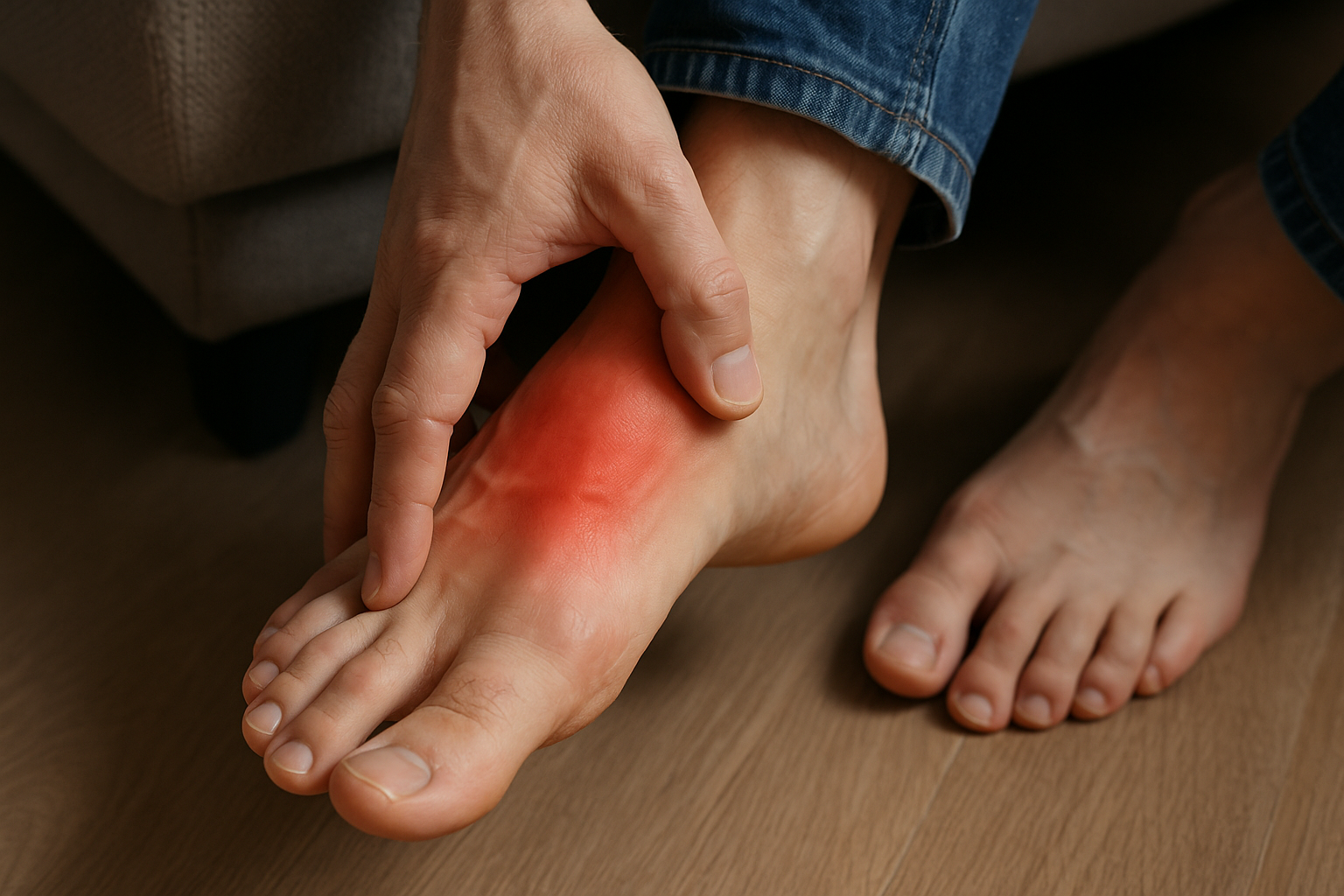
Pain in the foot often appears as soreness, stiffness, or sharp stabs, where the location can vary from heel and arch to forefoot and toes. Many experience increased pain after prolonged standing or after strenuous activities, and some notice the greatest discomfort in the morning during the first steps. Muscle tension in the foot's muscles can feel like a tight, heavy sensation, while nerve pain can be experienced as more burning or tingling.
How common is pain in the foot in everyday life?
Foot pain is common and is seen both in younger, physically active people and in older people with prolonged strain. In everyday life, it is not uncommon for people to experience periodic discomfort in the feet in connection with work, leisure activities, or increased walking and standing time. The degree of pain can vary greatly, from short-lived soreness after a long day to longer-lasting discomfort that affects walks and ordinary tasks.
Everyday factors that can affect the pain
Several daily factors can affect how much discomfort you experience. Using shoes without sufficient support, long periods of standing work, extra strain during running or walks, and a rapid increase in activity level are often associated with increased pain. Weight and gait pattern can also have an effect, as can the surface you walk on — hard surfaces more often cause more strain than softer surfaces. Work routines, transport, and leisure habits can all be relevant in relation to how often and how intensely pain is felt.
Variations in the pain picture and muscle tension
Foot pain can appear in different patterns: sharp pain in the heel, soreness in the arch, or pressure sensitivity in the forefoot. Muscle tension in the foot, ankle, and calf can cause a pulling sensation and make it harder to walk normally. Tension in the legs, back, or shoulders can change the gait pattern and thus affect the strain on the feet, causing the pain to shift or change character. Some experience that pain varies during the day, others that it gets worse after repeated strain.
Everyday patterns and points of attention
When pain in the foot appears in everyday life, small patterns can provide useful context. The pain may vary from day to day and appear as stiffness in the morning, soreness after certain activities, or a change in the way you walk. These variations are often associated with repeated movements, changes in daily routines, or longer periods of one-sided strain. Paying attention to when and in which situations the discomfort occurs can provide a clearer picture of what affects the foot over time.
Habits in everyday life that matter for the foot
Some daily habits can matter for how the feet feel on a daily basis. Longer periods of standing work, frequent walks on hard surfaces, and repeated movements in housework or commuting are often associated with changes in the pain experience. In addition, lack of variation in footwear or constant uniform movements can cause certain areas of the foot to be strained more than others, which can affect the condition over time.
Signs in the small details of everyday life
- Wear patterns on the shoe sole can show where the strain most often lands and how the gait pattern may change.
- Changes in the daily rhythm of movement can be experienced as more pronounced soreness after certain activities.
- Minor swelling or a feeling of tightness in the foot can come and go depending on activity and rest patterns.
These observations can provide a nuanced picture of how the foot reacts to daily strain without pointing to specific solutions. At Reliefr, it is often noted that small, repeated influences can become visible when you follow everyday patterns over time.
Frequently asked questions
What can wear patterns on shoes tell about the foot's strain?
Wear patterns on the shoe sole can reveal which areas take the most strain during walking. Uneven wear can show changes in gait pattern or in how weight is distributed from heel to toe, and it may be relevant to pay attention to these details.
Can sleep and recovery affect how pain is experienced?
Sleep and recovery are often linked to the body's ability to handle daily strain. Lack of recovery can cause soreness or stiffness to be felt more strongly, while good sleep is often experienced as contributing to a better ability to cope with daily demands.
How do massage and relief relate to daily well-being in the feet?
Massage and relief are often mentioned in connection with well-being because they can affect muscle tone and local sensation in the foot's soft tissues. The effect may be experienced as relief of tension and a feeling of greater mobility in everyday life without being a direct solution.
.