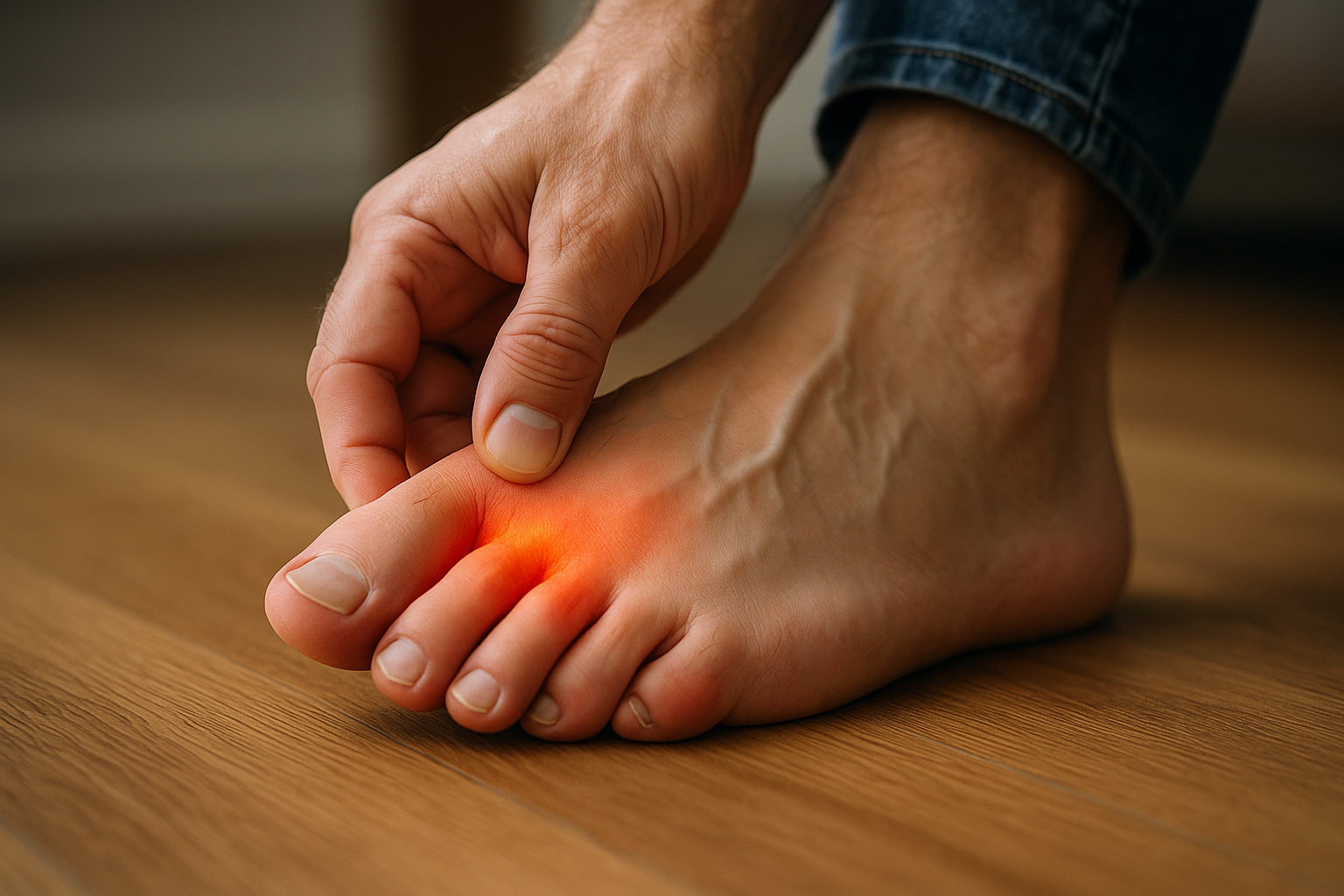
Many people find that pain in the toes can make everyday life less comfortable. It is common to feel pain after both physical activity and longer periods of sedentary work. Pain in the toes can manifest as a stabbing, burning, or at times tightening sensation that affects daily comfort. When the feet have to carry us through the day, repeated strain and small imbalances can over time give rise to discomfort. Therefore, it is not surprising that many seek knowledge about why the toes in particular are affected and how one can feel an improvement in everyday life.
The pain is often experienced after long walks, physical work, or if the feet are squeezed by tight shoes. These situations can cause the muscles and connective tissue in the feet to become tense and blood circulation to decrease. It is a challenge that many face, and which can turn an ordinary day into a struggle with discomfort. By gaining an overview of what pain in the toes involves, it becomes easier to understand how daily activities and lifestyle choices are connected with the pain experienced.
What is pain in the toes?
Pain in the toes is described as a type of foot pain that is often experienced as both stabbing and burning. This sensation can be associated with the daily strain that the feet are exposed to. It may be a condition that arises as a result of overexertion, where repeated movements and prolonged strain on muscles and joints give rise to tension. The condition may furthermore be experienced as an irritation that reduces comfort during walks and activities where the toes are in constant contact with the surface.
Some of the elements that often help form the framework for how the pain arises include:
- Overuse from repeated strain
- Muscle tension and fatigue in the feet
- Reduced blood circulation, which can lead to a cold and clammy sensation
As many people experience varying degrees of discomfort, it is understandable that a need arises for information about how and why the pain manifests itself. A factual understanding of what pain in the toes involves provides a good starting point for being able to focus on the daily influences and lifestyle aspects that contribute to the condition. In this way, one opens up a broader context where the pain is seen as a natural reaction to specific strains in everyday life.
Typical causes of pain in the toes
Pain in the toes is often related to tension in muscles and connective tissue in the foot, especially when tissue becomes tight or imbalanced. Overuse from repeated movements or longer periods of standing activity can cause increased pressure in the forefoot and around the toes. Incorrect fit in shoes, persistent pressure against the front of the toes, or altered walking pattern can also cause local irritation and tenderness.
How does pain in the toes present itself?
The pain can be experienced as different sensations: burning warmth, stabbing tingling, a sharp soreness under strain, or a feeling of tightness in the front of the foot. Some experience reduced sensation or tingling, others notice pain from direct pressure on the toes or when walking longer distances. The intensity varies and can shift from only slight discomfort after activity to more persistent pain that affects the choice of shoes and the ability to walk longer distances.
Where in the body can problems be seen in connection with pain in the toes
Pain in the toes often affects the entire movement chain. Compensation in the walking pattern can increase the strain on the foot, ankle, knee, and back, which can make it harder to stand or walk for longer periods. When one part of the feet is used less or the pain becomes dominant, muscles around the ankle and calf can become more tense, and this can change the pressure distribution in the rest of the leg.
Prevalence in everyday life and situations with increased risk
Many people will at some point experience pain in the toes, often in connection with certain activities. Long walks, running, repeated assembly tasks, or work where one stands a lot are common contexts. Even short periods of increased physical strain without gradual adaptation can cause discomfort. In everyday life, this often shows up in choosing softer or wider shoes, shortening walks, or avoiding certain activities to reduce the discomfort.
Variations in the pain experience
Pain can appear acutely after a single strenuous event or as long-term discomfort that creeps in over time. Nerve involvement can cause tingling or burning sensations, while muscular tension is more often felt as stiffness and a feeling that the toes do not move as freely. Swelling and warmth can appear during periods of irritation, while at other times the symptoms are primarily sensory or movement-related.
.