Learn more about your pain

Pain in the foot on the outside: What causes it, and how is it relieved?
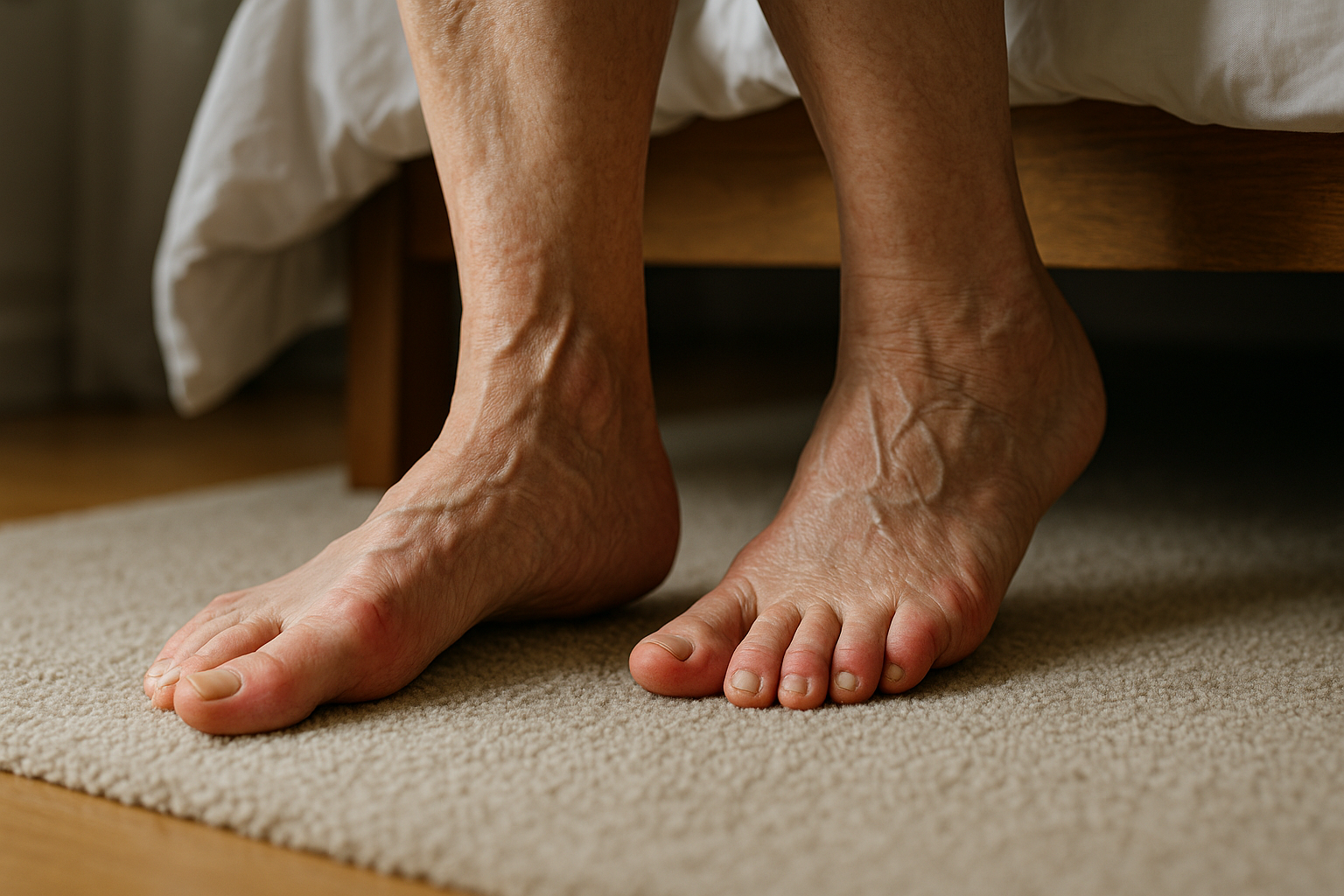
Many people periodically experience pain in the foot, and for some it is specifically the outer side of the foot that causes problems. This pain can be felt both in everyday life and during physical activity, and it often arises without a clear cause. It is common for discomfort or soreness along the outer edge of the foot to make daily movement less comfortable. The pain can appear suddenly, but for many it develops over time, which can lead to gradually becoming aware of how the sensation affects the overall comfort of the foot.There is often great curiosity about what exactly causes the pain and how it differs from other forms of foot pain. It is important to gain a clear understanding of what is meant by pain in the outer side of the foot, as several everyday factors can help trigger the discomfort. Many people who experience this type of pain may have had a change in their activity pattern or changed their footwear, and they consider whether these changes may be connected to the unpleasant sensation.What is pain in the outer side of the foot?Pain in the outer side of the foot describes a condition where pain is primarily felt on the lateral part of the foot. This pain can occur from a single case of overexertion to a longer period of repeated strain. Typically, the pain feels like soreness that worsens with certain movements, especially when the foot is exposed to further strain. This discomfort can be experienced both while walking and during other activities where the foot plays a central role. The intensity of the pain can vary throughout the day The discomfort can be intensified by repeated strain Certain movements can trigger a marked worsening of the pain Many want to understand why this particular part of the foot is especially prone to pain. It may be a combination of overuse, altered foot position, or a previous overuse injury. By getting an overview and a factual framework for what is actually happening, it becomes easier to take the necessary precautions and adapt everyday life. People often seek information in order to adjust their daily activities and prevent the discomfort from developing into a more persistent problem. In this way, factual understanding becomes a starting point for creating calm and reassurance in relation to daily well-being when the foot is affected by unpleasant pain.Common causes of pain on the outer side of the footPain on the outer side of the foot often appears with repeated strain or increased pressure against the edge of the foot. Tendon irritation, local overexertion, and altered foot position are common causes, just as shoes that press or provide incorrect support can contribute. Sudden movements or twists can also lead to pain, especially if muscles and tendons are already tense from daily activity.How the pain can be feltPain on the outer side of the foot can be experienced as local soreness, stiffness, or sharper twinges with certain movements. The intensity can vary throughout the day and worsen during longer walks, running, or carrying a heavy load. Some mainly notice discomfort under strain, while others experience a persistent mild soreness that may feel stronger after prolonged activity.Everyday factors that can affect the discomfortSeveral daily conditions are often connected with increased pain on the outer side of the foot. Choice of footwear, the surface you walk on, sudden changes in activity level, and repeated movements at work can all affect how quickly the pain develops. Tension higher up in the body can also play a role; strain and muscle tension in the back, neck and shoulders as well as in the legs often affect how much strain the foot has to take.Pain relief and offloading in everyday lifeA combination of offloading and targeted relief can make everyday life easier. Offloading is about reducing direct pressure and repeated strain on the painful side of the foot and instead distributing weight and movement so the foot has peace to rest. Massage and heat can loosen muscle tension, increase blood circulation, and create a feeling of increased comfort, while short breaks from demanding activities often reduce the intensity of the pain.Typical activities that can worsen pain Longer walks or runs on hard or uneven surfaces Standing work without the possibility of changing position Frequent lateral movements or sudden turns Daily habits that can affect the foot over timeIn everyday life, it is often small patterns that play a role in how pain on the outer side of the foot develops. Repeated movements, one-sided standing work, and prolonged use of the same type of footwear can over time change the distribution of strain in the foot. These conditions often appear as persistent soreness or discomfort, which can change in intensity depending on activity and rest.Surfaces, footwear, and wear patternsThe surface one moves on and the properties of the shoe are often connected to how pressure and friction are distributed along the edge of the foot. Wear on the sole or stiffness in materials can change the foot’s movement pattern. Over time, such changes can affect how often and how strongly the area is strained, and therefore uniform use of the same shoes or one-sided strain may be relevant in a longer-term perspective.Posture, compensation, and tensionPain in the foot is often connected with movement patterns higher up in the body. Compensation in the hip, knee, or ankle can change the strain on the outer side of the foot, and muscle tension in the leg and calf can appear as altered walking or increased stiffness. Psychological stress can also affect muscle tension and the experience of discomfort in the body in general.Signs of change over time Variation in pain intensity in relation to days or weeks Changed pattern in wear on shoes or uneven pressure under strain Symmetry in walking pattern that changes with prolonged activity Being aware of these conditions can provide a picture of which patterns repeat themselves, without necessarily saying anything about the cause in each individual case. At Reliefr you can find examples of products for foot massage and support, if you want to explore the options available: https://reliefr.dk/collections/fodmassageFrequently asked questionsHow can one distinguish between tendon-related and nerve-related pain?Pain related to tendons often appears as local soreness and worsening with certain movements, while nerve-related discomfort can be experienced as shooting pain, tingling, or radiating sensations. Differences in how the pain changes over time and with different types of strain can be useful indicators.Can massage or heat influence the discomfort?Many describe that massage and heat can provide temporary relief by reducing muscle tension and increasing blood circulation in the area. How and how quickly such an effect is experienced varies from person to person.Which product categories do people typically search for when experiencing pain on the outer side of the foot?People often search for products for reducing pressure, support, and comfort as well as devices for local massage. Nouns such as insoles, massage devices, and heat products recur in searches when people want to explore options for home use.
Learn more
Stiff legs: What causes it, and how can it be relieved?
Many experience that their legs feel stiff during everyday life, especially after physical activity or longer periods of sedentary work. The feeling of stiffness can give a sensation of soreness and tension in the leg muscles, which affects daily mobility and comfort. It is common for the legs to seem less flexible, and for the muscle tension to be felt more clearly when the body has to rediscover its balance after rest or activity. These sensations often arise as the muscles have been exposed to repeated strain or prolonged inactivity. Many therefore seek information about what may be the cause of stiff legs and how best to manage the uncomfortable condition in a busy everyday life.What are stiff legs?Stiff legs is a term that covers a range of sensations in the leg muscles, where soreness and reduced flexibility are central elements. The condition can be experienced as a general tightness in the legs and can arise for several reasons related to the body's daily strain. Among the most common triggering factors is overuse, such as intense exercise or prolonged periods of inactivity, which mean that the muscles do not get the opportunity to relax completely. The experience of stiff legs can also arise after sitting down a lot, where movement is limited, and therefore the muscles can become tense and stiff.The accompanying symptoms can vary in intensity, and many describe a feeling that the legs are "locked" or have a feeling of fatigue and heaviness. It is noted that the condition typically manifests itself as soreness, which may be associated with mild or more pronounced tension in the muscles. Common descriptions of stiff legs include: A feeling of tightness and less flexibility in the muscles Soreness that can be felt both before and after physical activity A general feeling of fatigue in the legs that affects daily movements These experiences are very common and can occur in people with both active and sedentary lifestyles. When stiff legs manifest themselves, it is often a sign that the body is reacting to a strain that one may not have noticed until the symptoms set in. For those who experience this condition regularly, it can be a natural reaction to various influences such as physical exertion, marked changes in activity level, or insufficient warm-up before exercise.How stiff legs typically present themselvesStiffness in the legs often presents itself as reduced mobility and a feeling of tightness that is most pronounced after longer periods without movement or after physical exertion. For some, the feeling is short-lived and disappears quickly with ordinary walking; for others, it can be persistent and felt during daily activities such as walking up stairs or standing up from a seated position. The symptoms can be experienced as soreness, a heavy sensation, or local increased sensitivity in the muscles.How widespread stiffness is in everyday lifeMany experience stiff legs from time to time, especially people with jobs that require long periods of standing or sitting work. Older people report stiffness more frequently, as do those who perform repeated movements in everyday life. Stiffness in the legs is often related to daily habits and the overall strain the body is exposed to over time.Everyday factors that can affect stiffness Poor posture at work and during leisure can increase the strain on the muscles. Longer periods of inactivity or one-sided movements often lead to an increased feeling of stiffness. Dehydration and insufficient rest can make muscles more sensitive and less flexible. Stress and sleep quality can affect muscle tension and thereby the experience of stiffness. Incorrect or poor cushioning in footwear can increase the strain on legs and feet. Variations and accompanying discomfortsStiff legs can occur in different ways: some primarily experience local tension in the thigh or calf, while others feel a more widespread sensation of heaviness in the legs, feet, and back. It is also common for the stiffness to be combined with cramps or swelling at times. Many describe that the stiffness changes character throughout the day — worse upon waking or after long periods without movement and improved after light activity.Frequently mentioned forms of reliefPeople with stiff legs often mention the use of massage, heat, and compression as ways of pain relief and relief. Massage is experienced as help in loosening tense muscles, heat can give a feeling of increased suppleness, and compression is described as support against the sensation of heaviness in the legs. These approaches are used in everyday life to create greater comfort and improved mobility.Observations in everyday lifeWhen stiff legs occur over time, there may be subtle patterns that are useful to be aware of. The stiffness often presents differently from day to day and may be experienced as changes in intensity, extent, or time of day. Several people notice that the type of activity immediately before the symptoms can often be related to how the stiffness develops in the following days. Longer-term patterns can provide insight into which situations or periods play a role in the experience of stiffness.Habits and conditions that can affect over time Variation in daily movement patterns can lead to some muscle groups being strained more during repeated movements. The quality of sleep and the choice of surface can matter for how muscles and joints feel upon waking. Ambient temperature and seasonal changes can affect how stiffness is experienced from day to day. Persistent imbalances in posture during work or leisure can over time change muscle tone and be felt as increased tightness. Repeated, asymmetrical strains in everyday life, for example when carrying bags on the same side, can cause localized changes in muscle tension. These conditions are not solutions, but points of attention. Over months, small differences in the rhythm of daily life can create clearer patterns in when and how the stiffness occurs. Symmetry in symptoms, changes in location, or newly arisen discomfort should be noted, because they can appear as changes in the way the body reacts to strain.Concluding perspective before questionsKeeping an eye on patterns rather than individual events can provide a more nuanced picture of the development of stiff legs. Changes in frequency, extent, and character can be useful guideposts in everyday life. The frequently asked questions below address some of the most common uncertainties about stiff legs.Frequently asked questionsHow can massage help against stiff legs?Massage can improve blood circulation in the treated area and loosen tension in the muscles, which many experience as a temporary relief of stiffness and soreness.Is heat or cold better for stiff legs?Heat can be experienced as soothing for tight muscles, while cold is often used in situations with local swelling or increased warmth in the tissue. The choice depends on the individual's experience of the symptoms.When should you seek a doctor for stiff legs?It may be relevant to contact a doctor if the stiffness changes character significantly, becomes persistent, or occurs together with severe pain, sudden swelling, or other new symptoms..
Learn more
Inflammation in the foot: Common causes and relief in everyday life
Many experience pain and swelling in the foot, which can often be a sign of an inflammatory condition. Inflammation in the foot can make everyday activities less comfortable and affect the feeling of well-being. Overuse and improper footwear are among the common causes that can lead the tissues in the foot to react with soreness and stiffness. It is common for symptoms such as pain, swelling, and a feeling of warmth to appear gradually or after a period of intense strain. This condition often becomes a focal point for those who want to understand what is happening in the foot and how discomfort can be eased in everyday life.What is inflammation in the foot?Inflammation in the foot refers to a condition in which the tissues in the foot become irritated and swollen. It can be experienced as a painful reaction that typically occurs during physical activity or as a result of prolonged strain. Some characteristic signs of inflammation in the foot are: Soreness during strain Swelling and a warm sensation Stiffness, which can especially be felt after rest It is not uncommon to feel that the discomfort in the foot is connected to a reaction that appears both physically and practically. When the foot is subjected to repeated overuse or wears improper footwear, any everyday activity can be accompanied by a persistent feeling of discomfort. Many seek information about inflammation in the foot to understand how simple means can relieve and prevent the symptoms that can make everyday life challenging.Having knowledge of how inflammation in the foot manifests provides a better overview of the challenges that can arise when the foot is overloaded. It is about knowing the typical characteristics so that the early signs can be identified. A basic understanding of how soreness, swelling, and stiffness develop makes it easier to put into words why many people in everyday life seek knowledge about how these symptoms arise and what can make the discomfort less bothersome. This attention to the first signs helps create a secure framework where listening to the body's signals becomes a natural part of a healthy everyday life.How inflammation in the foot typically appears in everyday lifeInflammation in the foot often appears as pain during weight-bearing activity and a feeling of stiffness after rest. Many find that the pain is most noticeable in the morning or after longer periods of sitting or standing work, while swelling and a local warm sensation can vary throughout the day. An altered gait pattern, such as putting less weight on the heel or stepping carefully, can be a sign that the foot is reacting to persistent irritation.When symptoms most often become more pronouncedSymptoms are often related to changes in activity level or changes in footwear. Periods of increased walking, running, or prolonged standing can cause worsening, just as shoes with poor support can make the pain more noticeable. Climate and temperature can also affect the experience of stiffness and soreness, and weight changes can affect how much strain the foot is subjected to.How muscle tension develops as a result of foot painPain in the foot can lead to compensation in other parts of the body. Tension can arise in the calf muscles, which may be felt as increased tightness in the leg. Over time, an altered gait can also affect the knees, hips, and back, and some experience increased tension in the neck and shoulders as a result of altered posture. These connections explain why the discomfort is rarely limited to one area.The role of relief in daily comfortRelief in everyday life is about reducing strain and creating room for better movement. Short breaks from demanding activities, elevating the foot during rest, and avoiding repeated heavy strain during periods of stronger pain can make a difference for both swelling and the experience of pain. An even distribution of strain throughout the day is often associated with fewer flare-ups of discomfort.Pain relief through touch and heat/coldMassage can have a relaxing effect on tense muscles and at the same time improve local blood circulation, which often reduces stiffness. Heat can provide a softening effect on sore muscles, while cooling can be experienced as soothing with marked swelling or a warm sensation. The choice between heat or cold depends on how the foot feels in the specific situation.What to pay attention to in everyday lifeIn daily life, small repeated patterns can matter for how discomfort in the foot develops over time. Changes in surfaces, how shoes wear down, and how often the foot is subjected to one-sided strain are often factors that play a role. It may be experienced that symptoms are worse after certain activities or times of day, and that the conditions around the foot affect both pain and mobility at times. The shoe’s wear pattern can show where the strain mainly lies Prolonged standing work is often associated with an increased feeling of fatigue in the feet Changing surfaces, for example hard versus soft, can change how the foot is loaded Habits that may matter over timeSome habits affect the foot gradually. Frequent repetition of the same movement, one-sided carrying of heavy objects, and long periods without variation in movement patterns can over time lead the tissues to react. Weight changes and longer-term changes in activity level can also affect how noticeable the symptoms are in everyday life. These factors do not have to be visible immediately, but can develop gradually and be felt as increased soreness or stiffness.General considerations in everyday lifeWhen thinking about the framework of everyday life, it may be relevant to be aware of the distribution of strain throughout the day and of which tasks are repeated often. Variation in activities and the frequency of the same movement are often linked to how the symptoms are experienced. Just as sleep and rest can play a role in how the foot feels upon waking, daily patterns can affect how much discomfort is felt during the day.The relationship between touch, heat, and the perception of painTouch and temperature often affect the perception of discomfort in the foot. Massage can be experienced as soothing on tense areas and can change how local sensitivity is experienced. Heat and cold can be experienced differently depending on the time of day and the degree of swelling, and many notice that these sensory impressions can change how the foot feels during activity. These reactions vary from person to person and can change over time.Long-term conditions that deserve attentionOver months and years, repeated patterns can lead to changes in gait and in muscular load. Compensation in movement can appear as increased tension in the lower leg and other joints, and such changes can help affect how frequently or intensely discomfort is experienced. Paying attention to patterns in when symptoms occur can provide insight into which factors play a role over time.The conclusion of this section naturally leads on to some frequently asked questions about common concerns with inflammation in the foot. The FAQ section below addresses common uncertainties and provides brief information about typical situations that many want answers to.Frequently asked questionsHow long can inflammation in the foot last?The duration varies greatly depending on causes and individual circumstances. Some find that the symptoms decrease over a few weeks, while others may have longer periods of varying discomfort. Patterns in daily activity and recovery can affect the course.Can daily habits make the symptoms worse over time?Yes, repeated strain and lack of variation in movement are often associated with worsening symptoms over time. How and how often the foot is loaded in everyday life can affect both the intensity and frequency of pain and stiffness.Are massage and heat good for relieving discomfort in the foot?Massage and heat can be experienced as pleasant and can affect the local sensation of stiffness and tension. Reactions are individual, and how these sensory impressions are experienced can vary with the time of day and the degree of swelling.What can the wear pattern on shoes tell about the load on the foot?The wear pattern can provide an indication of where the load mainly lies during walking and running. It can help make repeated patterns of strain visible, which over time may matter for how the foot reacts.
Learn more
Pain on top of the foot when I walk: What can cause it and how is it relieved?
Many experience pain on top of the foot when they walk, and this can make everyday life less comfortable. A sharp or irritating sensation is often felt, signaling that something is not quite right when the foot is loaded during walking. It is common for the feeling to vary – some days one experiences a slight soreness, while at other times the pain can be more pronounced. This form of discomfort is typically related to the strains that daily walking entails, and it is interesting that many seek information about why pain on top of the foot arises precisely during these activities.The experience of pain on the top of the foot is not unusual and can be felt both by those who are active and by people with a busy everyday life. The pain is often connected with the way we use the foot – when it is repeatedly exposed to movement and pressure, small irritations can arise in tissue and tendons. This can lead to a feeling of tightness or discomfort that flares up with activity. Many also experience that the pain becomes more noticeable when walking quickly or on uneven surfaces, and it can affect one’s ability to perform everyday tasks comfortably.What is pain on top of the foot when I walk?Pain on top of the foot when I walk refers to a sensation of pain that occurs in the area on the top of the foot, especially during movement. It is not a medical diagnosis, but rather an observation of how the foot reacts to daily strain. The pain can arise as a result of some conditions that affect the foot during repeated strain or prolonged walking. Among the typical causes are: Overuse from repeated movements Use of unsuitable or tight shoes Increased muscle tension during physical activity These experiences have been described by many who at times can feel that the top of the foot is particularly exposed to irritation and discomfort. It can give the impression that the pain is merely a result of daily activity, but at the same time it is precisely under these conditions that one often seeks an understanding of what may be causing the discomfort. By gaining an overview of what triggers the pain, it becomes easier to assess how best to handle it and ensure a more comfortable everyday life.Typical causes in tendons and soft tissuePain on top of the foot is often associated with irritation in tendons and soft tissue at the front of the foot. Often it is the extensor muscles and their tendons that are strained during repeated use or with suddenly increased activity. Tight shoes and lacing that press against the top of the foot can worsen this strain and make tendons more sensitive to ordinary walking.How does the pain show itself?The pain can be experienced differently, but there are some recurring features. Typical signs can show themselves as: immediate soreness when pressing on the top of the foot sharp or shooting pain during certain movements, especially when lifting the foot a feeling of fatigue in the foot after longer walks Some experience that the pain becomes less when the foot gets warmth and movement, but returns with prolonged strain.How common is it in everyday life?Pain on the top of the foot is fairly frequent among people who walk a lot, stand for long periods, or perform repeated movements with their feet. Active people and those with busy everyday lives often describe episodes where the discomfort affects walking rhythm or pace. The problem is seen across age and gender, but the frequency increases during periods of increased activity or with changed use of footwear.Factors that can cause pain during walkingSeveral everyday conditions can contribute to the experience of pain. Walking on slanted or uneven surfaces increases the strain on the tendons at the front of the foot. Rapid increases in the pace or length of walks, heavy load when carrying, and the use of shoes with little room for the toes are all conditions that can make the area more sensitive. In addition, tightness in the calves and shins is often associated with increased tension on the top of the foot.Variations in the course and intensity of the painThe experience of pain can vary from a slight, nagging soreness to a sharp sensation with every push-off. For some, the pain is short-lived and occurs only with certain movements; for others, there may be a persistent feeling of fatigue that can affect walking comfort. There may also be differences in how the pain spreads to surrounding areas such as the foot, leg, and sometimes back, if the gait pattern is changed to avoid discomfort.What you can pay attention to in everyday lifeIn everyday life, it is often small, repeated phenomena that provide useful information about how pain on top of the foot develops. Pay attention to the timing of the discomfort. Some experience that pain appears as early fatigue in the foot after short walks, while others notice a gradual worsening during the day. The pain can also be experienced as sharp during certain movements or more as a persistent soreness after longer periods of standing work. Time pattern: when the symptoms occur and whether they change over the week Relation to strain: whether the discomfort follows certain activities or repeated movements Sensation quality: whether the pain appears as stabbing, burning, or throbbing Habits and conditions that can play a roleHabit changes and daily routines are often connected with how pain develops over time. A change in gait pattern, longer periods on the feet, or carrying heavier bags than normal can affect the sensation in the foot. Temperature and weather can also affect the feeling; cold conditions can make muscles stiffer, while moisture and heat can change the comfort in shoes and socks.How changes in movement patterns can show themselvesWhen pain arises, it is often seen that the gait pattern is adapted to avoid discomfort. This adjustment can be experienced as a changed stride length, more frequent breaks, or a shift in strain to other parts of the foot. Over time, such changes can show themselves as fatigue in the lower leg or discomfort in the hip and knee, because posture changes to compensate.Frequently asked questionsCan massage help with pain on top of the foot?Massage can be experienced as relieving muscle tension and can provide a feeling of increased blood flow in the area. Many describe that soothing massage appears as temporary relief, especially after longer walks.Why can pain return after short-term activity?Pain that returns is often associated with repeated strain or with the tissue still being sensitive after previous activity. The pain can be experienced as a repeated reaction to the same type of movement or surface.When should I pay extra attention to changes?Pay attention if the pain changes character, moves to new areas, or if significant swelling or reduced mobility occurs. Such changes may be signs that something in the gait pattern or strain has changed significantly..
Learn more
Infrared massage device: What are the benefits of heat and vibration?
Many experience stiff muscles and discomfort in everyday life, and it is common to seek methods to relieve these symptoms in a safe and easy way. A device with infrared heat and vibration is intended to create a feeling of relaxation and improve general well-being. By combining two different elements—heat that penetrates the muscles, and gentle vibrations that loosen tension—such a machine can help reduce daily discomfort. Many find that the warm sensation together with the light pulsating movements creates a pleasant and calm atmosphere, where one feels both relaxation and an increased sense of pain relief. This form of self-massage has become part of everyday routines for those who want to give their body and mind a break from everyday stress and muscle tension.The use of an infrared massage device can be experienced as a natural aid for loosening tight areas, especially after a long day or after physical activity. The heat treatment works by increasing blood circulation, while the vibrations help loosen built-up tension. Many therefore become curious when they hear about how such devices can create a mild, yet effective basis for reducing the feeling of fatigue and soreness, without the need for medical aids.What is an infrared massage device?An infrared massage device is a machine that uses infrared heat in combination with vibrations to create a gentle massage experience. This combination works by allowing the heat to penetrate deep into the muscles while simultaneously stimulating tissue through light, rhythmic movements. Several people experience that this form of massage promotes better blood circulation and gives a marked feeling of relaxation. Infrared heat provides a deep sensation in muscles and tissues The vibrations help loosen muscle tension Regular use can lead to noticeable pain relief and increased well-being It is important to understand that an infrared massage device is not a replacement for professional treatment, but rather a supplement to daily self-care. Many experience that a combination of heat and vibrations provides both immediate calm and a lasting feeling of improved well-being, which makes it attractive for those who want to relieve everyday discomfort in a simple way.How does infrared heat work?Infrared heat is experienced as a deeper, more penetrating warming than ordinary surface heat. When the heat reaches down into muscles and connective tissue, it can increase local blood flow, allowing more oxygen and nutrients to reach the affected areas. Many describe the feeling as a gentle warming that reduces stiffness and makes the muscles more receptive to gentle stimulation from vibrations.Benefits of the combination of heat and vibrationThe combination of heat and vibration often works more strongly than each on its own, because they address tension in two ways: heat relaxes the tissue, while vibrations affect muscle tone and sensory perception. This may present as a faster experience of pain relief and a feeling that the muscles loosen more easily after a short time.Typical benefits often mentioned Reduction of muscle tension, which can be experienced as less stiffness in movement Improved blood flow and increased oxygenation of tissue in the treated area Increased relaxation and a calmer sensation, which many experience in connection with reduced stress levels Typical areas with noticeable improvementThe neck, back, and shoulders are among the areas where heat and vibration often feel most effective for loosening tight muscles. The legs and feet can also respond positively, especially after long days on your feet or after physical activity. When several areas are affected, the effect can feel more overall, because the body experiences less discomfort from several places at the same time.How can use in everyday life affect well-being?Regular use of a device in connection with daily routines can be experienced as a way to reduce muscle soreness and fatigue. Many experience that short sessions after work or activity make it easier to wind down in the evening and support more comfortable movement in everyday tasks.There is also a practical side: the use of heat and vibration can make it easier to focus on rest and recovery at home, because the treatment is easily accessible and can be used specifically on the neck, back, shoulders, legs, and feet without the need for long preparation time.What to be aware of in everyday lifeWhen an infrared massage device becomes part of daily routines, there are several factors that can affect the experience over time. Repetitive movements at work or in leisure time, sleep patterns, and the general strain on certain muscle areas are often connected with how the body reacts to heat and vibration. These conditions can change the way the device's effect presents itself as comfort or discomfort.Habits that can affect the experienceSome daily habits can help shape how using a massage device feels in everyday life. Prolonged sedentary behavior or one-sided movement patterns can make certain areas more sensitive, while variation in daily movement can provide a different experience. It is common for people to note differences in response depending on the time of day and level of fatigue. Work patterns with repetitive movements can change where one experiences tension Sleep position and rest can affect how muscles feel in the morning Clothing and materials against the skin can matter for comfort during use Indoor climate and room temperature can affect the sensation of warmth Maintenance and storage without technical detailsMaintenance of the device itself affects durability and smooth operation over time. Storage conditions, cleanliness, and regular checking of parts can play a role in how the device behaves with repeated use. These considerations are relevant both for good function and for the overall experience of using the device at home.Expectations and the time aspectExpectations can vary greatly. Some users experience quick changes in comfort, while others notice more gradual differences. How the effect presents itself as perceived well-being can influence how often the device is used and in which situations it is preferred.Below you will find answers to common questions about use and differences that often come up when considering an infrared massage device.Frequently asked questionsHow does infrared massage differ from traditional massage?Infrared massage is often experienced as a combination of warming sensation and rhythmic vibrations from a device, while traditional massage typically involves manual manipulation of muscles. The practical difference can be seen in accessibility and in how the impact is experienced superficially versus more focused.Are there risks when using infrared heat?Some may experience temporary redness or increased sensitivity in the skin after use. Reactions vary from person to person, and such changes may appear as short-lived sensations without being persistent.Can the device affect daily comfort in the longer term?Reports from users show that the effect can vary over time. For some, regular use provides an altered experience of well-being, while others notice more fluctuating results depending on daily conditions and habits..
Learn more
Sore legs: What causes it, and how can it be relieved?
Many experience sore legs during their lives, and the discomfort can vary from a mild feeling of fatigue to more pronounced muscle tension. It is common for the legs to become sore after long periods of sedentary work, intense physical activities, or simply because of the daily strain that life offers. A slight soreness is often felt, which can develop over time, and this can create a feeling that the legs are not getting the necessary variation in movement. A persistent feeling of soreness can therefore be seen as a signal from the body that a change in everyday life is needed, either through more active movement or by giving the legs a well-deserved rest. For many, the feeling of sore legs becomes a topic they seek knowledge about, as it directly affects both comfort and general quality of life without being a medical diagnosis in itself.It is not unusual for sore legs to arise as a result of a range of different lifestyle choices. Long periods of inactivity combined with sudden strain can lead to a condition that is experienced as both fatigue and slight muscle stiffness in the legs. This type of discomfort can be felt after a day of many hours of seated work or after intense physical activity, where the leg muscles have worked extra hard. Normally, the symptoms are perceived as a natural reaction to the strain, and daily information about how the legs are feeling can help create an understanding of why changes in one's movement pattern often become necessary.What are sore legs?Sore legs refer to a condition where the muscles in the legs feel tired, tense, or painful. The condition can manifest as slight soreness immediately after physical activity, or it can develop gradually as the legs are exposed to repeated strain. The feeling of soreness can often be experienced after activities where the legs have had to work extra hard, but it can also arise the next day after a long workday. In some people, a slight pressure or stiffness in the legs gives rise to curiosity about whether the daily activity level is sufficient, while others experience more marked soreness that can make it challenging to maintain a normal daily routine. By understanding what sore legs entail, it becomes easier to gain an overview of how lifestyle and daily movement are connected with the experienced feeling of discomfort in the legs.How do sore legs present themselves?Sore legs often present as a feeling of fatigue or heaviness in the muscles, which can be localized or more widespread. It can be experienced as soreness after activity, stiffness after a long time in the same position, or as a throbbing sensation when pressure is applied to the muscles. Some also experience reduced mobility and a feeling that the legs need to "wake up" after rest, while others notice persistent tension that affects walking and standing work.How common are sore legs in everyday life?Sore legs are a common general complaint among both younger and older people, and the occurrence is often linked to work and leisure patterns. Both people with sedentary jobs and those with physically demanding everyday lives can experience soreness, although the causes may be different. In everyday life, the soreness can affect comfort during standing tasks, walks, and sleep, and many notice that the symptoms vary with activity and rest.Typical factors in everyday life that can cause sore legsFrequent factors include repeated strain from work or sports, long periods without variation in movement, as well as poor posture during seated work. Uneven surfaces, frequent short walks with many stops and starts, and lack of variation in standing positions can also cause increased strain in the leg muscles. Stress and sleep quality can also affect muscle tension and the experience of soreness.Variations in soreness and which areas are typically feltThe soreness may be acute after a single strain or more persistent with repeated strain. Affected areas often include legs, feet, and calves, but muscle tension can also be felt in the back, neck, and shoulders at the same time as in the legs. Some primarily experience local soreness in one muscle group, while others feel a more diffuse fatigue spread across several areas.Muscle tension in everyday lifeMuscle tension presents as tightness or a cramp-like feeling and is often associated with repeated use or prolonged static strain. Tension can be worsened by physical fatigue and psychological stress, and it can make normal movements more strenuous. For many, understanding how tension develops in everyday life is important in order to identify patterns in when and where the soreness occurs.What you can be aware of in everyday lifeWhen sore legs occur in everyday life, small patterns can provide useful information without pointing to concrete solutions. For many, the symptoms appear as variation in intensity throughout the day, and they can be experienced as both heaviness and localized tension. It may be appropriate to note when the discomfort occurs and which daily habits are often connected with changes in the sensation.Typical factors that may have an effect over timeSome factors in everyday life tend to play a role over a longer time, and they can affect how the soreness develops. Wearing shoes with worn soles or low cushioning can appear as increased strain in the feet and calves. The hardness of the surface and repeated short strains at work can also have an effect, just as variation in standing and sitting periods often matters for the feeling in the legs. Temperature and choice of clothing can make muscles more or less sensitive and thereby affect the experience of soreness. Use of tight-fitting socks or shoes can in some cases change pressure distribution and be experienced as discomfort Daily rhythms where mobility varies greatly can appear as fluctuating symptoms Prolonged strain on uneven surfaces can over time lead to persistent tension Sleep quality and psychological strain are often linked with muscle tone and experienced soreness General considerations without adviceIt can be useful simply to note patterns and times without seeking specific solutions. Many experience that certain days stand out because the soreness is more pronounced, while other days feel easier. Knowing these variations can provide perspective on which factors appear as repeated triggers over time. In this way, it becomes easier to ask the right questions about everyday habits if one chooses to investigate further.Frequently asked questionsCan massage be relevant for sore legs?Massage can be experienced as a way to create temporary relief and loosen muscle tension. Many describe a feeling of increased flexibility and easier blood circulation after massage, but the effect varies from person to person.How do sleep and stress affect the experience of sore legs?Poor sleep and elevated stress levels are often linked with increased muscle tone, which can make the legs more sensitive. Stress can appear as persistent tension, and the quality of sleep can affect how pronounced the soreness feels the next day.How do the symptoms typically vary over a day?Symptoms can vary from slight stiffness in the morning to increased heaviness during the day or a feeling of tired legs at the end of the day. Some also experience that variation in movement during the day affects how the soreness feels..
Learn more
Inflammation in the foot: What causes it, and how can you relieve it?
Many periodically experience pain and discomfort in their feet, which can make everyday activities challenging. The condition often arises as a natural reaction in the body's tissues when they become overloaded or exposed to repeated strain. It is common for people to notice increased sensitivity and a general feeling of stiffness in the feet after long days of standing or walking a lot. This inflammatory process can cause a range of unpleasant symptoms that greatly affect how one manages in daily life, especially when the feet have to carry the entire body's weight during activities such as walking and work.This is why many seek information and guidance on the subject, in order to understand how the inflammation arises and what it can mean for their general well-being. By gaining an overview of what inflammation in the foot entails, one can better describe the symptoms experienced and assess how the discomfort affects the workday and leisure activities. This understanding is important for creating a reassuring framework in which it is possible to observe when the feet show signs of irritation and stiffness, without it necessarily having to be a serious problem.What is inflammation in the foot?Inflammation in the foot arises as a result of a natural reaction in the body's tissues, where there is an increased flow of blood and immune cells to the affected area. This can result in swelling, redness, and a feeling of warmth. The condition is often seen as a result of overuse, tendon inflammation, or plantar tendon problems, and the accompanying pain can vary in both intensity and extent from person to person. Many experience discomfort during weight-bearing, something that can be felt especially during walks or when standing for longer periods, and a feeling of stiffness that can make the start of the day extra challenging.It is noted that inflammation in the foot does not necessarily prevent daily activities, but that it often creates an extra challenge in the form of persistent discomfort and a tendency for the feet to feel more tired. Therefore, it is important to have knowledge of which typical symptoms may occur, and to be aware of how these experiences are connected to the strain one exposes one's feet to in everyday life.How inflammation in the foot presents itselfInflammation in the foot often presents itself as pain during weight-bearing and a feeling of tenderness when pressure is applied. Other common signs are swelling, warm skin, and a stiff sensation, which may be most pronounced in the morning or after rest. Some experience a crackling or pulling sensation in the tissue, while others feel general fatigue in the feet after longer periods of walking or standing. The intensity can vary from mild irritation to stronger pain, and the duration can be short-lived or repeated over several weeks.How widespread is the problem in everyday life?Many experience periodic problems in their feet in connection with work and leisure activities. Older people and those with a high activity level report discomfort more frequently, but sedentary work with sudden changes in load can also be significant. Lifestyle choices such as frequent walking on hard surfaces or long days on one's feet are often linked with increased risk of irritation and pain, which can affect mobility and daily comfort.What can cause inflammation in the foot?Several factors can cause irritation in the tissues of the foot. Repeated overuse from sports, long walks, or work where one stands for a long time are common causes. Incorrect or poorly supportive footwear can alter the loading pattern and lead to increased pressure on certain areas. Previous sprains or prolonged strain in the foot and lower leg can also make the tissue more vulnerable, just as sudden changes in activity level can matter.Different forms and where they are locatedInflammation can affect different tissue types in the foot, such as tendons, connective tissue, and soft tissue around the joints. Symptoms may be localized to the heel, forefoot, or side of the foot, depending on which structures are strained. Muscle tension in the lower leg can often be related to increased strain in the foot, and similar discomfort can also arise in other areas such as the back, neck, and shoulders, where overuse changes movement patterns.Practical measures for relief in everyday lifeThere are a number of simple, everyday measures that can provide relief. Short-term rest from demanding activities, cold compresses for swelling, light compression, and keeping the foot elevated can reduce discomfort in acute phases. The use of support in shoes and relieving footwear can alter the load, while gentle massage increases blood flow and can reduce muscle tension. Heat can help with stiffness, while short breaks and frequent position changes during the day can improve well-being.What you can pay attention to in everyday lifeIn everyday life, it is useful to be observant of patterns rather than individual episodes. Pain signals can vary from day to day, and several factors are often connected with how symptoms develop over time. Some notice that discomfort occurs more frequently on certain surfaces or after days with prolonged standing, while others experience that the foot feels stiffer in the morning or becomes warm during the workday. These patterns can provide insight into which situations affect comfort the most.Shoe changes and wear patternsThe condition of the shoes and how they wear can matter. Uneven wear on the soles or pressure points often shows where the load is greatest. Changes in fit during the day, for example if shoes feel tighter at the end of the day, can also be something one notices, as this can affect how the load is distributed.Timing and variation in symptomsThe timing of pain or discomfort can provide knowledge about which processes are involved. Some especially experience increased sensitivity in connection with the first steps in the morning, others mainly notice fatigue after longer activity. Fluctuations from day to day can be a sign that the impact is related to daily habits or loading patterns.Other factors that may affect over time Changes in gait pattern or posture, which alter pressure distribution The foot's appearance and volume at different times of the day Footwear, sock material, and how they affect friction Sleep and mental strain, which can change the pain threshold At Reliefr, we note that attention to these daily signals often helps with understanding what changes over time. Keeping an eye on patterns can make it easier to assess which situations repeatedly affect the well-being of the feet. In the following, we answer some of the most common questions that many ask when the discomfort arises.Frequently asked questionsHow can I test for inflammation in the foot myself?Simple observations can be useful. Comparing warmth, swelling, and tenderness in the affected foot in relation to the other foot can provide indications. Also note whether pain changes after rest or at the start of movement, and whether the swelling is visible when comparing in a mirror or in photos over time.Can heat be used instead of cold?Heat and cold can be experienced differently. Cold often appears as relief with visible swelling or warmth, while heat can be experienced as more comfortable with stiffness. How it feels for the individual can vary, and some choose based on what provides the greatest temporary comfort.How long can discomfort in the foot last?The duration varies greatly. Some periods of discomfort may be short-lived and disappear over days, while others may return over weeks or longer. Repeated patterns in symptoms can make it clear whether something is affecting the foot continuously or only sporadically..
Learn more
Arch tendon: What is it, and how is the pain relieved?
Many experience pain and discomfort in the feet, especially when the arch tendons are affected by overuse in everyday life. It is not uncommon for the first movement in the morning to be revealed by a stabbing sensation under the heel, which can seem inhibiting for a comfortable start to the day. The experience is often described as a sharp pain that gradually subsides as the foot warms up during movement. This form of discomfort can be felt whether one is mobile and active or has happened to have a period with many hours in a standing position, and it is one of the reasons why further knowledge is sought on the subject.Arch tendon problems typically occur as a reaction to the constant strain the foot is exposed to, and the irritating pain often leads to increased attention to how everyday activities affect the body's balance and movement. The experience can vary from slight soreness to more pronounced pain that makes it difficult to put the first foot out in the morning. It is a condition that many encounter at one point or another, and which therefore arouses curiosity about what arch tendons actually are and how the pain can be relieved for a more comfortable everyday life.What are arch tendons?Arch tendons refer to the band of tissue that runs from the heel to the toes and functions as a natural shock absorber for the foot. This band of tissue, also known as plantar fascia, helps distribute the body's weight and absorb shock during walking and running. Overuse of the arch tendons can result in increased sensitivity, causing even a light load to lead to stabbing pain, especially in the morning when the foot is cold. This feeling of discomfort is often felt clearly with the first steps, and although the pain may subside as the foot becomes warmed up, the sensitive sensation can continue to affect one's daily routines.With an increased understanding of what arch tendons cover, it becomes easier to recognize how the load on the foot can show itself in the form of sore and stabbing pain. This knowledge creates reassurance and provides a clearer framework for how one can listen to the body's signals and be aware of when an overuse is about to show itself.How do arch tendon problems show themselves?Pain in the arch tendons often shows itself as a sharp or stabbing sensation under the heel, especially in the first steps after rest. The pain can be described as intense during weight-bearing and subside as the foot warms up, but can return during longer walks or after prolonged standing work. In addition to local pain, the area may feel sore to pressure and cause an altered walking rhythm, where one compensates by supporting on the outside of the foot or taking shorter steps.How common is this type of pain in everyday life?Pain from the arch tendons is a frequent cause of foot pain in many age groups. It is often experienced by people with active everyday lives, those who have long periods of standing, and by those who suddenly increase their activity. In everyday life, this means that mornings and periods of repeated strain can be particularly problematic, and that activities such as walking, stair climbing, and longer standing tasks can intensify the discomfort.What can affect how severe the symptoms become?The extent of pain is often linked to the amount and type of strain on the foot. Prolonged standing, frequent walking on hard surfaces, or rapid increases in activity can cause increased sensitivity. Choosing footwear with poor support or worn soles can also increase the strain. In addition, tension in the calf muscles and ankles can affect the load pattern in the feet, just as general posture and strain in the back, hips, and knees can change the way one walks.How do muscle tension and relief show themselves in everyday life?Muscle tension around the foot and calf can be felt as tightness or a pressing sensation, making movement feel less smooth. Relief in everyday life shows itself as changed habits: shorter walks, frequent sitting breaks, or preferring to sit rather than stand for longer periods. These adaptations can provide temporary relief, but can also lead to imbalance in gait, which can affect other areas such as the back, neck, or shoulders.Everyday possibilities for relief and less strainMassage and warmth around the arch tendons can lead to short-term pain relief by loosening tension in the tissue and increasing blood flow. Stretching of the calf and the underside of the foot can reduce tightness and thereby reduce discomfort during strain. Choosing footwear with good support and periods of reduced standing time can reduce the strain in everyday life and make it easier to maintain function in daily tasks.Signs in everyday life that may require attentionIn everyday life, small changes in how one moves or distributes weight can over time show themselves as increased sensitivity in the arch tendons. It may be temporary soreness after longer periods of standing or a gradual change in how one places pressure on the foot while walking. Some experience that certain surfaces or prolonged work on hard floors are often linked to a persistent feeling of discomfort, while others notice that shoes that are very worn give an altered movement pattern.Habits and repeated strain that can affect over timeDaily routines tend to shape load patterns. One-sided habits such as preferring one side when carrying bags or repeated short movements at work can change the way weight is distributed on the foot. Over months, such patterns can show themselves as increased soreness or fatigue in the arch tendons, without it necessarily being a single event that triggers the problem.Other conditions one can be aware of Changes in gait as a result of pain elsewhere in the body can show themselves as changes in the load on the arch tendons Wear on the shoe sole or uneven heel wear can be an early sign of changed weight distribution Short-term periods of increased activity after relative inactivity can over time affect sensitivity in the foot Tension in the muscles of the lower leg can often be linked to a feeling of tightness around the underside of the foot Long-term considerations without concrete adviceOver months, repeated load patterns can lead to changes in how the body's joints and muscles work together. It is useful to be aware of persistent changes in pain, gait, or fatigue in the foot, because such signals often show themselves gradually. Noticing patterns in everyday life can provide a better basis for assessing what is relevant to investigate more closely.Frequently asked questionsWhat is the difference between arch tendon problems and heel spur?Arch tendon problems relate to irritation in the soft tissue band under the foot, while heel spur describes a bony growth at the heel bone. The symptoms may resemble each other, but the underlying causes can be different.How can massage affect the arch tendons?Massage can be experienced as relieving by loosening tension and increasing local blood circulation, which for many provides a temporary reduction in soreness and stiffness.When do the pains often change character over time?The pain can develop from pronounced stiffness with the first step to a more persistent soreness during longer strain. Changes in intensity, frequency, or location of the pain can show themselves gradually..
Learn more
Massage roller for feet: What is it good for?
Many experience daily discomfort and tension in the feet, especially after long workdays or during intensive training. It is common to feel that the feet become tired and stiff, which can make even everyday tasks less comfortable. In a busy everyday life, where the temperature changes and the strain can vary from day to day, it is important to find a simple way to give the feet the necessary attention. A massage roller for feet appears precisely as an easy method for achieving increased well-being and relieving the daily strain on the feet.What is a massage roller for feet?A massage roller for feet is a handheld tool used to massage and stimulate areas of the foot using rolling movements. The roller is often made of soft and flexible material, which provides pleasant contact over the surface of the feet. This tool is popular because it can help increase blood circulation and reduce muscle tension, which is often experienced as a pleasant relief after a long day. Increases blood circulation Reduces muscle tension Creates a feeling of relaxation Using the massage roller is simple and only requires gently rolling it under the feet. The rolling effect is soothing and can help distribute the daily strain that many feel in their feet. During periods of prolonged standing or walking, but also after physical activity, the massage roller can serve as a quick and easily accessible way to reduce discomfort and promote a sense of well-being.There are many variants of massage rollers for feet, each offering different degrees of stimulation. Some models have structures such as knobs or ridges that provide a more intense massage, while others focus on delivering a gentle, even rolling sensation. This diversity makes it possible to adapt the user experience to the individual person's preferences and needs. Common to most models, however, is that they work by stimulating the areas of the foot that are often most affected by strain, which can have a relieving effect in everyday life.All in all, the massage roller for feet proves to be a simple tool that can help create balance and increase well-being, even when everyday life presents many challenges. By integrating a short moment of massage into everyday life, the feeling of fatigue and stiffness can decrease, supporting a more relaxed and comfortable existence.How the massage roller affects the feetThe rolling contact of the massage roller can be experienced as direct stimulation of soft tissue in the sole of the foot, which often shows itself as less tension and a more relaxed feeling after use. The movements can improve local blood circulation, so the area feels warmer and less stiff, while soreness after prolonged standing or walking may become less prominent. Overall, the roller works by targeting the areas that are often felt the most after a day of strain.Physiological reactions during useWhen the foot is massaged with a roller, a feeling of increased flow and loosened muscle fibers may arise, which can cause immediate relief. Many also experience general relaxation in nearby areas such as the back, neck, and shoulders, as reduction of foot tension is often associated with a feeling of greater bodily calm. The feeling is often described as both local relief and broader well-being.Common symptoms that are often relievedThe following discomforts in the feet are typical areas where a massage roller can have a relieving effect: soreness in the sole of the foot, a feeling of tension in the heel area, tired feet after work or exercise, as well as stiffness when getting started in the morning. These symptoms appear in everyday life for many, especially those who stand or walk a lot, or who are exposed to repeated strain.How widespread is use in everyday lifeMassage rollers often find their way into daily routines as an easily accessible tool to relieve tired feet. Use occurs both after physical activity and as a break during the workday, and many integrate the use in the evening to promote relaxation. The use is seen broadly among people with varying activity levels and ages.What can affect the effect?The effect can be influenced by the material and surface structure of the roller, the duration of use, and the force applied during rolling movements. The structure of the foot, previous strain patterns, and training level can also affect how the massage is experienced. Temperature and time of day can also change whether the relief is experienced as long-lasting or temporary.Variations in design and what stimulation they provideThere are rollers with a smooth surface, knobs, ridges, or embedded balls, and each type provides a different degree of pressure and stimulation. Softer materials provide a more subdued, even contact, while harder textures deliver a sharper stimulation that can be felt deeper in the tissue. Choice of design affects how tension in the feet, legs, and surrounding areas is experienced.What one can pay attention to in everyday lifeIn everyday life, several conditions can often be connected with how the feet react over time. Choice of footwear, the duration of standing work, and the surfaces one moves on can affect whether discomfort appears as soreness or fatigue. Likewise, repeated movement patterns and one-sided strain can make certain areas in the foot more sensitive. These conditions can be experienced as gradual changes in comfort and mobility and can make the need for attention to the feet vary from day to day. The fit of the shoe and the support of the sole can be connected with where the strain is distributed The hardness of the surface can affect how impacts and pressure are felt during the day Daily standing time or many steps can appear as increased fatigue toward the evening Season and temperature can change the condition and sensitivity of the skin Habits that affect the well-being of the footLong-term habits can affect the condition of the foot over months and years. For example, many repetitions in the same movement or persistent standing work can lead to some areas becoming more strained than others. Weight distribution when walking and standing, as well as the frequency of breaks in everyday life, can also play a role. These conditions can be experienced as changes in where the feet feel strongest or most tired, and they can make attention to prevention and care more relevant.Practical considerations when using a massage rollerWhen the massage roller becomes part of everyday life, the durability of the material and the surface structure may be things one notices over time. Hygiene and cleaning options may prove to be important aspects for ongoing use. Storage and the effects of moisture or heat can also matter for how the roller feels after prolonged use. At Reliefr, these practical conditions are referred to neutrally as elements that users often take into consideration when choosing tools for daily well-being.Below are answers to common questions that often arise in connection with massage rollers for feet.Frequently asked questionsHow do you choose the right massage roller for feet?Considerations about material, surface structure, and size often come into play. Some prefer softer contact, while others place emphasis on more pronounced stimulation. Personal preferences and daily habits can be decisive for the choice.How often should one use a massage roller on the feet?Usage patterns vary greatly from person to person. Some find that regular short-term use in everyday life feels comfortable, while others only bring it out during periods of increased strain.How do you best take care of a massage roller?Durability depends on the material and storage conditions. Cleaning and avoiding prolonged exposure to moisture or strong heat can affect the lifespan and the experienced comfort..
Learn more