Many periodically experience pain and discomfort in their feet, which can make everyday activities challenging. The condition often arises as a natural reaction in the body's tissues when they become overloaded or exposed to repeated strain. It is common for people to notice increased sensitivity and a general feeling of stiffness in the feet after long days of standing or walking a lot. This inflammatory process can cause a range of unpleasant symptoms that greatly affect how one manages in daily life, especially when the feet have to carry the entire body's weight during activities such as walking and work.
This is why many seek information and guidance on the subject, in order to understand how the inflammation arises and what it can mean for their general well-being. By gaining an overview of what inflammation in the foot entails, one can better describe the symptoms experienced and assess how the discomfort affects the workday and leisure activities. This understanding is important for creating a reassuring framework in which it is possible to observe when the feet show signs of irritation and stiffness, without it necessarily having to be a serious problem.
What is inflammation in the foot?
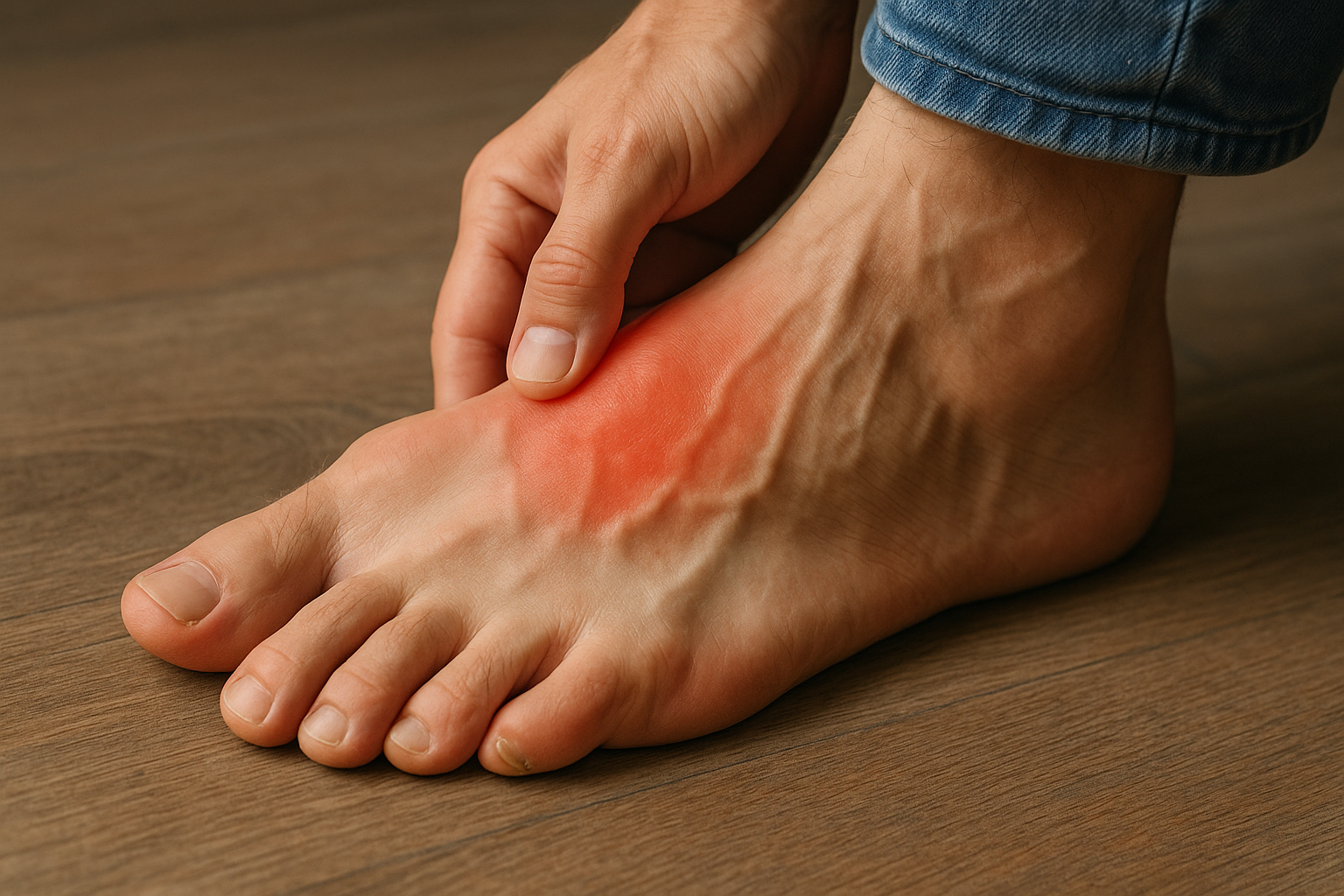
Inflammation in the foot arises as a result of a natural reaction in the body's tissues, where there is an increased flow of blood and immune cells to the affected area. This can result in swelling, redness, and a feeling of warmth. The condition is often seen as a result of overuse, tendon inflammation, or plantar tendon problems, and the accompanying pain can vary in both intensity and extent from person to person. Many experience discomfort during weight-bearing, something that can be felt especially during walks or when standing for longer periods, and a feeling of stiffness that can make the start of the day extra challenging.
It is noted that inflammation in the foot does not necessarily prevent daily activities, but that it often creates an extra challenge in the form of persistent discomfort and a tendency for the feet to feel more tired. Therefore, it is important to have knowledge of which typical symptoms may occur, and to be aware of how these experiences are connected to the strain one exposes one's feet to in everyday life.
How inflammation in the foot presents itself
Inflammation in the foot often presents itself as pain during weight-bearing and a feeling of tenderness when pressure is applied. Other common signs are swelling, warm skin, and a stiff sensation, which may be most pronounced in the morning or after rest. Some experience a crackling or pulling sensation in the tissue, while others feel general fatigue in the feet after longer periods of walking or standing. The intensity can vary from mild irritation to stronger pain, and the duration can be short-lived or repeated over several weeks.
How widespread is the problem in everyday life?
Many experience periodic problems in their feet in connection with work and leisure activities. Older people and those with a high activity level report discomfort more frequently, but sedentary work with sudden changes in load can also be significant. Lifestyle choices such as frequent walking on hard surfaces or long days on one's feet are often linked with increased risk of irritation and pain, which can affect mobility and daily comfort.
What can cause inflammation in the foot?
Several factors can cause irritation in the tissues of the foot. Repeated overuse from sports, long walks, or work where one stands for a long time are common causes. Incorrect or poorly supportive footwear can alter the loading pattern and lead to increased pressure on certain areas. Previous sprains or prolonged strain in the foot and lower leg can also make the tissue more vulnerable, just as sudden changes in activity level can matter.
Different forms and where they are located
Inflammation can affect different tissue types in the foot, such as tendons, connective tissue, and soft tissue around the joints. Symptoms may be localized to the heel, forefoot, or side of the foot, depending on which structures are strained. Muscle tension in the lower leg can often be related to increased strain in the foot, and similar discomfort can also arise in other areas such as the back, neck, and shoulders, where overuse changes movement patterns.
Practical measures for relief in everyday life
There are a number of simple, everyday measures that can provide relief. Short-term rest from demanding activities, cold compresses for swelling, light compression, and keeping the foot elevated can reduce discomfort in acute phases. The use of support in shoes and relieving footwear can alter the load, while gentle massage increases blood flow and can reduce muscle tension. Heat can help with stiffness, while short breaks and frequent position changes during the day can improve well-being.
What you can pay attention to in everyday life
In everyday life, it is useful to be observant of patterns rather than individual episodes. Pain signals can vary from day to day, and several factors are often connected with how symptoms develop over time. Some notice that discomfort occurs more frequently on certain surfaces or after days with prolonged standing, while others experience that the foot feels stiffer in the morning or becomes warm during the workday. These patterns can provide insight into which situations affect comfort the most.
Shoe changes and wear patterns
The condition of the shoes and how they wear can matter. Uneven wear on the soles or pressure points often shows where the load is greatest. Changes in fit during the day, for example if shoes feel tighter at the end of the day, can also be something one notices, as this can affect how the load is distributed.
Timing and variation in symptoms
The timing of pain or discomfort can provide knowledge about which processes are involved. Some especially experience increased sensitivity in connection with the first steps in the morning, others mainly notice fatigue after longer activity. Fluctuations from day to day can be a sign that the impact is related to daily habits or loading patterns.
Other factors that may affect over time
- Changes in gait pattern or posture, which alter pressure distribution
- The foot's appearance and volume at different times of the day
- Footwear, sock material, and how they affect friction
- Sleep and mental strain, which can change the pain threshold
At Reliefr, we note that attention to these daily signals often helps with understanding what changes over time. Keeping an eye on patterns can make it easier to assess which situations repeatedly affect the well-being of the feet. In the following, we answer some of the most common questions that many ask when the discomfort arises.
Frequently asked questions
How can I test for inflammation in the foot myself?
Simple observations can be useful. Comparing warmth, swelling, and tenderness in the affected foot in relation to the other foot can provide indications. Also note whether pain changes after rest or at the start of movement, and whether the swelling is visible when comparing in a mirror or in photos over time.
Can heat be used instead of cold?
Heat and cold can be experienced differently. Cold often appears as relief with visible swelling or warmth, while heat can be experienced as more comfortable with stiffness. How it feels for the individual can vary, and some choose based on what provides the greatest temporary comfort.
How long can discomfort in the foot last?
The duration varies greatly. Some periods of discomfort may be short-lived and disappear over days, while others may return over weeks or longer. Repeated patterns in symptoms can make it clear whether something is affecting the foot continuously or only sporadically.
.