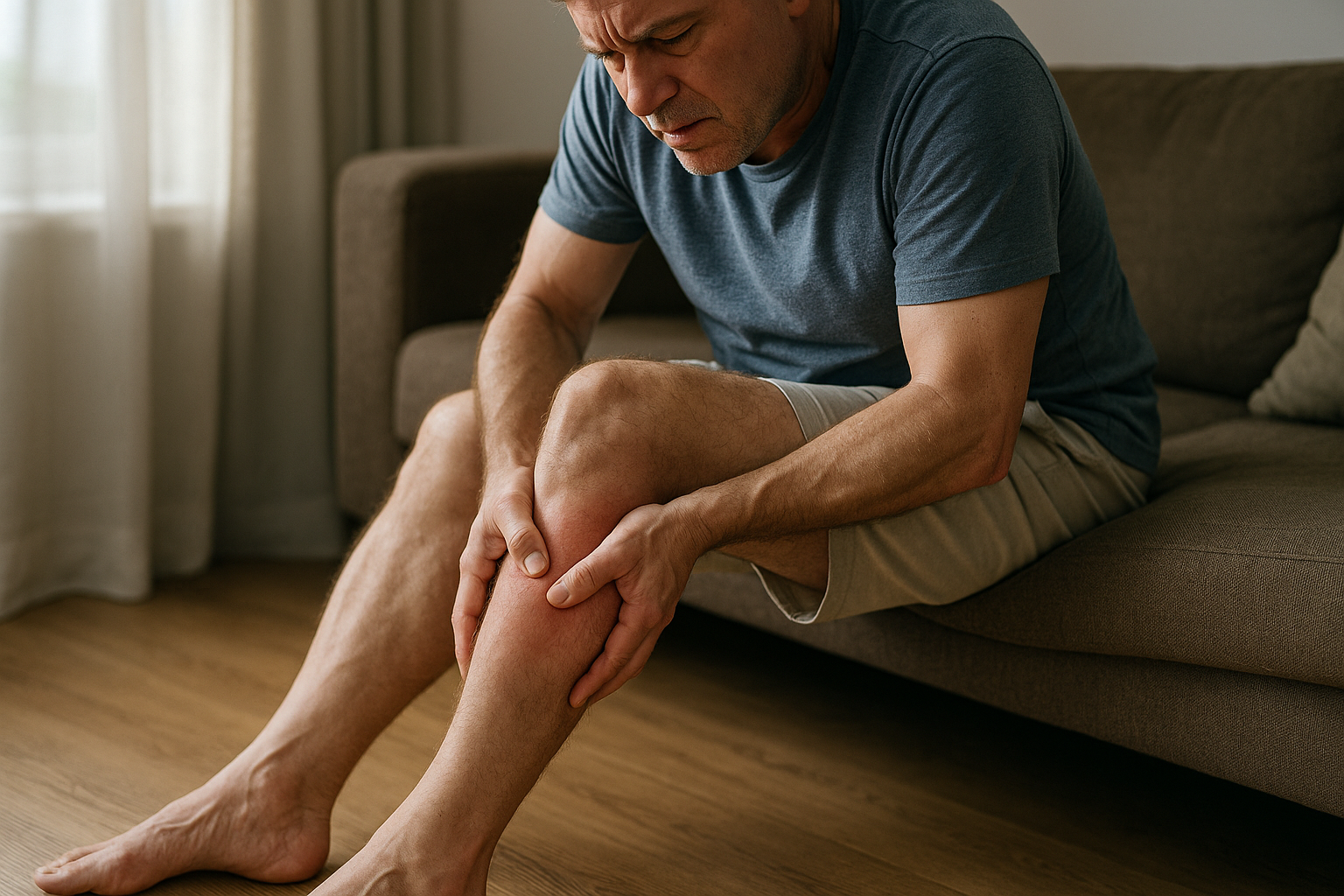
Many experience sore legs during their lives, and the discomfort can vary from a mild feeling of fatigue to more pronounced muscle tension. It is common for the legs to become sore after long periods of sedentary work, intense physical activities, or simply because of the daily strain that life offers. A slight soreness is often felt, which can develop over time, and this can create a feeling that the legs are not getting the necessary variation in movement. A persistent feeling of soreness can therefore be seen as a signal from the body that a change in everyday life is needed, either through more active movement or by giving the legs a well-deserved rest. For many, the feeling of sore legs becomes a topic they seek knowledge about, as it directly affects both comfort and general quality of life without being a medical diagnosis in itself.
It is not unusual for sore legs to arise as a result of a range of different lifestyle choices. Long periods of inactivity combined with sudden strain can lead to a condition that is experienced as both fatigue and slight muscle stiffness in the legs. This type of discomfort can be felt after a day of many hours of seated work or after intense physical activity, where the leg muscles have worked extra hard. Normally, the symptoms are perceived as a natural reaction to the strain, and daily information about how the legs are feeling can help create an understanding of why changes in one's movement pattern often become necessary.
What are sore legs?
Sore legs refer to a condition where the muscles in the legs feel tired, tense, or painful. The condition can manifest as slight soreness immediately after physical activity, or it can develop gradually as the legs are exposed to repeated strain. The feeling of soreness can often be experienced after activities where the legs have had to work extra hard, but it can also arise the next day after a long workday. In some people, a slight pressure or stiffness in the legs gives rise to curiosity about whether the daily activity level is sufficient, while others experience more marked soreness that can make it challenging to maintain a normal daily routine. By understanding what sore legs entail, it becomes easier to gain an overview of how lifestyle and daily movement are connected with the experienced feeling of discomfort in the legs.
How do sore legs present themselves?
Sore legs often present as a feeling of fatigue or heaviness in the muscles, which can be localized or more widespread. It can be experienced as soreness after activity, stiffness after a long time in the same position, or as a throbbing sensation when pressure is applied to the muscles. Some also experience reduced mobility and a feeling that the legs need to "wake up" after rest, while others notice persistent tension that affects walking and standing work.
How common are sore legs in everyday life?
Sore legs are a common general complaint among both younger and older people, and the occurrence is often linked to work and leisure patterns. Both people with sedentary jobs and those with physically demanding everyday lives can experience soreness, although the causes may be different. In everyday life, the soreness can affect comfort during standing tasks, walks, and sleep, and many notice that the symptoms vary with activity and rest.
Typical factors in everyday life that can cause sore legs
Frequent factors include repeated strain from work or sports, long periods without variation in movement, as well as poor posture during seated work. Uneven surfaces, frequent short walks with many stops and starts, and lack of variation in standing positions can also cause increased strain in the leg muscles. Stress and sleep quality can also affect muscle tension and the experience of soreness.
Variations in soreness and which areas are typically felt
The soreness may be acute after a single strain or more persistent with repeated strain. Affected areas often include legs, feet, and calves, but muscle tension can also be felt in the back, neck, and shoulders at the same time as in the legs. Some primarily experience local soreness in one muscle group, while others feel a more diffuse fatigue spread across several areas.
Muscle tension in everyday life
Muscle tension presents as tightness or a cramp-like feeling and is often associated with repeated use or prolonged static strain. Tension can be worsened by physical fatigue and psychological stress, and it can make normal movements more strenuous. For many, understanding how tension develops in everyday life is important in order to identify patterns in when and where the soreness occurs.
What you can be aware of in everyday life
When sore legs occur in everyday life, small patterns can provide useful information without pointing to concrete solutions. For many, the symptoms appear as variation in intensity throughout the day, and they can be experienced as both heaviness and localized tension. It may be appropriate to note when the discomfort occurs and which daily habits are often connected with changes in the sensation.
Typical factors that may have an effect over time
Some factors in everyday life tend to play a role over a longer time, and they can affect how the soreness develops. Wearing shoes with worn soles or low cushioning can appear as increased strain in the feet and calves. The hardness of the surface and repeated short strains at work can also have an effect, just as variation in standing and sitting periods often matters for the feeling in the legs. Temperature and choice of clothing can make muscles more or less sensitive and thereby affect the experience of soreness.
- Use of tight-fitting socks or shoes can in some cases change pressure distribution and be experienced as discomfort
- Daily rhythms where mobility varies greatly can appear as fluctuating symptoms
- Prolonged strain on uneven surfaces can over time lead to persistent tension
- Sleep quality and psychological strain are often linked with muscle tone and experienced soreness
General considerations without advice
It can be useful simply to note patterns and times without seeking specific solutions. Many experience that certain days stand out because the soreness is more pronounced, while other days feel easier. Knowing these variations can provide perspective on which factors appear as repeated triggers over time. In this way, it becomes easier to ask the right questions about everyday habits if one chooses to investigate further.
Frequently asked questions
Can massage be relevant for sore legs?
Massage can be experienced as a way to create temporary relief and loosen muscle tension. Many describe a feeling of increased flexibility and easier blood circulation after massage, but the effect varies from person to person.
How do sleep and stress affect the experience of sore legs?
Poor sleep and elevated stress levels are often linked with increased muscle tone, which can make the legs more sensitive. Stress can appear as persistent tension, and the quality of sleep can affect how pronounced the soreness feels the next day.
How do the symptoms typically vary over a day?
Symptoms can vary from slight stiffness in the morning to increased heaviness during the day or a feeling of tired legs at the end of the day. Some also experience that variation in movement during the day affects how the soreness feels.
.