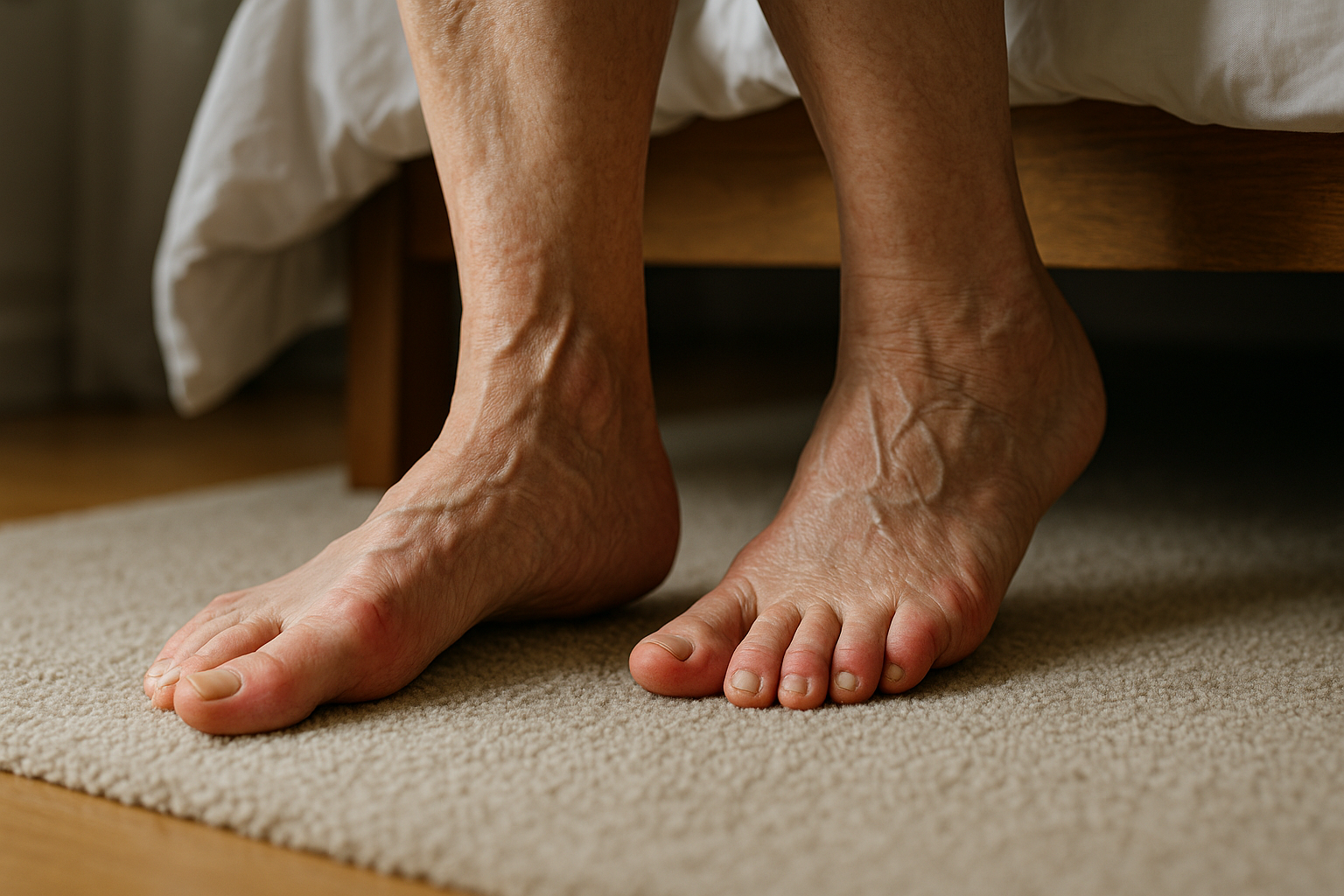
Many experience stiff and sore feet in the morning, where the first steps out of bed can feel both uncomfortable and tiring. This phenomenon is something most people have encountered at some point in their everyday lives, regardless of age or lifestyle. The feeling of stiffness and soreness can make the start of the day less pleasant and raise a number of questions about what lies behind the initial pain, as well as how best to achieve relief. It is common to wonder whether the condition is due to strain during the day, a long night of inactivity, or whether other factors play a role. Many therefore seek information that can provide a reassuring understanding of why the feet can feel so old and sore in the morning, and what characterizes the daily experience of well-being.
What are stiff and sore feet in the morning?
Stiff and sore feet in the morning are often described as a feeling that the feet are less flexible and suddenly feel heavier than normal. For some, this manifests as a slight pain or discomfort during the first steps, while others experience a more pronounced stiffness that can make it difficult to get started with the day’s activities. The description varies from person to person, but common to all is the impression that the feet need to 'warm up' to become comfortable.
The condition is typically experienced after a longer period of inactivity during the night, when the feet have had a break from the daily strain. This temporary stiffness can be related to how the body reacts when it goes from rest to movement, and how the feet adapt to the sudden activity. Many notice that the discomfort subsides during the first hours, as the feet are set in motion and the body gets the opportunity to 'wake up'.
The experience of stiffness and soreness can thus be seen as a natural reaction to the contrast that arises between the inactivity of sleep and the movement of the day. It is a condition that many think about when they discover that there is something special about that feeling of ‘morning sensation’ in the feet, and which arouses a curiosity about which daily circumstances may influence overall comfort and well-being.
Why do the feet feel stiff in the morning?
When the feet have been at rest for several hours, tissue in the arch and heel can become shorter and less flexible, making the first steps noticeable. Reduced blood flow during sleep can play a role, because less circulation means that warmth and nourishment reach the tissue more slowly. At the same time, tension in the calf muscles and ankles can make it harder for the joints of the foot to move freely when starting up in the morning.
How do stiffness and soreness show themselves?
The symptoms vary, but typical signs are a sharp or throbbing sensation on first loading, followed by gradually decreasing discomfort as movement increases. Some experience most pain in the heel area, while others notice a general soreness in the arch or forefoot. The feeling can be worse after days with a lot of standing work or long walks.
Everyday factors that can affect the intensity?
Several everyday circumstances can affect how stiff and sore the feet feel in the morning. Choosing shoes with poor support or very flat soles can increase the strain on the arch and heel. A high activity level on certain days can lead to increased fatigue in the structures of the foot, while periods of sedentary work can make muscles and tendons tighter. Body weight also matters, as greater load increases the pressure on the tissues of the foot when movement is resumed.
Typical areas where pain and tension are felt
It is common for discomfort not to be limited only to the feet. Frequently mentioned areas include:
- feet, especially heel and arch
- ankles, which may feel stiff or less mobile
- thighs and lower legs, where muscles may be tense
- back and neck, where compensation in the gait pattern can cause increased strain
How widespread is the problem in everyday life?
Many experience morning stiffness from time to time, both young and old. The frequency may be higher among those who stand or walk a lot at work, during changes in activity level, or after periods of increased weight. For most, the symptoms subside during the day, but variation in intensity and frequency is common depending on daily habits and movement patterns.
Everyday conditions that deserve attention
When the morning brings stiff and sore feet, small elements in the day’s rhythm and surroundings can matter over time. It is not only about isolated events but about patterns in everyday life that can affect how the feet feel from the moment one gets up. Some conditions appear as recurring triggers, while others may be more hidden and only become clear through observation over several days or weeks.
Certain factors can change the way feet are experienced without necessarily being directly related to a specific injury. For example, variation in surfaces at home and in the workplace can make the strain feel different from day to day. Likewise, daily patterns of movement and breaks can affect how tissues and joints react, and this can be seen as a difference in the morning feeling over time. Sleep habits and the way the ankles and feet rest throughout the night can also influence how they behave upon waking.
- Patterns in daily routines and how often these are changed
- Differences in surfaces during the day, for example hard floors versus soft surfaces
- Temperature and humidity in the bedroom, which can affect tissue sensation
- The frequency of standing periods without variation in movement
Long-term habits can affect overall comfort in the feet, and it is often in the repetition that changes become noticeable. Over time, small daily differences are often connected with a changed experience of stiffness or soreness. Paying attention to patterns rather than individual episodes gives a broader perspective on why mornings can feel different from day to day.
Frequently asked questions
How long can morning stiffness typically last?
Morning stiffness can be experienced differently, from a few minutes to several hours, depending on individual circumstances. For many, the discomfort gradually subsides during the morning, but the duration can vary from day to day.
Can the temperature in the bedroom affect how feet feel in the morning?
Yes, temperature can affect how tissues and nerves feel upon waking. Cooler surroundings can make muscles and joints less flexible, while warmer surroundings can lead to a different sense of comfort.
When are changes in the pattern worth paying special attention to?
Persistent changes in where, when, or how the discomfort appears can signal that patterns in everyday life have changed. Significant differences in duration or location over weeks may be signs that something in everyday life has changed and deserves attention.