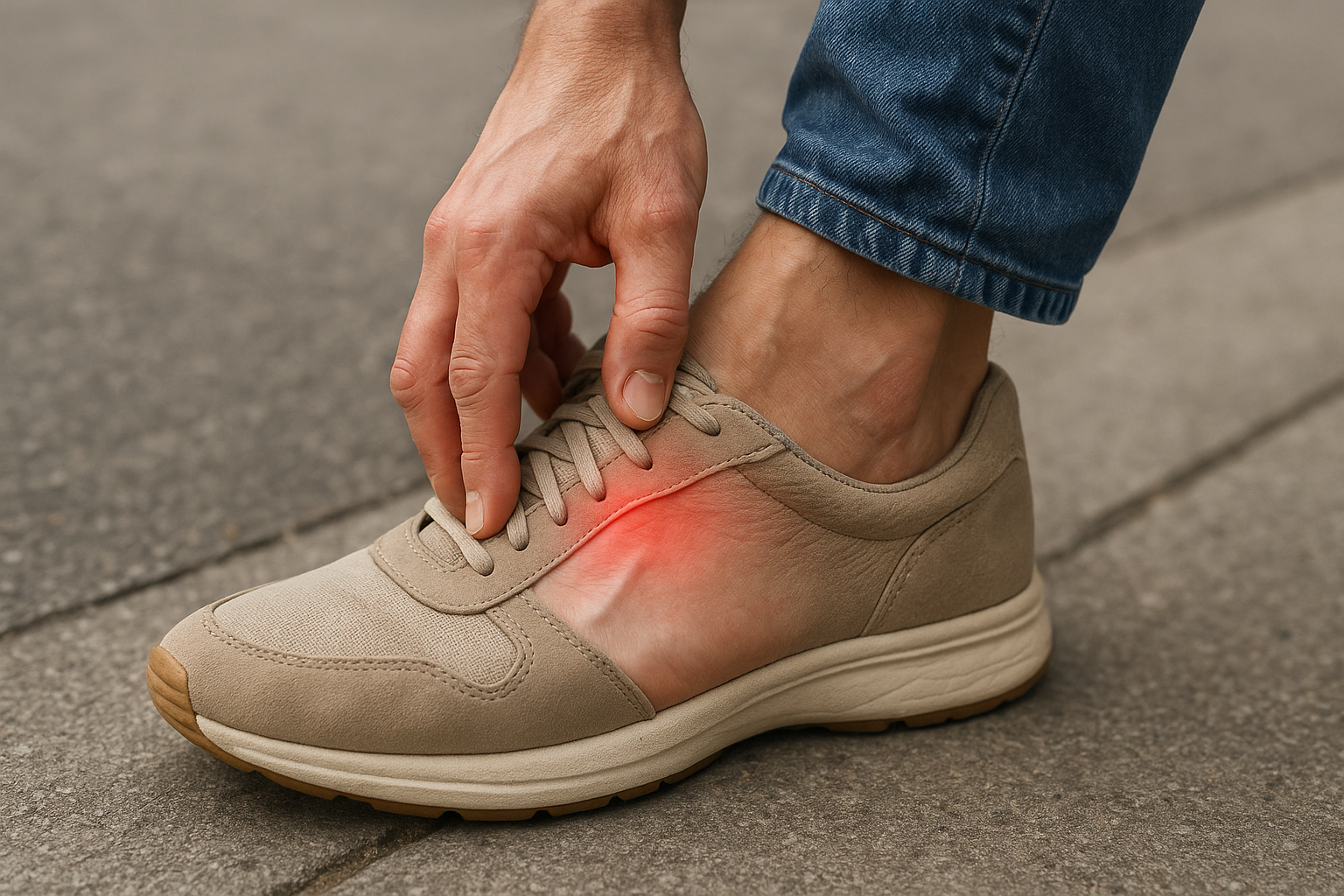
Many experience pain on top of the foot when they walk, and this can make everyday life less comfortable. A sharp or irritating sensation is often felt, signaling that something is not quite right when the foot is loaded during walking. It is common for the feeling to vary – some days one experiences a slight soreness, while at other times the pain can be more pronounced. This form of discomfort is typically related to the strains that daily walking entails, and it is interesting that many seek information about why pain on top of the foot arises precisely during these activities.
The experience of pain on the top of the foot is not unusual and can be felt both by those who are active and by people with a busy everyday life. The pain is often connected with the way we use the foot – when it is repeatedly exposed to movement and pressure, small irritations can arise in tissue and tendons. This can lead to a feeling of tightness or discomfort that flares up with activity. Many also experience that the pain becomes more noticeable when walking quickly or on uneven surfaces, and it can affect one’s ability to perform everyday tasks comfortably.
What is pain on top of the foot when I walk?
Pain on top of the foot when I walk refers to a sensation of pain that occurs in the area on the top of the foot, especially during movement. It is not a medical diagnosis, but rather an observation of how the foot reacts to daily strain. The pain can arise as a result of some conditions that affect the foot during repeated strain or prolonged walking. Among the typical causes are:
- Overuse from repeated movements
- Use of unsuitable or tight shoes
- Increased muscle tension during physical activity
These experiences have been described by many who at times can feel that the top of the foot is particularly exposed to irritation and discomfort. It can give the impression that the pain is merely a result of daily activity, but at the same time it is precisely under these conditions that one often seeks an understanding of what may be causing the discomfort. By gaining an overview of what triggers the pain, it becomes easier to assess how best to handle it and ensure a more comfortable everyday life.
Typical causes in tendons and soft tissue
Pain on top of the foot is often associated with irritation in tendons and soft tissue at the front of the foot. Often it is the extensor muscles and their tendons that are strained during repeated use or with suddenly increased activity. Tight shoes and lacing that press against the top of the foot can worsen this strain and make tendons more sensitive to ordinary walking.
How does the pain show itself?
The pain can be experienced differently, but there are some recurring features. Typical signs can show themselves as:
- immediate soreness when pressing on the top of the foot
- sharp or shooting pain during certain movements, especially when lifting the foot
- a feeling of fatigue in the foot after longer walks
Some experience that the pain becomes less when the foot gets warmth and movement, but returns with prolonged strain.
How common is it in everyday life?
Pain on the top of the foot is fairly frequent among people who walk a lot, stand for long periods, or perform repeated movements with their feet. Active people and those with busy everyday lives often describe episodes where the discomfort affects walking rhythm or pace. The problem is seen across age and gender, but the frequency increases during periods of increased activity or with changed use of footwear.
Factors that can cause pain during walking
Several everyday conditions can contribute to the experience of pain. Walking on slanted or uneven surfaces increases the strain on the tendons at the front of the foot. Rapid increases in the pace or length of walks, heavy load when carrying, and the use of shoes with little room for the toes are all conditions that can make the area more sensitive. In addition, tightness in the calves and shins is often associated with increased tension on the top of the foot.
Variations in the course and intensity of the pain
The experience of pain can vary from a slight, nagging soreness to a sharp sensation with every push-off. For some, the pain is short-lived and occurs only with certain movements; for others, there may be a persistent feeling of fatigue that can affect walking comfort. There may also be differences in how the pain spreads to surrounding areas such as the foot, leg, and sometimes back, if the gait pattern is changed to avoid discomfort.
What you can pay attention to in everyday life
In everyday life, it is often small, repeated phenomena that provide useful information about how pain on top of the foot develops. Pay attention to the timing of the discomfort. Some experience that pain appears as early fatigue in the foot after short walks, while others notice a gradual worsening during the day. The pain can also be experienced as sharp during certain movements or more as a persistent soreness after longer periods of standing work.
- Time pattern: when the symptoms occur and whether they change over the week
- Relation to strain: whether the discomfort follows certain activities or repeated movements
- Sensation quality: whether the pain appears as stabbing, burning, or throbbing
Habits and conditions that can play a role
Habit changes and daily routines are often connected with how pain develops over time. A change in gait pattern, longer periods on the feet, or carrying heavier bags than normal can affect the sensation in the foot. Temperature and weather can also affect the feeling; cold conditions can make muscles stiffer, while moisture and heat can change the comfort in shoes and socks.
How changes in movement patterns can show themselves
When pain arises, it is often seen that the gait pattern is adapted to avoid discomfort. This adjustment can be experienced as a changed stride length, more frequent breaks, or a shift in strain to other parts of the foot. Over time, such changes can show themselves as fatigue in the lower leg or discomfort in the hip and knee, because posture changes to compensate.
Frequently asked questions
Can massage help with pain on top of the foot?
Massage can be experienced as relieving muscle tension and can provide a feeling of increased blood flow in the area. Many describe that soothing massage appears as temporary relief, especially after longer walks.
Why can pain return after short-term activity?
Pain that returns is often associated with repeated strain or with the tissue still being sensitive after previous activity. The pain can be experienced as a repeated reaction to the same type of movement or surface.
When should I pay extra attention to changes?
Pay attention if the pain changes character, moves to new areas, or if significant swelling or reduced mobility occurs. Such changes may be signs that something in the gait pattern or strain has changed significantly.
.