Learn more about your pain

Sore heels: Experience, everyday life and general considerations
Sore heels are often mentioned in connection with daily strain, repeated movements, and longer periods of standing or walking activity. Many experience that their heels feel sore, tired, or sensitive at the end of the day, especially after work, exercise, or many hours on hard surfaces. The discomfort can vary from a slight soreness to more persistent sensations that affect walking and comfort in everyday life. When the heels begin to draw attention to themselves, there is often a desire to understand why the discomfort occurs and how it is typically experienced over time. For many, focus is directed toward the heels when ordinary rest no longer feels sufficient to restore comfort.What is meant by sore heels?Sore heels refer to a condition where the area at the back of or under the heel feels strained, sore, or tense. The sensation may be localized directly under the heel bone or more diffuse around the edges of the heel. The experience varies from person to person and can change depending on activity, footwear, and time of day.Some describe a stabbing or pressing sensation with the first steps after rest, while others mainly feel the discomfort after prolonged strain. The soreness can be temporary or recurring and is often perceived as part of the body's reaction to daily use.How are sore heels experienced in everyday life?In everyday life, sore heels can present themselves in several ways. For some, the discomfort is felt most clearly in the morning, when the foot is loaded after rest. For others, the soreness arises gradually during the day and becomes more pronounced after many hours of activity.The experience can affect walking pace, posture, and the desire to move. In some cases, the discomfort can lead one to unconsciously change the way one steps, which can affect strain elsewhere in the body.How widespread is the experience of sore heels?The experience of sore heels is relatively common and is often mentioned by people with standing work, physically demanding tasks, or active leisure habits. People who spend a lot of time in the same footwear may also experience a connection between daily strain and discomfort in the heels.Although the degree of soreness varies, common to many is that the heels play a central role in overall comfort in everyday life.What can matter for discomfort in the heels?Several conditions in everyday life can influence how the heels are experienced. Repeated strain on hard surfaces, limited variation in movement, and changes in activity level can all matter. The design and wear of footwear can also affect how pressure is distributed under the foot.In addition, small differences in walking pattern and weight distribution over time can change how the strain accumulates in the heel area.How are the heels connected to the rest of the body?The heels function as a central point of contact between the body and the surface. When the strain in the heels changes, it can affect movement patterns higher up in the body. Some experience that tension in the heels may be connected with fatigue in the ankles, calves, or lower back, especially if walking or balance is affected.This connection means that discomfort in the heels is often experienced as more than just a local problem.Everyday patterns that can play a roleDaily routines and habits can over time affect the experience of sore heels. Long periods without breaks, one-sided movements, and switching between different types of surfaces can all contribute to the strain building up.Examples of conditions often mentioned are: Standing or walking on hard surfaces Limited variation in working positions Repeated use of the same footwear Changing activity level from day to day Attention to signals over timeOver time, the body can send different signals that change depending on strain and recovery. Some notice that the soreness varies from week to week, while others experience more fixed patterns in relation to certain activities.Paying attention to these variations can provide a better picture of how the heels react in different situations, without necessarily pointing to specific solutions.Sore heels as part of everyday lifeFor many, sore heels become a recurring part of everyday life, which is handled differently depending on needs and routines. Some adjust activity, others become more aware of breaks and strain. The experience of sore heels often forms part of a larger context in which comfort, movement, and recovery interact.Overall considerations without instructions Observation of when the discomfort is most noticeable Connection between activity and experienced soreness Variation in comfort depending on daily routines These considerations are intended as general reflections without specific recommendations.Frequently asked questionsWhen are sore heels typically felt the most?Many experience sore heels either at the start of the day after rest or later in the day after prolonged strain. The experience can vary from person to person.Can sore heels change the walking pattern?For some, discomfort in the heels can lead to small changes in the way the foot is placed on the surface, which can affect overall movement.Is the experience the same for everyone?The experience of sore heels is individual. Some only feel slight discomfort, while others experience more persistent soreness depending on everyday life and strain..
Learn more
Heel spur: What is it, and why does it occur?
Many experience periodic pain in the heel, especially when they are getting started after longer periods of rest. It is common to feel a stabbing sensation during the first steps in the morning or after a break, when the foot has been still. This sensation can be perceived as disruptive in a busy everyday life, where long periods of standing or walking can intensify the discomfort. The experience can create uncertainty about how everyday activities should be handled to reduce the pain. At the same time, many ask questions about what actually triggers this pain and whether it is a temporary phenomenon or whether there is an underlying process affecting the feet. Interest in the topic is great, as pain in the heel often gives rise to speculation about how strain in the foot is connected with lifestyle habits and daily movement.In fact, this pain may be associated with heel spur, a condition that many experience but that is not always easy to get a clear explanation of. It is typically during physical activities where the foot bears a large part of the body's weight that a stabbing pain becomes noticeable. The severity of the condition can vary from a mild irritation to a more pronounced pain experience, where it may feel like a persistent problem. The question of what triggers this calcification in the heel is therefore central for those seeking a better understanding of how daily strain affects the foot.What is heel spur?Heel spur refers to a calcium deposit that forms as a result of repeated strain in the area around the heel bone. The condition typically occurs when the area around the plantar fascia is exposed to small, persistent strains. This form of calcification in the foot is often experienced as a stabbing pain, especially at the start of the day and during the first steps after rest. Several describe the experience as a sharp sensation that can be bothersome in everyday life. It is also common for the stabbing pain to become more pronounced during activities where the foot has to bear a lot of weight or withstand repeated strain. Therefore, it is natural for people to seek information about heel spur in order to gain a better understanding of how such a condition can arise and affect daily activities. Many are curious to know how strain in the foot is connected to the pain and which factors may play a role in the development of this calcification.How heel spur shows itself in everyday lifeHeel spur typically shows itself as a sharp or stabbing pain under the feet during the first steps after rest. Many experience that the pain is most intrusive in the morning or after prolonged sitting, and that it becomes more pronounced when walking on hard surfaces. In everyday life, it may feel like a sudden twinge in the foot during push-off or like a persistent soreness that makes ordinary activities more strenuous.Symptom variations and how severe they can beThe intensity can vary greatly from person to person; some only notice periodic discomfort, while others experience more constant pain that affects movement patterns. The pain may also feel like a radiating sensation in the sole of the foot, or like pressing soreness under the heel. Activity and relief are very important for how symptoms show themselves at any given time.How pain can affect muscle tensionChanges in gait pattern due to heel spur are often linked to increased tension in other parts of the body. When movements are adapted to avoid pain, the calf, knee, and hip may be strained differently, which can lead to increased muscle tension in the legs and hips. Furthermore, this compensation can spread to the back, neck, and shoulders, making daily movement feel more tiring.Examples of affected body areasFeet, legs, and back are often mentioned in descriptions of the connection between heel-related pain and muscle tension. Many experience tension in the calf muscles, increased fatigue in the thighs, and discomfort in the lower back during longer walks or standing work.How widespread is it in everyday life?Heel-related pain is a frequent cause of reduced well-being in everyday life, especially in people who stand or walk a lot. It is often seen in people with demanding workdays or in those who suddenly increase their activity level. The frequency means that many seek knowledge about pain relief and ways to relieve the foot in order to preserve daily well-being.Everyday factors that can affect symptoms? Prolonged standing on hard floors can make pain more pronounced. Increased body weight can increase the load on the heel and thereby affect the experience of pain. Sudden increases in activity level can lead to worsening of symptoms. Footwear without sufficient support can make relief more difficult in everyday life. What you can pay attention to in everyday lifeIn daily life, small variations in the pattern around pain can provide useful insight. The time at which the discomfort arises can vary and may be experienced differently from person to person; some notice changes during the day, others during longer periods of activity. For many, changes in intensity are often linked to repetitive movements and the way shoes and soles wear over time.Another aspect to pay attention to is where the pain is felt precisely in relation to the inside of the shoe. Wear patterns in the sole or changes in fit can be associated with a shift in the load on the foot, which can affect the experience over time. Likewise, it may be relevant to note whether the pain feels more localized at the edge of the heel, in the middle under the sole, or as radiation further forward in the foot.There may also be variation in the sensory experience. Some describe a sharp, stabbing sensation while others experience a more diffuse soreness or changes in skin sensation. Such differences can provide a picture of how the condition affects daily function and well-being without pointing to a single cause. Shifts in the timing of pain during the week Changes in where the shoe feels tighter or looser New or unexpected sensations in the skin under the foot Differences in how quickly stiffness or discomfort increases during longer activities Variation in fatigue or tension in the legs and back after ordinary days Paying attention to these patterns can provide a more nuanced picture of how heel pain is part of everyday life, and how different conditions may affect the experience over time. The next section answers common questions that often arise in connection with uncertainty about symptoms and changes.Frequently asked questionsCan children get heel spur?Children and adolescents can experience heel pain, but the causes and patterns may be different than in adults. Pain in younger people often shows itself as activity-related pain and may be experienced in different parts of the heel.Can sensation change in connection with heel pain?Some describe changes in sensation such as tingling or reduced sensitivity in the area. Such sensations can feel different from the typical stabbing pain and may vary from person to person.Can weather or temperature affect how the pain is experienced?Several people experience that cold or damp days affect stiffness or discomfort. Temperature and weather can for some affect the subjective experience of pain over time.How can symptom patterns change over weeks or months?Symptom patterns can fluctuate in both intensity and frequency over a longer period of time. Changes in daily habits, footwear, or strain can be associated with gradual shifts in how pain is experienced..
Learn more
How does heel spur feel: Typical symptoms and what you can be aware of
Many experience periods of pain in the heel, which can create both confusion and unease in everyday life. It is common to feel a sharp, stabbing pain, especially in the morning or after a longer break, when the foot has had time to rest. The question of how heel spurs feel often comes up among those experiencing this pain, and it can give rise to a range of reflections on how the discomfort affects daily activities. The experience can range from a mildly irritating soreness to a more persistent and intense sensation that makes it challenging to get through a normal day without interruptions. This condition is well known for its ability to leave traces of discomfort, especially when you start moving the foot again after inactivity.The pain often described in connection with heel spurs appears when the pressure on the heel changes – for example in the transition from rest to movement. Many find that the pain decreases as the foot warms up during the day, but that it returns with prolonged strain such as walking or standing. It is this cycle of pain and a short period of relief that leads many to seek knowledge about how heel spurs feel and what signals from the body to pay attention to. Concern about knowing the cause of the pain and understanding how it affects everyday life is a natural reaction, and it is therefore important to have a correct and calm approach to the subject.What are heel spurs?Heel spurs refer to a condition in which painful sensations in the heel are experienced as a result of altered load patterns in the foot. The condition often manifests as localized pain, which can be felt as a stabbing or pressing sensation on the underside of the heel. The pain can vary in intensity and is often felt most strongly in the morning, when it first becomes active after a period of inactivity.Some of the typical descriptions of how heel spurs feel include: Sharp pain in the lower part of the heel, especially after rest A persistent soreness under the feet that can be marked with strain A pressing sensation that makes even short walks challenging The experience of heel spurs is often affected by daily activities that cause variations in the foot's load, and it is therefore not uncommon for the pain to vary in step with daily activity. Many who have felt the characteristic symptoms seek information to gain a better understanding of what is going on in the foot and how the sensation of heel spurs can be identified and described. This curiosity and desire for insight form the basis for further exploration of the topic, so that individual experiences can be placed in a broader context and gain the necessary understanding that can help create calm and clarity in an everyday life with pain.Typical symptoms of heel spursThe pain often appears as a sharp or stabbing sensation under the heel, but can also be experienced as persistent soreness. Some describe it as a pinpoint discomfort at the transition between the heel pad and arch, others as a more diffuse pressure on the underside of the heel. Many notice a difference in intensity depending on activity and rest. Sharp pain with the first steps after rest Soreness during prolonged strain Pain experienced during walking, running, or climbing stairs When is the pain most noticeable?The pain can be most noticeable after a period of rest, for example in the morning or after sitting breaks, when the foot has just been loaded again. During the day, the pain may decrease as the foot warms up, but it can return with repeated or prolonged strain such as long walks or many hours of standing at work.How can it affect your gait and other areas of the body?When the heel hurts, the way you walk often changes to avoid discomfort. This is often associated with extra pressure on the legs, knees, and back, because the load is shifted elsewhere. Such changes can be felt as increased fatigue in the legs or tension in the lower back after long walks or standing work.How widespread are heel spurs in everyday life?The condition is common among adults and is seen both in people with high activity levels and in those who spend many hours standing during the day. It is often associated with certain lifestyle factors and types of strain and appears in different age groups, especially among middle-aged people and active exercisers.Factors that can affect the symptomsSeveral factors can affect how strongly the pain is felt. Being overweight and wearing shoes without sufficient support can make the pain worse, as can repeated strain from running or prolonged standing work. The structure of the foot and the way you move can also affect how the symptoms appear.Variations in the sensationThere is great variation from person to person. Some have only sporadic soreness, while others experience stronger, more persistent discomfort. In some cases, the symptoms may vary from day to day depending on activity, footwear, and rest. If the condition persists over a longer period of time, it can lead to lasting discomfort and changes in movement patterns.What to pay attention to in everyday lifeWhen heel pain appears, it can be helpful to notice patterns in everyday life without interpreting them as a call for specific measures. The experience of pain can vary from day to day and often appear as changes in when the discomfort is most noticeable. Some find that the feeling shifts in step with daily routines, while others notice that the intensity changes over longer periods.Habits around strain and breaks are often linked to how the pain is experienced over time. Paying attention to which surfaces are often used, as well as how the wear on the shoe is distributed, can give an impression of the patterns affecting the foot. Also note whether the experience of pain occurs in connection with carrying bags or other extra weight in everyday life, as such factors may play a role in how the sensation develops.Pain relief through massage and gentle stimulation often appears as a change in the perception of discomfort. Massage can feel different from person to person; for some it is experienced as immediate relief or warmth, for others as increased soreness before a change in comfort level. Relief in daily situations may be something you notice in the form of short-term changes in how the foot is loaded, without it necessarily changing the underlying pattern. Patterns in pain over days and weeks Differences in sensation depending on the surface Wear patterns in shoes and what they may indicate How touch and massage can affect the experience The relationship between fatigue and increased sensitivity Paying attention to these factors can provide a more nuanced picture of how heel pain affects everyday life. Once you have gathered an impression of patterns and variations, it may become clearer which questions are relevant to ask next. Below are frequently asked questions that many seek answers to at this stage.Frequently asked questionsHow does the difference between a pressing pain and a sharp pain feel?A pressing pain can be experienced as persistent soreness or heaviness under the heel, while a sharp pain appears as a brief, stabbing discomfort during certain movements. Both can vary in intensity and duration.Can touching the heel feel different from pain during strain?Yes. Touch can produce local sensitivity or soreness that does not always directly match the pain felt when walking or standing. The difference in sensation can provide information about how the area reacts to direct pressure versus weight-bearing strain.How long can the sensation change from day to day?The sensation can vary both from day to day and over longer periods. Some notice rapid fluctuations within single days, while others see slower changes over weeks or months. The variation often depends on daily patterns and personal habits..
Learn more
Pain in feet: Common causes and options for relief
Many people at some point experience pain in their feet after long days of standing work or intense physical activity. The discomfort can make even ordinary everyday movements a challenge and affect how one feels in daily life. The feeling of sore feet is a common experience that for many has become persistent, and which naturally raises the desire to understand what lies behind the pain. It is typically an irritation that can be felt as a stabbing, throbbing, or sore sensation, depending on the situation and the activity. When the feet experience repeated strain, one may feel the need to seek knowledge about the various causes and possible approaches to relief.What is sore feet?Sore feet covers a range of types of discomfort and pain that can be felt in different ways. Many describe it as a general soreness or a wearing discomfort that worsens during longer periods of strain. The pain can arise in connection with activities such as walking, standing, or even after rest, when the discomfort comes alive with the first movements.Typical experiences of foot pain often include: Pain in the heel area Soreness in the midfoot Stiffness in the arch In everyday life, foot pain is often experienced in combination with other strains. Many causes are related to the foot being exposed to repeated pressure and improper footwear, which can lead to discomfort over time. The feeling of sore feet can also vary in intensity and be distributed across different parts of the foot, which makes it important to gain a basic understanding of what exactly is meant by the term.For those who regularly feel a restless pain in their feet, it can be helpful to observe how the pain arises and develops during the day. It can often be seen that occupations with prolonged standing work or intensive walking trigger an increase in the discomfort. Having an overview of the broad features of foot pain can help put the problem into words and create peace of mind in relation to how best to handle the daily challenges that arise when the feet do not fully cooperate with the rest of the body.How does foot pain typically present itself?Foot pain often presents as pain under strain, but can also be present after rest or as stiffness in the morning. Many experience a sharp or throbbing sensation, tenderness to touch, and local swelling. Muscle tension in the calves and under the arch of the foot may occur together with the pain itself and make movement more tiring.How widespread is sore feet in everyday life?Foot pain is common among people with standing work, people who walk a lot daily, and elderly citizens. The problem can be felt across many age groups and affects mobility and daily routines. When the walking pattern changes because of pain, it can often be related to increased strain in the knees, hips, and back, which can lead to increased muscle tension in other parts of the body.Which factors can affect foot pain?Footwear and fitIncorrect fit and lack of support in footwear can make pressure in the feet uneven and lead to increased pain during standing or walking activities. Using shoes without sufficient support can affect how the weight is distributed through the foot and increase muscle tension in the calf and foot.Physical activity and strainFrequent or intensive strain on the feet, for example long walks or repeated strain at work, can make the pain more pronounced. Rapid changes in activity level can also lead to increased soreness and tightness in the muscles around the foot and ankle.Body weight and movement patternsBody weight affects the overall pressure on the foot’s structures. Over time, a high level of strain can lead to increased fatigue in the foot’s muscles and a greater need for relief in everyday life. The way one walks can amplify tension up through the leg and on to the knee and hip.Differences in the pain experiencePain in the feet can present differently: some experience short-term, sharp pain with certain movements, others notice a persistent, diffuse soreness. The location varies from heel to midfoot and forward to the forefoot, and the intensity can change during the day. Muscle tension and stiffness can make daily activities less comfortable and increase the need for breaks and relief..
Learn more
Electric foot massage: How can it relieve tired feet in everyday life?
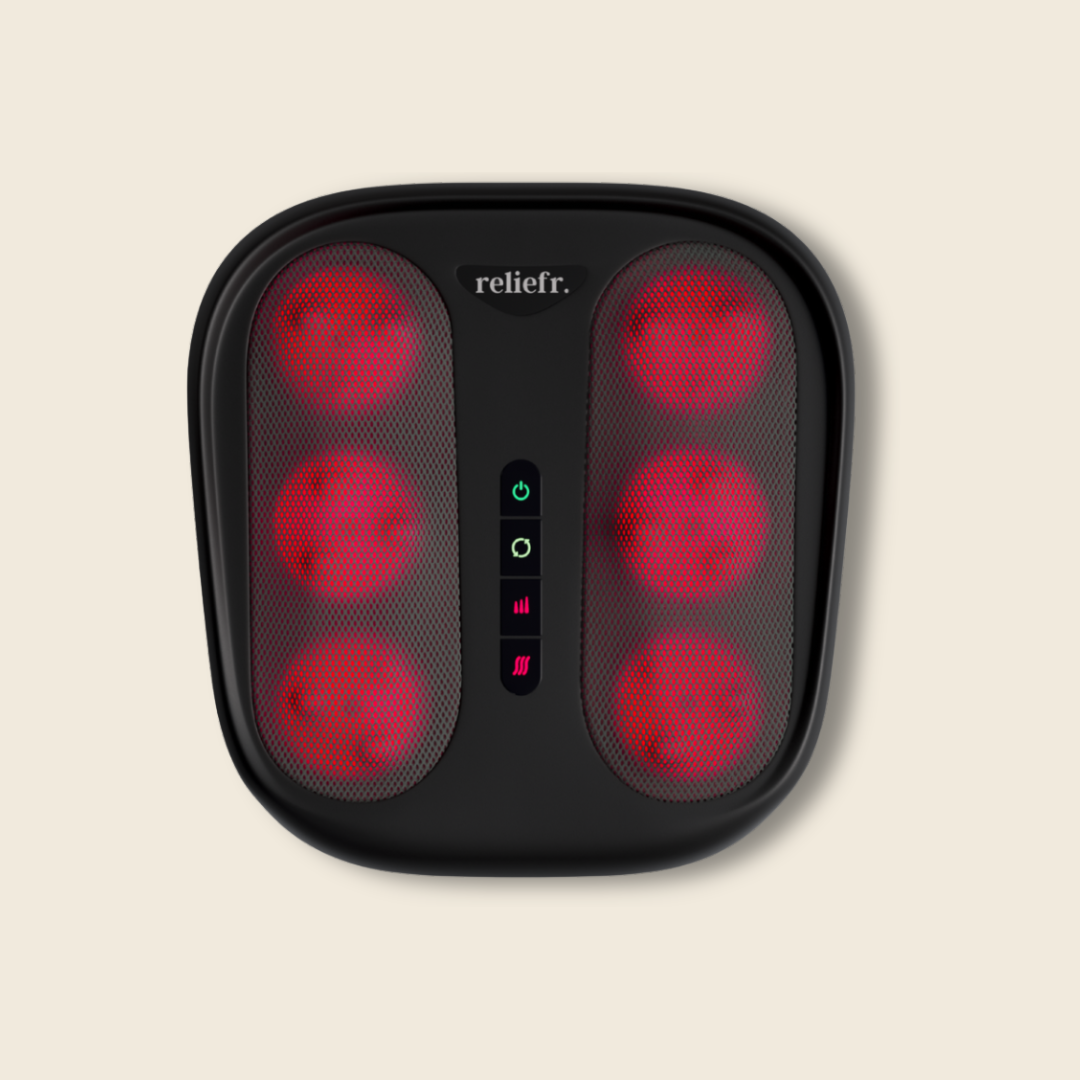
Many experience tired feet after a long day, where both workdays and daily physical activity can lead to soreness and tension. It is common to seek a form of relaxation that can provide a feeling of fresh energy and well-being in everyday life. An electric foot massage appears as a modern solution that offers an easy and effective way to relieve discomfort in the feet. The light combination of heat and pressure can contribute to a pleasant sensation, which many find appealing, after a busy day.It is not unusual for people to integrate small wellness breaks into their daily routine, especially when one feels that the day has offered many stressful moments. An electric foot massage can provide calm and rejuvenation, as it specifically works on the areas where fatigue and tension are often felt. In this way, a natural interest arises in products that combine functions such as heat, pressure, and massage techniques that imitate the manual treatment one might otherwise receive from a masseur.By taking a closer look at how these devices work, it can be observed that the technology behind electric foot massage is developed to offer a simple method for daily relief. It focuses on stimulating blood circulation and loosening muscle tension, which provides an effective and pleasant treatment at home. Many who need a quick break and a way to make everyday life more comfortable thus find an easy approach to relaxation through this type of massage.What is electric foot massage?Electric foot massage refers to devices that use combined functions of heat, pressure, and massage, often inspired by the shiatsu technique. These devices are developed to imitate the soothing and rejuvenating effects that can be achieved by a manual massage. The focus is on stimulating blood circulation and reducing tension in the feet, which often leads to a feeling of relief and relaxation. Heat function: Provides a pleasant and soothing warmth that can relieve the feeling of cool stiffness. Shiatsu massage: Imitates the pressing movement that can loosen tension and increase comfort. Compression: Used to reduce the feeling of fatigue and improve blood circulation in the feet. With these built-in functions, electric foot massage offers a simple and accessible method for handling daily foot fatigue. By combining several techniques, a treatment is created that can be adapted to the needs of the individual situation and thereby help make everyday life a little more comfortable.How do tired feet show themselves?Tired feet often show themselves as soreness after longer periods of standing work or prolonged walking. Symptoms can be a tightening sensation under the feet, slight swelling, or a general fatigue in the muscles. It can also be felt as tension that spreads to the calves, knees, and sometimes all the way up to the back and shoulders. Many describe a feeling of heaviness at the end of the day that can make ordinary activities less comfortable. Soreness under the sole of the foot and in the forefoot Tightness or fatigue in the calves Feeling of stiffness that can reach up to the back and neck How widespread is the issue in everyday life?Foot fatigue is common among people with standing jobs, commuters, and those who are physically active in their leisure time. In everyday life, repeated strain from long workdays or many hours of walking can make the need for relief arise frequently. For many, short breaks focusing on the feet become a necessary part of the evening routine to regain energy and reduce tension.What can cause the need for regular relief?Several daily conditions can cause increased strain on the feet and thereby a need for regular relief. Prolonged standing work, frequent walking or running, as well as choosing footwear with poor support can increase the feeling of fatigue. In addition, imbalances in strain, hard floors, and repeated stress from daily tasks are often associated with increased tension in muscles and connective tissue.How can electric foot massage vary?Electric devices for foot massage differ in functionality and design, which affects the experienced effect. Some offer deeper kneading, others focus more on compression or heat. Intensity levels, program selection, and time settings are common variations, just as open versus enclosed design can change how the massage feels for the foot and calf. The presence of a heat function can provide a softer sensation, while compressions can feel like a more embracing relief.Which areas of the body often feel the effect?In addition to the feet, the massage can be felt in the calves, ankles, and in some cases further up the legs. Some also experience a reduction of tension in the back, neck, and shoulders through improved well-being and relaxation after a session. The effect on these areas appears as a general relief and a decreasing feeling of muscle tension after use.Small habits that affect the condition of the feetIn daily life, it is often subtle habits that change how the feet feel over time. Several repeated strains during the day can appear as increased fatigue or stiffness toward the end of the day. Attention to patterns in activity and recovery gives a picture of when the need for electric foot massage arises more frequently.Conditions in everyday life that can make a difference Frequency of standing or walking tasks Hardness of the surface and duration of strain Changing between types of strain during the day Usual patterns for short breaks and recovery These conditions are often connected with how the feet feel after a long workday. Even small changes in daily routines can over time affect the need for relief and unloading.The impact of habits over timeWhen habits are repeated day after day, the consequences can develop gradually. Long-term patterns can make symptoms appear more often or with greater intensity. At the same time, periods with less strain can appear as temporary relief, while repeated strain can lead to persistent sensations of fatigue. Following changes in patterns provides an insight into which conditions are more often linked to the need for foot massage.Considerations when using devices regularlyUsing electric foot massage in everyday life can be part of a wellness routine. When devices are included as a fixed part of everyday life, it is useful to be aware of connections between usage time, other daily habits, and how the feet react over time. Some experience that changes in activity level or work rhythm quickly affect how often the need appears.Frequently asked questionsWhat effect does electric foot massage have on blood circulation?Electric foot massage can be experienced as a stimulation of local circulation, which often feels like warmth and a slightly improved flow in the feet and lower legs. The effect varies depending on the device's functions and individual conditions.Are there any side effects from daily use of electric foot massage?Some users may feel temporary soreness or fatigue after use, especially at higher intensity or during longer sessions. Such reactions show themselves differently from person to person and can change over time.How do you choose the best electric foot massage device for your needs?The choice often depends on personal preferences for the feel of the massage, the extent of the coverage area, and how often the device is expected to be used. Considering your own habits and which situations most often trigger the need can give an impression of which functions may be relevant..
Learn more
Inflammation in the heel: What can it be related to, and how is it experienced in everyday life?
Many experience pain in the heel as part of everyday life, where the discomfort can appear both at the start of movement and after longer periods of strain. Inflammation in the heel is often associated with a sore, stabbing, or pressing sensation, which can make walking and standing activities more challenging. For some, the discomfort is felt most clearly in the morning after rest, while others experience that the pain increases during the day after work, exercise, or many hours on their feet. When the heel becomes a focal point in everyday life, there is often a desire to understand what inflammation in the heel may be associated with and how it is typically experienced over time.Inflammation in the heel is often mentioned in connection with repeated strain and daily movements, where the heel is exposed to pressure again and again. The area functions as a central point of contact between the body and the surface, and therefore even small changes in strain or routines can make the heel more sensitive at times.What is meant by inflammation in the heel?Inflammation in the heel covers an irritation condition in the tissue around the heel area, where pain and soreness can arise as the body's reaction to repeated strain. The sensation may be localized directly under the heel or more diffusely around the heel bone. The experience varies from person to person and can change depending on activity level, footwear, and time of day.Some describe a sharp or stabbing sensation in the first steps after rest, while others primarily feel a more dull and persistent soreness that develops during the day. The discomfort may be temporary or recurring and is often experienced as part of the body's overall strain response.How is inflammation in the heel experienced in everyday life?In everyday life, inflammation in the heel can appear in several ways. For many, the morning is a time when the pain is most pronounced because the heel is loaded again after rest. For others, the discomfort arises gradually and becomes more noticeable after many hours of standing or walking activity.The experience can affect walking pace, movement pattern, and the desire to be active. In some cases, one may unconsciously begin to relieve the heel, which can alter the strain elsewhere in the body.How widespread is inflammation in the heel?Inflammation in the heel is relatively common and occurs in both active and less active people. It is often seen in people with work that involves a lot of standing or walking, as well as in people with repetitive movements in their leisure time. Age, daily routines, and the load on the foot often play a role in how frequently the discomfort occurs and how long it lasts.What many have in common is that the heel is of great importance for overall comfort in everyday life, because even small pains can be felt clearly with every step.What can matter for discomfort in the heel?Several conditions in everyday life can influence how inflammation in the heel is experienced. Repeated strain on hard surfaces, limited variation in movement, and changes in activity level can all matter. The fit, support, and wear of footwear can also affect how pressure is distributed in the heel area.In addition, small changes in gait pattern and weight distribution over time can lead to the strain becoming more concentrated in the heel.Connection between the heel and the rest of the bodyThe heel functions as a central element in the body's chain of movement. When discomfort arises in the heel, it can affect movement in the ankles, lower legs, and further up the body. Some find that tension in the heel is connected with fatigue in the calves, knees, or lower back, especially if walking or balance changes.This connection means that inflammation in the heel is often experienced as more than just a local problem.Everyday patterns that may play a roleDaily routines and habits can over time affect the experience of inflammation in the heel. Long periods without breaks, repetitive movements, and repeated strain on the same surface can contribute to the discomfort becoming more pronounced.Examples of factors that are often mentioned are: Long days with standing or walking activity Limited variation in movement Repeated use of the same footwear Changing activity level from day to day Attention to signals over timeOver time, the body can send different signals that change depending on strain and recovery. Some notice that the heel pain varies from week to week, while others experience more fixed patterns in relation to certain types of days or activities.Paying attention to these variations can provide a better picture of how the heel reacts in different situations, without it necessarily pointing to concrete solutions.Inflammation in the heel as part of everyday lifeFor many, inflammation in the heel becomes a recurring part of everyday life, handled differently depending on needs and routines. Some adjust pace and strain, while others become more aware of breaks and variation in movement. The experience often forms part of a larger context, where comfort, movement, and recovery interact..
Learn more
Heel spur socks: Experience, everyday life and general considerations
Heel spur socks are often mentioned in connection with everyday challenges, where discomfort in the heel area can be prominent both at the start of movement and after longer periods of strain. Many experience that their heels feel sore, sensitive, or tense, especially after work, exercise, or many hours on their feet. In that context, heel spur socks become for many a part of daily clothing, associated with support, pressure, and a different sensation around the heel. The experience can vary from person to person and change depending on activity level, routines, and time of day.When discomfort in the heel becomes a recurring part of everyday life, there is often an interest in products related specifically to this area. Heel spur socks are therefore associated not only with the heel itself, but also with daily habits, comfort, and the experience of being able to move more effortlessly through the day.What is meant by heel spur socks?Heel spur socks refers to socks designed with a focus on the heel area and the underside of the foot. They are typically characterized by a tighter fit around the heel and arch, which can provide a sense of support or light pressure. The sensation can be different from regular socks and is experienced differently depending on the shape of the foot and the individual's movement pattern.Some associate heel spur socks with: A more enveloping sensation around the heel A feeling of stability when walking and during standing activity Less attention to the heel area during the day The experience often depends on when the socks are used and how they fit into daily routines.How are heel spur socks experienced in everyday life?In everyday life, many describe that heel spur socks are felt most clearly during the first steps, when the heel may otherwise feel most sensitive. For others, the sensation becomes more noticeable after longer periods of activity, where pressure and strain have been present throughout the day. The socks can be experienced as a constant, yet discreet part of clothing that follows the foot in both calm and more active periods.Some notice that walking pace and posture change slightly, while others experience that the socks simply become a natural part of everyday life without much attention.How widespread is the use of heel spur socks?The use of heel spur socks is seen among many different groups. People with standing jobs, active leisure habits, or repetitive movements in everyday life often mention the heel area as a point of focus. Also, people who experience discomfort at the start of movement may be interested in socks specifically related to the heel.Although the experience varies, what many have in common is that the heel plays a central role in overall comfort throughout the day.What can affect the experience of heel spur socks?Several conditions in everyday life can influence how heel spur socks are experienced. Activity the day before, the length of active periods, and variation in movement can affect how the heel area feels. The choice of footwear and surface can also matter for how pressure and strain are distributed throughout the day.Small changes in gait pattern and weight distribution can over time change how the sensation from the socks is experienced.Connection between the heel and the rest of the bodyThe heel functions as a central point of contact between the body and the surface. When attention is directed toward the heel area, many also become more aware of movement in the ankles, lower legs, and the rest of the body. For some, the experience of heel spur socks is therefore connected with a general sense of support in movement, especially during longer periods of walking or standing.This connection means that heel spur socks are often experienced as more than just a sock..
Learn more
Plantar fasciitis: What causes it, and how is the pain relieved?
Many experience heel pain, especially in the morning, which can make the start of the day challenging. It is common to feel a stabbing sensation of discomfort that seems disturbing when getting out of bed and starting the day's activities. In everyday life, this type of pain is often felt when standing up or getting out of a seat. For many, this condition arises as part of the natural strain the foot is exposed to through everyday activities. Therefore, many seek an understanding of what exactly causes this heel pain and how it can best be managed with simple, non-surgical methods.When one encounters heel pain in everyday life, it is important to have knowledge of the underlying factors. A clear understanding of what characterizes the condition can provide reassurance and help identify the situations in which the pain worsens. Many find that the pain is most noticeable in the first steps in the morning, but it can also return during longer periods of walking or standing activity. It is precisely this daily, general experience that makes the topic relevant to a broad group of people who want practical advice and methods to reduce the discomfort.What is plantar fasciitis?Plantar fasciitis is an inflammatory condition in the connective tissue that runs under the foot – known as the plantar fascia. The condition often arises as a result of repeated strain and the use of footwear that does not provide sufficient support. Many experience that the sharp pain is especially noticeable when the foot is subjected to load after a period of rest, for example in the morning or after a break during the day.The typical factors in plantar fasciitis include, among other things: Overload from repeated strain Incorrect footwear that does not support the foot optimally Biomechanical factors that make the foot extra exposed to strain It is precisely the combination of these factors that can cause the discomfort. Many experience that the pain tends to show itself in everyday activities and can thus affect both leisure interests and the working day. By having an overview of what plantar fasciitis covers, it becomes easier to put words to the experienced pain and understand why conservative methods are often the first step toward everyday life with less heel pain. For many, this knowledge is the key to finding a calmer and more comfortable existence focused on well-being and pain relief without extensive interventions.How does plantar fasciitis show itself in everyday life?The pain most often appears as a sharp or stabbing sensation in the heel during the first steps in the morning or after longer rest. Many find that the pain decreases during the day, but returns after longer periods of standing work or walks. In addition to the heel, tension may be felt in the foot, in the calf, and further up the leg, and some experience discomfort in the back, neck, or shoulders as a result of altered gait.How widespread is the problem?Heel pain related to strain in the foot's connective tissue is common among people who stand or walk a lot during the day. Groups with daily strain on their feet report symptoms more frequently, and many seek help to make everyday life function with less pain. More than nine out of ten cases improve with conservative measures over time, which makes home-oriented strategies relevant for a broad audience.What factors can cause or worsen the pain?Several factors are often associated with an increased risk of heel pain. Excess weight increases the load on the structures of the foot. Incorrect footwear without sufficient support or cushioning can cause increased pressure on the heel area. Sudden increases in activity level, for example longer walks or work on hard surfaces, can also make symptoms more pronounced. In addition, reduced mobility in the calf and tension in the foot muscles can make it harder to distribute the load evenly.Pain relief and relief in everyday life Ice and local massage can provide quick relief from acute pain episodes and reduce swelling in the area. Targeted massage of the foot and calf helps loosen muscle tension and reduce pressure on the heel. Stretching of the calf muscles and soft tissue stretches can improve mobility and reduce strain when walking. Supportive footwear and insoles can relieve the heel by distributing pressure better across the sole of the foot. Shorter periods of seated breaks during standing work can reduce continuous strain and provide immediate relief. Typical variations in symptomsSymptoms vary from mild irritations that are only felt during prolonged standing to sharp pain during the first steps. Some primarily experience discomfort in the heel, while others get radiating tension down into the foot or up into the calf. The pattern often depends on daily activities, footwear, and the general muscular condition of the legs and feet..
Learn more
Massage of feet: What can it mean for tired and strained feet?
Many experience that their feet become tired, sore, or tense after a long day of work, walking, or other daily tasks. The feet carry the body throughout the day and are subjected to repeated strain, which can often be felt as discomfort at the end of the day. Foot massage is therefore a topic that interests many, because it is associated with relaxation, increased comfort, and a break from the stresses of everyday life. For some, foot massage becomes a regular part of the routine, while others see it as an occasional way to give their feet attention after periods of extra activity.The need to find calm and relaxation in a busy everyday life means that many seek knowledge about how foot massage can be experienced and what sensations it can provide. Massage is often associated with well-being and a feeling of lightness, which may be sought after when the feet feel heavy or tired.What is foot massage?Foot massage covers various forms of manual or mechanical stimulation of the foot’s muscles, tendons, and soft tissues. It can be performed with hands, massage balls, or devices that work with pressure, movement, and in some cases heat. The purpose is often to stimulate certain areas of the foot and create a relaxing sensation.Foot massage is often associated with: Pressure on the arch, heel, and forefoot Gentle or firmer movements along the underside of the foot An experience of relaxation in the tissue Temporary relief of fatigue and tension The feet contain many nerves and pressure points, which may help explain why massage here is experienced as particularly pleasant by many.How does the need for foot massage show up in everyday life?The need for foot massage often arises after longer periods of standing work, many steps, or repetitive movements. Some notice soreness in the heels, others tension in the arch or a general feeling of fatigue in the entire foot. The discomfort may appear at the end of the day or after physical activity and can affect the desire to be active.For some, foot massage becomes a way to create a clear transition between activity and rest, where the feet get the opportunity to relax after strain.Which areas of the foot are often affected by massage?Foot massage typically targets several central areas where tension often accumulates.Arch and heelThe arch and heel are subjected to a lot of strain during the day. Massage here can be experienced as a way to loosen tense tissue and provide a more relaxed sensation under the foot.Forefoot and toesThe forefoot and toes play an important role in push-off and balance. Massage of these areas can be experienced as lightness in the foot and provide a feeling of increased mobility.Ankle and transition to the lower legTension in the foot can be related to the area around the ankle. When these areas are affected, some experience that the tension in the entire lower leg decreases.What can affect the experience of foot massage?The experience of massage varies from person to person and depends on several conditions. Pressure strength, duration, and method often play a role in how the massage feels. Some prefer gentle massage for relaxation, while others seek firmer pressure to affect deeper tension.Daily conditions such as activity level, footwear, and surface can also matter for how clearly the need for massage is felt.Foot massage as part of daily routinesFor some, foot massage becomes a regular part of the evening routine, while others use it more sporadically. Regularity can affect how the feet feel over time, but the experience is individual. Some notice quick relaxation, while others only experience changes after repeated use.Massage can be seen as one element among several that together affect daily foot comfort.Daily habits that may play a roleRepeated movements, uniform strain, and long periods without breaks can affect how much tension builds up in the feet. Massage can be experienced differently depending on whether it is used after active or more sedentary days.Attention to one’s own habits can provide insight into when foot massage feels most relevant.Practical conditions around foot massageWhere and when the massage is performed can affect the experience. Some prefer calm and silence, while others combine foot massage with relaxation in front of the television. The temperature in the room, sitting position, and support for the legs can also matter for comfort during the massage.Frequently asked questionsCan foot massage affect the feeling of fatigue?Many experience that massage can reduce the feeling of fatigue in the feet and provide a more relaxed sensation. However, the effect varies from person to person.How often do people typically choose to massage their feet?The frequency varies. Some use foot massage daily, while others only do it after particularly demanding days or activities.Can the experience of massage change over time?Yes, the experience can change depending on strain, habits, and the body’s general condition. It is common for the sensation to vary from day to day..
Learn more