Heel spur socks are often mentioned in connection with everyday challenges, where discomfort in the heel area can be prominent both at the start of movement and after longer periods of strain. Many experience that their heels feel sore, sensitive, or tense, especially after work, exercise, or many hours on their feet. In that context, heel spur socks become for many a part of daily clothing, associated with support, pressure, and a different sensation around the heel. The experience can vary from person to person and change depending on activity level, routines, and time of day.
When discomfort in the heel becomes a recurring part of everyday life, there is often an interest in products related specifically to this area. Heel spur socks are therefore associated not only with the heel itself, but also with daily habits, comfort, and the experience of being able to move more effortlessly through the day.
What is meant by heel spur socks?
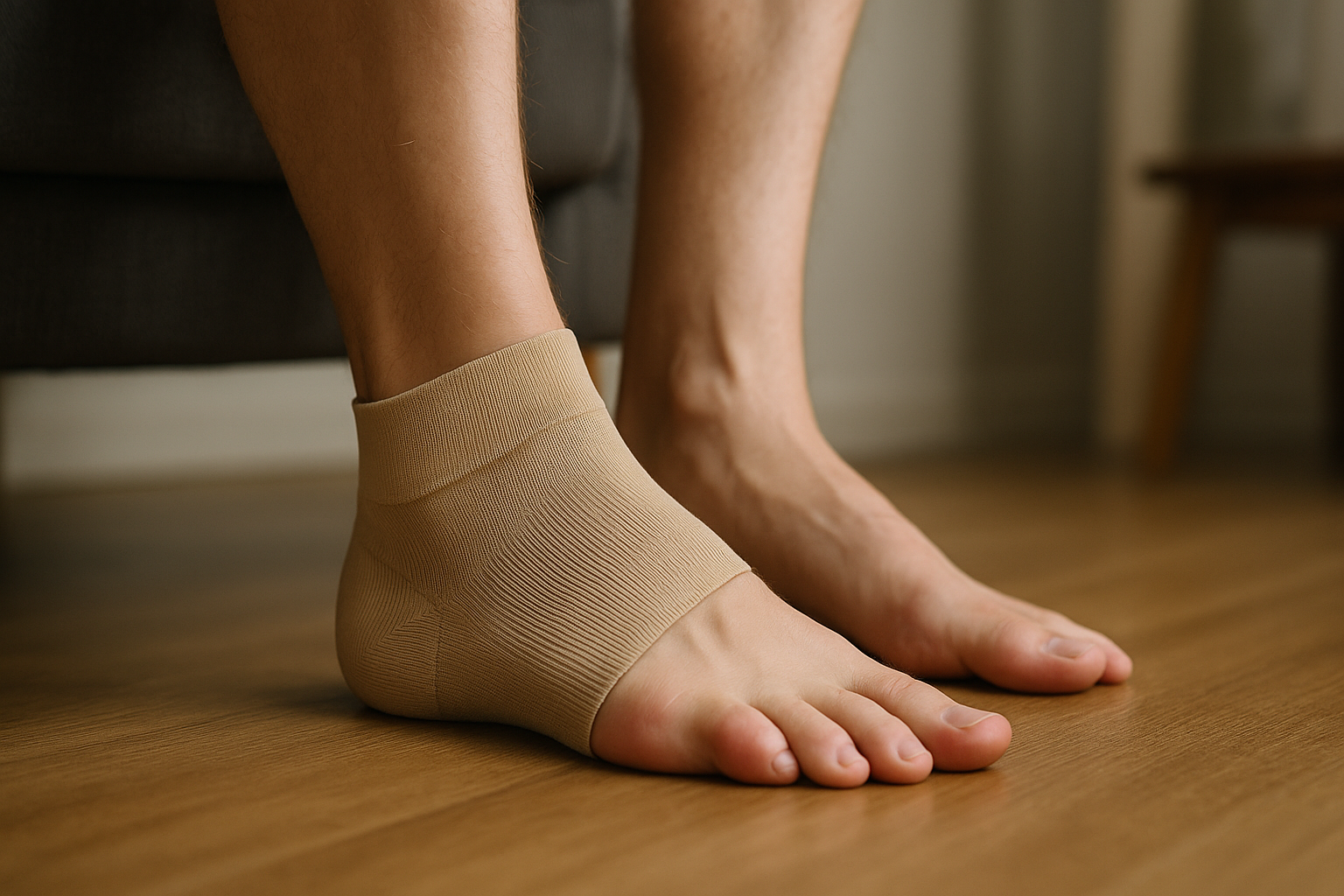
Heel spur socks refers to socks designed with a focus on the heel area and the underside of the foot. They are typically characterized by a tighter fit around the heel and arch, which can provide a sense of support or light pressure. The sensation can be different from regular socks and is experienced differently depending on the shape of the foot and the individual's movement pattern.
Some associate heel spur socks with:
- A more enveloping sensation around the heel
- A feeling of stability when walking and during standing activity
- Less attention to the heel area during the day
The experience often depends on when the socks are used and how they fit into daily routines.
How are heel spur socks experienced in everyday life?
In everyday life, many describe that heel spur socks are felt most clearly during the first steps, when the heel may otherwise feel most sensitive. For others, the sensation becomes more noticeable after longer periods of activity, where pressure and strain have been present throughout the day. The socks can be experienced as a constant, yet discreet part of clothing that follows the foot in both calm and more active periods.
Some notice that walking pace and posture change slightly, while others experience that the socks simply become a natural part of everyday life without much attention.
How widespread is the use of heel spur socks?
The use of heel spur socks is seen among many different groups. People with standing jobs, active leisure habits, or repetitive movements in everyday life often mention the heel area as a point of focus. Also, people who experience discomfort at the start of movement may be interested in socks specifically related to the heel.
Although the experience varies, what many have in common is that the heel plays a central role in overall comfort throughout the day.
What can affect the experience of heel spur socks?
Several conditions in everyday life can influence how heel spur socks are experienced. Activity the day before, the length of active periods, and variation in movement can affect how the heel area feels. The choice of footwear and surface can also matter for how pressure and strain are distributed throughout the day.
Small changes in gait pattern and weight distribution can over time change how the sensation from the socks is experienced.
Connection between the heel and the rest of the body
The heel functions as a central point of contact between the body and the surface. When attention is directed toward the heel area, many also become more aware of movement in the ankles, lower legs, and the rest of the body. For some, the experience of heel spur socks is therefore connected with a general sense of support in movement, especially during longer periods of walking or standing.
This connection means that heel spur socks are often experienced as more than just a sock.
.