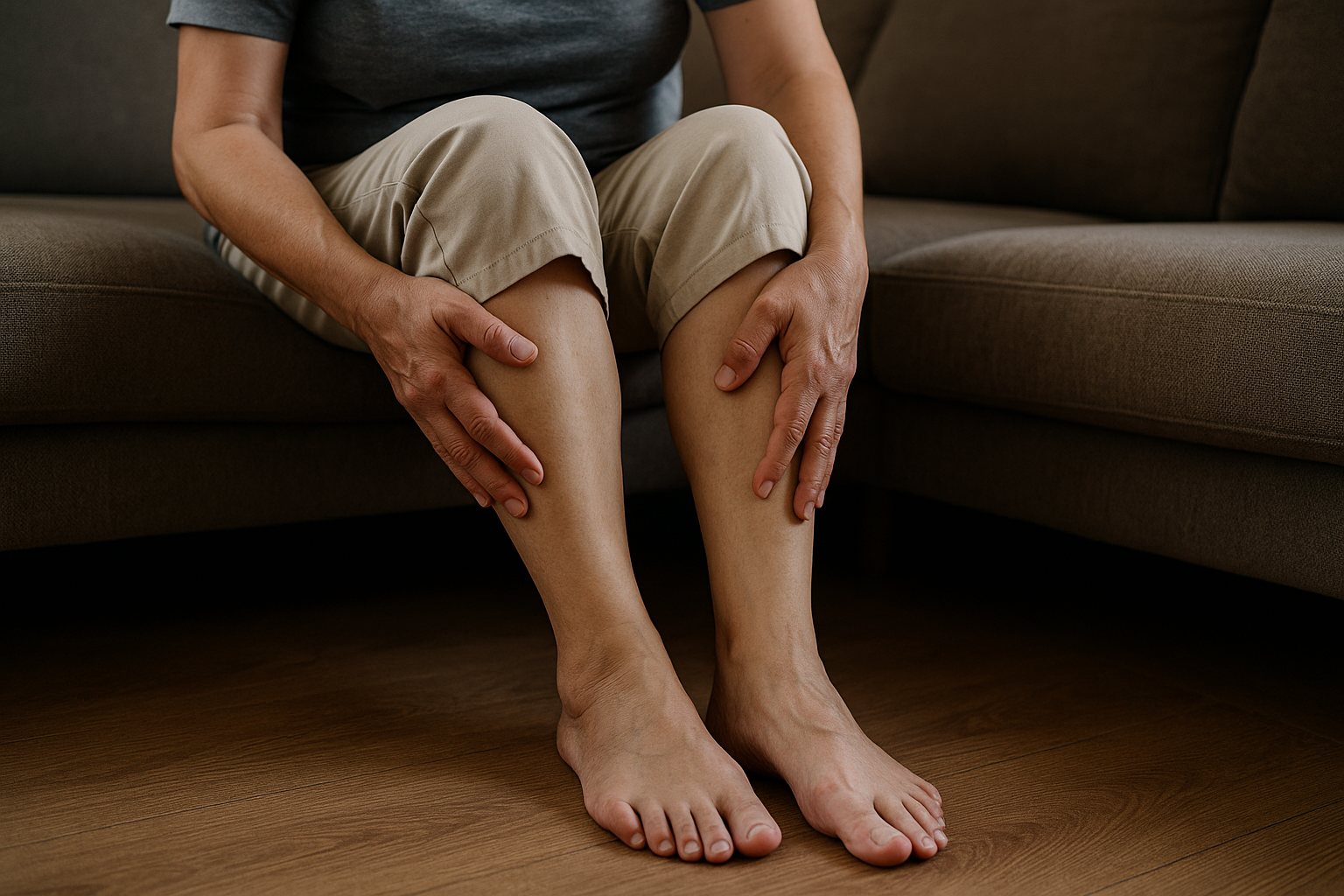
Many experience the sensation of heavy legs as part of everyday life, especially after long periods of standing or seated work, toward the end of the day, or during periods of reduced movement. The feeling can be described as fatigue, tension, or heaviness in the legs, affecting both comfort and freedom of movement. For some, the discomfort arises gradually during the day, while others notice it most clearly in the evening, when the legs finally get rest.
Heavy legs can create the feeling that the legs feel slower or more burdened than usual. It can affect the desire to move and make ordinary activities such as walking, stairs, or longer trips more demanding. Many therefore seek knowledge about why heavy legs occur and how it typically appears in daily life.
When taking a closer look at the experience of heavy legs, it becomes clear that there may be several contributing factors. For some, it is linked to work postures and daily routines, while for others it appears more recurrently. Consider, for example, conditions such as:
- Longer periods of sedentary or standing work
- Limited movement during the day
- Feeling of tension or buildup in the lower legs
What are heavy legs?
Heavy legs is a term for a subjective sensation of heaviness, fatigue, or discomfort in the legs, typically located in the lower legs, but sometimes also up into the thighs. The experience can vary in intensity and can occur both at rest and during movement. For many, the sensation becomes most apparent at the end of the day or after prolonged strain.
The sensation of heavy legs is often linked to the body's way of handling strain and circulation in the legs. When the legs are used a lot – or conversely used too little – it can affect how they feel during the day. For some, it becomes a recurring part of everyday life that affects comfort and energy level.
Common mechanical and daily factors behind heavy legs
Heavy legs are often associated with reduced movement and one-sided working positions, where the legs are not activated sufficiently. Long periods of sedentary work can create a feeling of buildup and fatigue, while many hours of standing work can lead to tension and strain in the leg muscles.
Lack of variation in movement can mean that muscles and tissues work less efficiently, which can create a feeling of heaviness. Tightness in the calves and hamstrings can also contribute to the legs feeling more tired and heavy, especially after physical activity or long workdays.
How do heavy legs typically present themselves?
Heavy legs can be experienced in different ways. Some describe a constant fatigue or a feeling that the legs are “full” or tense, while others notice a more diffuse soreness. The sensation may become clearer during sedentary rest after an active day or arise gradually in line with the day's strain.
For some, the discomfort is relieved by movement, while for others it only subsides when the legs get rest. In some cases, the legs may feel stiffer or less flexible, which can make walking and daily movements more strenuous.
How common are heavy legs in everyday life?
Heavy legs are a common experience and occur in people with both active and more sedentary everyday lives. The problem can occur across age and lifestyle and is often seen during periods of changed routines, increased strain, or less movement than usual.
It is also common for the sensation of heavy legs to occur together with fatigue or tension in the feet and calves, where the overall strain in the lower body affects the experience.
Variations in heavy legs and their character
The experience of heavy legs can vary both in location and intensity. Some primarily notice heaviness in the lower legs, while others experience that the sensation extends up into the thighs. The discomfort may be most pronounced at the end of the day, after prolonged inactivity, or in connection with repeated strain.
The sensation can be described as pressing, pulling, or as a general fatigue in the legs. These variations mean that heavy legs are experienced differently from person to person and can change character depending on daily habits, strain, and movement patterns.
.