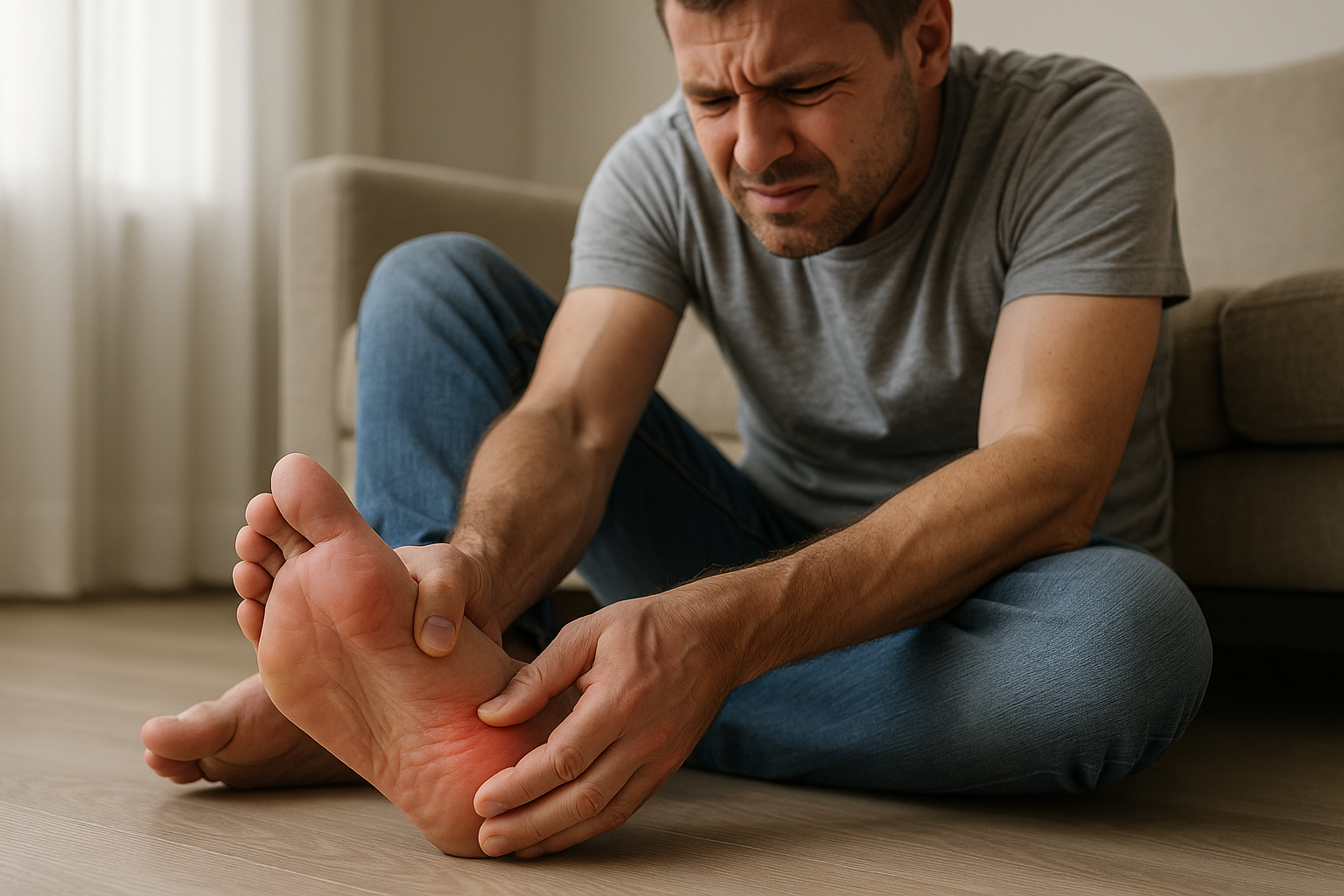
Many people at some point experience pain in their feet after long days of standing work or intense physical activity. The discomfort can make even ordinary everyday movements a challenge and affect how one feels in daily life. The feeling of sore feet is a common experience that for many has become persistent, and which naturally raises the desire to understand what lies behind the pain. It is typically an irritation that can be felt as a stabbing, throbbing, or sore sensation, depending on the situation and the activity. When the feet experience repeated strain, one may feel the need to seek knowledge about the various causes and possible approaches to relief.
What is sore feet?
Sore feet covers a range of types of discomfort and pain that can be felt in different ways. Many describe it as a general soreness or a wearing discomfort that worsens during longer periods of strain. The pain can arise in connection with activities such as walking, standing, or even after rest, when the discomfort comes alive with the first movements.
Typical experiences of foot pain often include:
- Pain in the heel area
- Soreness in the midfoot
- Stiffness in the arch
In everyday life, foot pain is often experienced in combination with other strains. Many causes are related to the foot being exposed to repeated pressure and improper footwear, which can lead to discomfort over time. The feeling of sore feet can also vary in intensity and be distributed across different parts of the foot, which makes it important to gain a basic understanding of what exactly is meant by the term.
For those who regularly feel a restless pain in their feet, it can be helpful to observe how the pain arises and develops during the day. It can often be seen that occupations with prolonged standing work or intensive walking trigger an increase in the discomfort. Having an overview of the broad features of foot pain can help put the problem into words and create peace of mind in relation to how best to handle the daily challenges that arise when the feet do not fully cooperate with the rest of the body.
How does foot pain typically present itself?
Foot pain often presents as pain under strain, but can also be present after rest or as stiffness in the morning. Many experience a sharp or throbbing sensation, tenderness to touch, and local swelling. Muscle tension in the calves and under the arch of the foot may occur together with the pain itself and make movement more tiring.
How widespread is sore feet in everyday life?
Foot pain is common among people with standing work, people who walk a lot daily, and elderly citizens. The problem can be felt across many age groups and affects mobility and daily routines. When the walking pattern changes because of pain, it can often be related to increased strain in the knees, hips, and back, which can lead to increased muscle tension in other parts of the body.
Which factors can affect foot pain?
Footwear and fit
Incorrect fit and lack of support in footwear can make pressure in the feet uneven and lead to increased pain during standing or walking activities. Using shoes without sufficient support can affect how the weight is distributed through the foot and increase muscle tension in the calf and foot.
Physical activity and strain
Frequent or intensive strain on the feet, for example long walks or repeated strain at work, can make the pain more pronounced. Rapid changes in activity level can also lead to increased soreness and tightness in the muscles around the foot and ankle.
Body weight and movement patterns
Body weight affects the overall pressure on the foot’s structures. Over time, a high level of strain can lead to increased fatigue in the foot’s muscles and a greater need for relief in everyday life. The way one walks can amplify tension up through the leg and on to the knee and hip.
Differences in the pain experience
Pain in the feet can present differently: some experience short-term, sharp pain with certain movements, others notice a persistent, diffuse soreness. The location varies from heel to midfoot and forward to the forefoot, and the intensity can change during the day. Muscle tension and stiffness can make daily activities less comfortable and increase the need for breaks and relief.
.