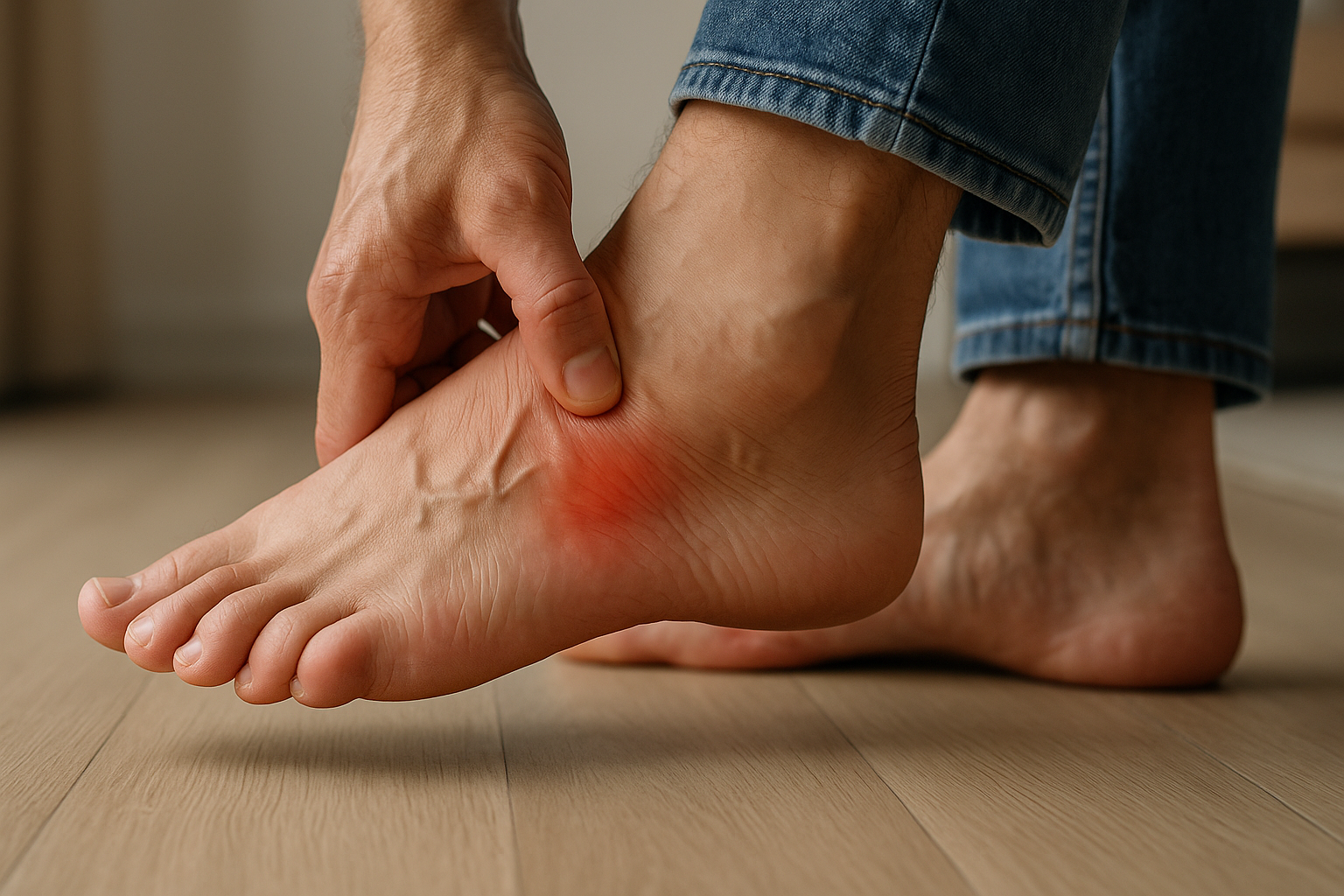
Many experience periodic pain in the heel, especially when they are getting started after longer periods of rest. It is common to feel a stabbing sensation during the first steps in the morning or after a break, when the foot has been still. This sensation can be perceived as disruptive in a busy everyday life, where long periods of standing or walking can intensify the discomfort. The experience can create uncertainty about how everyday activities should be handled to reduce the pain. At the same time, many ask questions about what actually triggers this pain and whether it is a temporary phenomenon or whether there is an underlying process affecting the feet. Interest in the topic is great, as pain in the heel often gives rise to speculation about how strain in the foot is connected with lifestyle habits and daily movement.
In fact, this pain may be associated with heel spur, a condition that many experience but that is not always easy to get a clear explanation of. It is typically during physical activities where the foot bears a large part of the body's weight that a stabbing pain becomes noticeable. The severity of the condition can vary from a mild irritation to a more pronounced pain experience, where it may feel like a persistent problem. The question of what triggers this calcification in the heel is therefore central for those seeking a better understanding of how daily strain affects the foot.
What is heel spur?
Heel spur refers to a calcium deposit that forms as a result of repeated strain in the area around the heel bone. The condition typically occurs when the area around the plantar fascia is exposed to small, persistent strains. This form of calcification in the foot is often experienced as a stabbing pain, especially at the start of the day and during the first steps after rest. Several describe the experience as a sharp sensation that can be bothersome in everyday life. It is also common for the stabbing pain to become more pronounced during activities where the foot has to bear a lot of weight or withstand repeated strain. Therefore, it is natural for people to seek information about heel spur in order to gain a better understanding of how such a condition can arise and affect daily activities. Many are curious to know how strain in the foot is connected to the pain and which factors may play a role in the development of this calcification.
How heel spur shows itself in everyday life
Heel spur typically shows itself as a sharp or stabbing pain under the feet during the first steps after rest. Many experience that the pain is most intrusive in the morning or after prolonged sitting, and that it becomes more pronounced when walking on hard surfaces. In everyday life, it may feel like a sudden twinge in the foot during push-off or like a persistent soreness that makes ordinary activities more strenuous.
Symptom variations and how severe they can be
The intensity can vary greatly from person to person; some only notice periodic discomfort, while others experience more constant pain that affects movement patterns. The pain may also feel like a radiating sensation in the sole of the foot, or like pressing soreness under the heel. Activity and relief are very important for how symptoms show themselves at any given time.
How pain can affect muscle tension
Changes in gait pattern due to heel spur are often linked to increased tension in other parts of the body. When movements are adapted to avoid pain, the calf, knee, and hip may be strained differently, which can lead to increased muscle tension in the legs and hips. Furthermore, this compensation can spread to the back, neck, and shoulders, making daily movement feel more tiring.
Examples of affected body areas
Feet, legs, and back are often mentioned in descriptions of the connection between heel-related pain and muscle tension. Many experience tension in the calf muscles, increased fatigue in the thighs, and discomfort in the lower back during longer walks or standing work.
How widespread is it in everyday life?
Heel-related pain is a frequent cause of reduced well-being in everyday life, especially in people who stand or walk a lot. It is often seen in people with demanding workdays or in those who suddenly increase their activity level. The frequency means that many seek knowledge about pain relief and ways to relieve the foot in order to preserve daily well-being.
Everyday factors that can affect symptoms?
- Prolonged standing on hard floors can make pain more pronounced.
- Increased body weight can increase the load on the heel and thereby affect the experience of pain.
- Sudden increases in activity level can lead to worsening of symptoms.
- Footwear without sufficient support can make relief more difficult in everyday life.
What you can pay attention to in everyday life
In daily life, small variations in the pattern around pain can provide useful insight. The time at which the discomfort arises can vary and may be experienced differently from person to person; some notice changes during the day, others during longer periods of activity. For many, changes in intensity are often linked to repetitive movements and the way shoes and soles wear over time.
Another aspect to pay attention to is where the pain is felt precisely in relation to the inside of the shoe. Wear patterns in the sole or changes in fit can be associated with a shift in the load on the foot, which can affect the experience over time. Likewise, it may be relevant to note whether the pain feels more localized at the edge of the heel, in the middle under the sole, or as radiation further forward in the foot.
There may also be variation in the sensory experience. Some describe a sharp, stabbing sensation while others experience a more diffuse soreness or changes in skin sensation. Such differences can provide a picture of how the condition affects daily function and well-being without pointing to a single cause.
- Shifts in the timing of pain during the week
- Changes in where the shoe feels tighter or looser
- New or unexpected sensations in the skin under the foot
- Differences in how quickly stiffness or discomfort increases during longer activities
- Variation in fatigue or tension in the legs and back after ordinary days
Paying attention to these patterns can provide a more nuanced picture of how heel pain is part of everyday life, and how different conditions may affect the experience over time. The next section answers common questions that often arise in connection with uncertainty about symptoms and changes.
Frequently asked questions
Can children get heel spur?
Children and adolescents can experience heel pain, but the causes and patterns may be different than in adults. Pain in younger people often shows itself as activity-related pain and may be experienced in different parts of the heel.
Can sensation change in connection with heel pain?
Some describe changes in sensation such as tingling or reduced sensitivity in the area. Such sensations can feel different from the typical stabbing pain and may vary from person to person.
Can weather or temperature affect how the pain is experienced?
Several people experience that cold or damp days affect stiffness or discomfort. Temperature and weather can for some affect the subjective experience of pain over time.
How can symptom patterns change over weeks or months?
Symptom patterns can fluctuate in both intensity and frequency over a longer period of time. Changes in daily habits, footwear, or strain can be associated with gradual shifts in how pain is experienced.
.