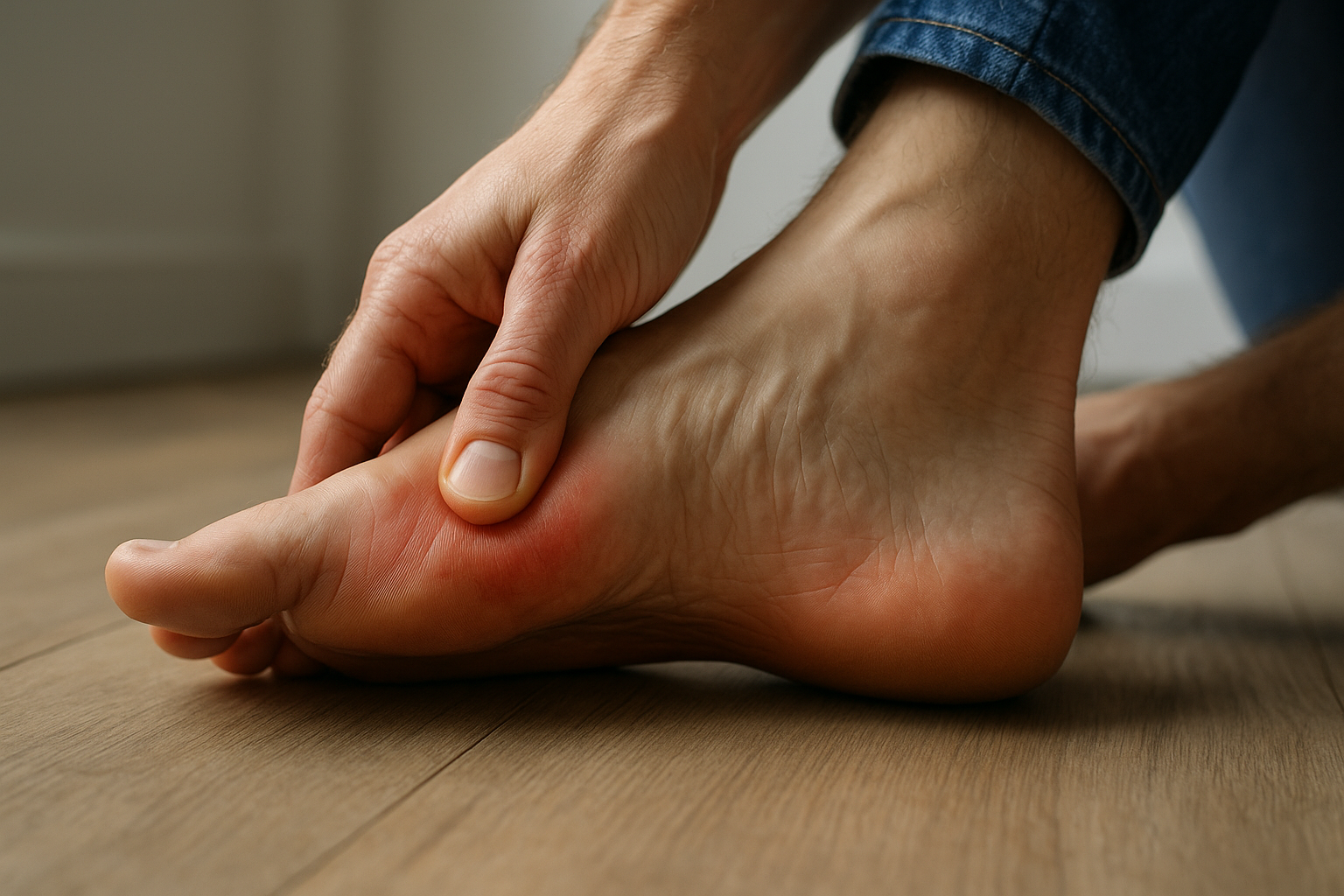
Many experience pain in the heel as part of everyday life, where the discomfort can appear both at the start of movement and after longer periods of strain. Inflammation in the heel is often associated with a sore, stabbing, or pressing sensation, which can make walking and standing activities more challenging. For some, the discomfort is felt most clearly in the morning after rest, while others experience that the pain increases during the day after work, exercise, or many hours on their feet. When the heel becomes a focal point in everyday life, there is often a desire to understand what inflammation in the heel may be associated with and how it is typically experienced over time.
Inflammation in the heel is often mentioned in connection with repeated strain and daily movements, where the heel is exposed to pressure again and again. The area functions as a central point of contact between the body and the surface, and therefore even small changes in strain or routines can make the heel more sensitive at times.
What is meant by inflammation in the heel?
Inflammation in the heel covers an irritation condition in the tissue around the heel area, where pain and soreness can arise as the body's reaction to repeated strain. The sensation may be localized directly under the heel or more diffusely around the heel bone. The experience varies from person to person and can change depending on activity level, footwear, and time of day.
Some describe a sharp or stabbing sensation in the first steps after rest, while others primarily feel a more dull and persistent soreness that develops during the day. The discomfort may be temporary or recurring and is often experienced as part of the body's overall strain response.
How is inflammation in the heel experienced in everyday life?
In everyday life, inflammation in the heel can appear in several ways. For many, the morning is a time when the pain is most pronounced because the heel is loaded again after rest. For others, the discomfort arises gradually and becomes more noticeable after many hours of standing or walking activity.
The experience can affect walking pace, movement pattern, and the desire to be active. In some cases, one may unconsciously begin to relieve the heel, which can alter the strain elsewhere in the body.
How widespread is inflammation in the heel?
Inflammation in the heel is relatively common and occurs in both active and less active people. It is often seen in people with work that involves a lot of standing or walking, as well as in people with repetitive movements in their leisure time. Age, daily routines, and the load on the foot often play a role in how frequently the discomfort occurs and how long it lasts.
What many have in common is that the heel is of great importance for overall comfort in everyday life, because even small pains can be felt clearly with every step.
What can matter for discomfort in the heel?
Several conditions in everyday life can influence how inflammation in the heel is experienced. Repeated strain on hard surfaces, limited variation in movement, and changes in activity level can all matter. The fit, support, and wear of footwear can also affect how pressure is distributed in the heel area.
In addition, small changes in gait pattern and weight distribution over time can lead to the strain becoming more concentrated in the heel.
Connection between the heel and the rest of the body
The heel functions as a central element in the body's chain of movement. When discomfort arises in the heel, it can affect movement in the ankles, lower legs, and further up the body. Some find that tension in the heel is connected with fatigue in the calves, knees, or lower back, especially if walking or balance changes.
This connection means that inflammation in the heel is often experienced as more than just a local problem.
Everyday patterns that may play a role
Daily routines and habits can over time affect the experience of inflammation in the heel. Long periods without breaks, repetitive movements, and repeated strain on the same surface can contribute to the discomfort becoming more pronounced.
Examples of factors that are often mentioned are:
- Long days with standing or walking activity
- Limited variation in movement
- Repeated use of the same footwear
- Changing activity level from day to day
Attention to signals over time
Over time, the body can send different signals that change depending on strain and recovery. Some notice that the heel pain varies from week to week, while others experience more fixed patterns in relation to certain types of days or activities.
Paying attention to these variations can provide a better picture of how the heel reacts in different situations, without it necessarily pointing to concrete solutions.
Inflammation in the heel as part of everyday life
For many, inflammation in the heel becomes a recurring part of everyday life, handled differently depending on needs and routines. Some adjust pace and strain, while others become more aware of breaks and variation in movement. The experience often forms part of a larger context, where comfort, movement, and recovery interact.
.