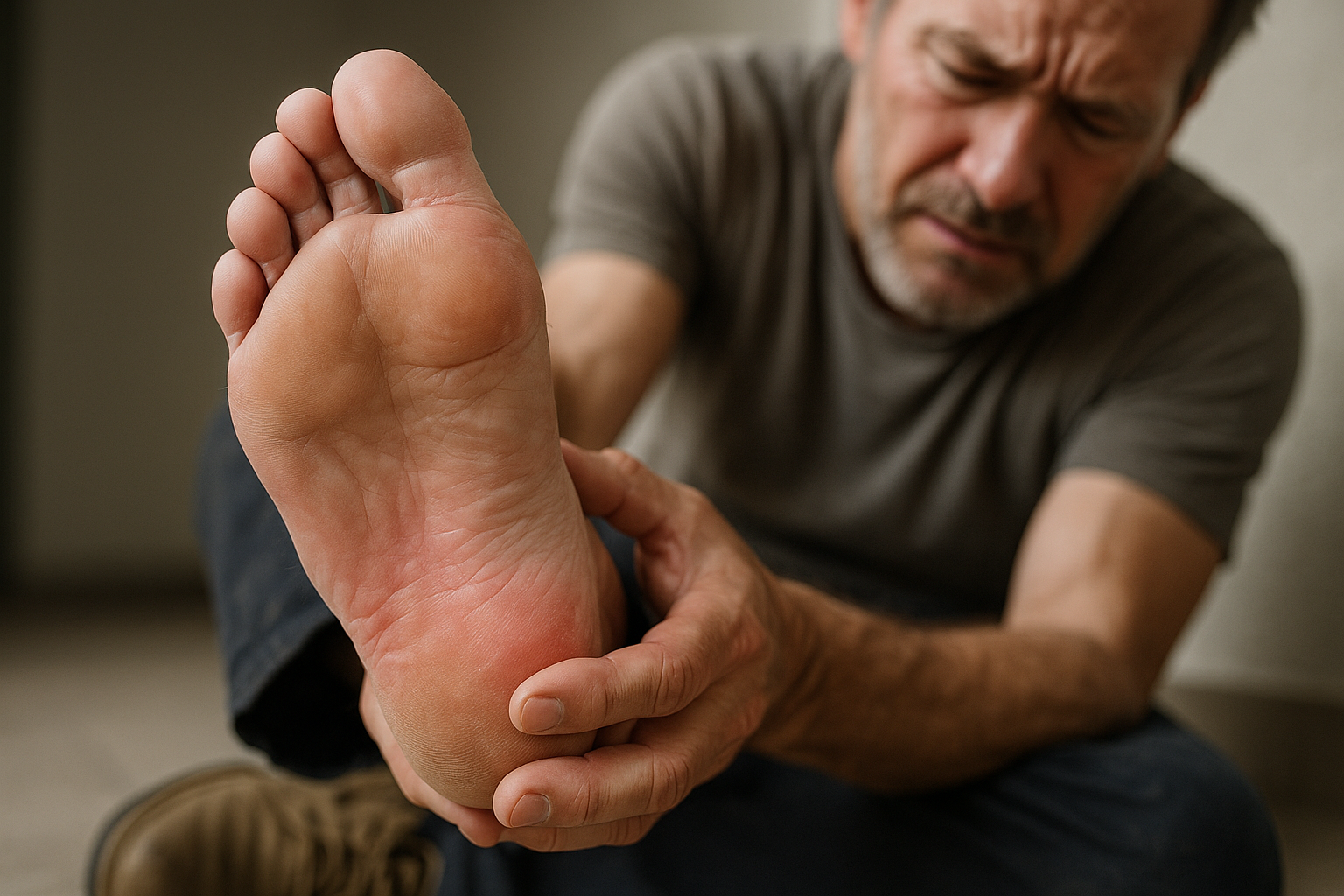
Sore heels are often mentioned in connection with daily strain, repeated movements, and longer periods of standing or walking activity. Many experience that their heels feel sore, tired, or sensitive at the end of the day, especially after work, exercise, or many hours on hard surfaces. The discomfort can vary from a slight soreness to more persistent sensations that affect walking and comfort in everyday life. When the heels begin to draw attention to themselves, there is often a desire to understand why the discomfort occurs and how it is typically experienced over time. For many, focus is directed toward the heels when ordinary rest no longer feels sufficient to restore comfort.
What is meant by sore heels?
Sore heels refer to a condition where the area at the back of or under the heel feels strained, sore, or tense. The sensation may be localized directly under the heel bone or more diffuse around the edges of the heel. The experience varies from person to person and can change depending on activity, footwear, and time of day.
Some describe a stabbing or pressing sensation with the first steps after rest, while others mainly feel the discomfort after prolonged strain. The soreness can be temporary or recurring and is often perceived as part of the body's reaction to daily use.
How are sore heels experienced in everyday life?
In everyday life, sore heels can present themselves in several ways. For some, the discomfort is felt most clearly in the morning, when the foot is loaded after rest. For others, the soreness arises gradually during the day and becomes more pronounced after many hours of activity.
The experience can affect walking pace, posture, and the desire to move. In some cases, the discomfort can lead one to unconsciously change the way one steps, which can affect strain elsewhere in the body.
How widespread is the experience of sore heels?
The experience of sore heels is relatively common and is often mentioned by people with standing work, physically demanding tasks, or active leisure habits. People who spend a lot of time in the same footwear may also experience a connection between daily strain and discomfort in the heels.
Although the degree of soreness varies, common to many is that the heels play a central role in overall comfort in everyday life.
What can matter for discomfort in the heels?
Several conditions in everyday life can influence how the heels are experienced. Repeated strain on hard surfaces, limited variation in movement, and changes in activity level can all matter. The design and wear of footwear can also affect how pressure is distributed under the foot.
In addition, small differences in walking pattern and weight distribution over time can change how the strain accumulates in the heel area.
How are the heels connected to the rest of the body?
The heels function as a central point of contact between the body and the surface. When the strain in the heels changes, it can affect movement patterns higher up in the body. Some experience that tension in the heels may be connected with fatigue in the ankles, calves, or lower back, especially if walking or balance is affected.
This connection means that discomfort in the heels is often experienced as more than just a local problem.
Everyday patterns that can play a role
Daily routines and habits can over time affect the experience of sore heels. Long periods without breaks, one-sided movements, and switching between different types of surfaces can all contribute to the strain building up.
Examples of conditions often mentioned are:
- Standing or walking on hard surfaces
- Limited variation in working positions
- Repeated use of the same footwear
- Changing activity level from day to day
Attention to signals over time
Over time, the body can send different signals that change depending on strain and recovery. Some notice that the soreness varies from week to week, while others experience more fixed patterns in relation to certain activities.
Paying attention to these variations can provide a better picture of how the heels react in different situations, without necessarily pointing to specific solutions.
Sore heels as part of everyday life
For many, sore heels become a recurring part of everyday life, which is handled differently depending on needs and routines. Some adjust activity, others become more aware of breaks and strain. The experience of sore heels often forms part of a larger context in which comfort, movement, and recovery interact.
Overall considerations without instructions
- Observation of when the discomfort is most noticeable
- Connection between activity and experienced soreness
- Variation in comfort depending on daily routines
These considerations are intended as general reflections without specific recommendations.
Frequently asked questions
When are sore heels typically felt the most?
Many experience sore heels either at the start of the day after rest or later in the day after prolonged strain. The experience can vary from person to person.
Can sore heels change the walking pattern?
For some, discomfort in the heels can lead to small changes in the way the foot is placed on the surface, which can affect overall movement.
Is the experience the same for everyone?
The experience of sore heels is individual. Some only feel slight discomfort, while others experience more persistent soreness depending on everyday life and strain.
.