Many experience discomfort in the heel, and it is common to seek information about where a heel spur is located when the pain becomes persistent. Heel pain can affect daily life, as for many it leads to an unpleasant start in the morning and a general deterioration of the foot's comfort. Especially during periods of increased physical activity, this condition can create uncertainty about what is actually causing the discomfort. Many have experienced that the pain subsides after the first few steps, which can make it challenging to understand whether there is a more long-term cause behind the pain. This type of bony growth is often anchored at the area where a large tendon meets the heel bone, and it can therefore help confuse those who experience both stiffness and pain in the foot.
It is not uncommon to begin experiencing pain as a result of a heel spur without knowing it, during periods of increased strain or with repeated strain on the foot. The experience of pain in the heel can raise questions about where it is precisely located and how this condition differs from other foot-related discomfort. It is often seen that the symptoms are more pronounced when the foot has to bear weight after a long period of rest, which leads many to seek answers and understanding of what they are actually dealing with. This curiosity and the need for a factual explanation of the heel spur's location are supported by a desire to find methods to manage the daily strain and reduce the discomfort.
What is a heel spur?
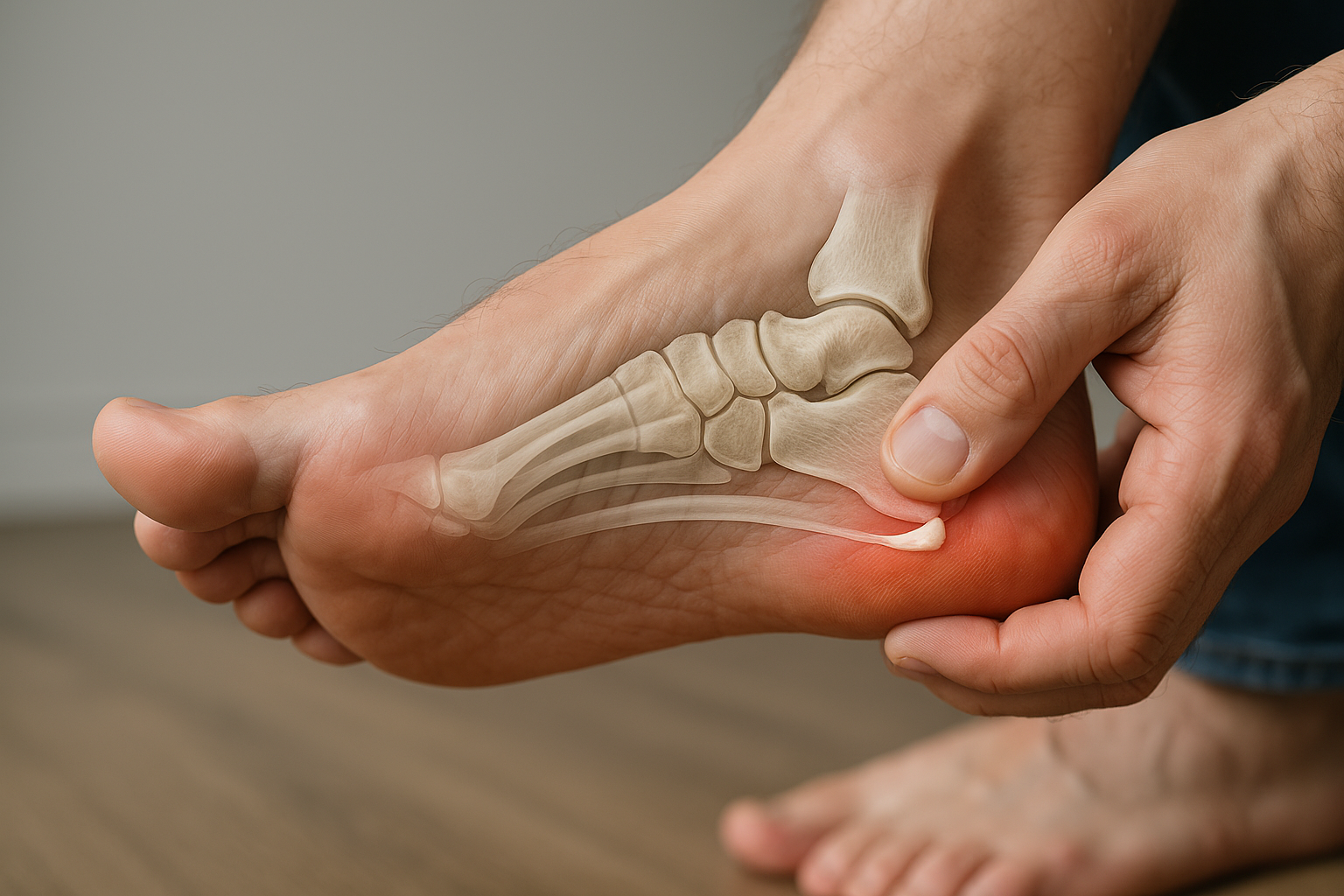
Heel spur refers to a small bony growth that forms on the front of the heel bone, near the place where a significant tendon meets the foot. This bony growth can be experienced as a hardened calcium deposit and is often seen more clearly on an X-ray examination. It is noteworthy that this condition can sometimes be confused with inflammation in the tendon, as both conditions typically cause pain, especially in the first steps in the morning. Some of the common characteristics of heel spur include:
- A growth located at the attachment of the large tendon under the foot
- Pain that is often felt at the start of the day and decreases with movement
- Frequent confusion with inflammation at the tendon attachment
It is important to understand that by its nature, heel spur concerns a change in bone growth and not directly an inflammatory condition. This differentiation means that although the symptoms may be similar, the approach to managing the discomfort is often shaped by the specific location and the type of strain the foot is exposed to in everyday life.
Where is the pain most often felt?
The pain typically appears under and in front of the heel, close to the place where the plantar fascia attaches to the heel bone. Many describe a sharp stab during the first steps after rest, which may then subside and develop into a throbbing or pressing sensation during prolonged walking or standing work. The pain can also radiate toward the midfoot or up into the calf, and in some cases the entire load pattern in the feet, legs, and back is affected.
How is it experienced in everyday life?
In everyday life, the condition often shows itself in that activities requiring prolonged standing or many steps feel heavier than normal. Morning movements can be especially challenging, and short breaks can provide temporary relief. Repetitive movements such as long walks or running can lead to increased discomfort the following day. For people who stand a lot at work or walk on hard surfaces, the discomfort is often linked to load patterns in everyday life.
Factors that often cause increased pain
The intensity of the pain can be affected by several factors: increased weight on the feet, long-term standing work, frequent running training or repeated jumping and leaping, as well as the use of shoes without sufficient support. Age also matters, as the incidence increases with age. Misloading of the foot, where the weight is distributed unevenly along the edge of the foot, is often associated with greater strain on the heel and thus higher pain in everyday life.
Muscle tension that arises with altered walking
When the heel hurts, the gait pattern often changes to avoid pain. This may appear as increased tension in the calf and in the muscles under the foot, and in the long term such changes can affect muscles around the knee and back. The tensions can be felt on the underside of the foot, in the calf muscles, and as stiffness in the back after longer activity. These secondary tensions can make it harder to find comfort in daily movements.
Relief in everyday life
Relief often involves changing the load in daily situations: reducing prolonged standing, varying working positions, and choosing footwear that provides more support when walking. Less strain during periods of worsened discomfort can make it easier to maintain the joy of movement, and attention to weight distribution while walking can reduce tension in the feet, legs, and back.
.