Many experience sore calf muscles after long days or after an intense workout. It is common for calf and muscle tension to lead to a feeling of discomfort that can affect daily well-being. Many find that a calf massage performed at home can create a feeling of relief and increase relaxation. By using simple massage techniques, it becomes possible to stimulate blood circulation and thereby reduce the tension, which can contribute to a more balanced everyday life. This type of practice is popular because it provides a practical approach to handling tired muscles and reducing the unpleasant sensations that often arise after prolonged physical exertion or a workday with many hours in a stationary position.
What is calf massage?
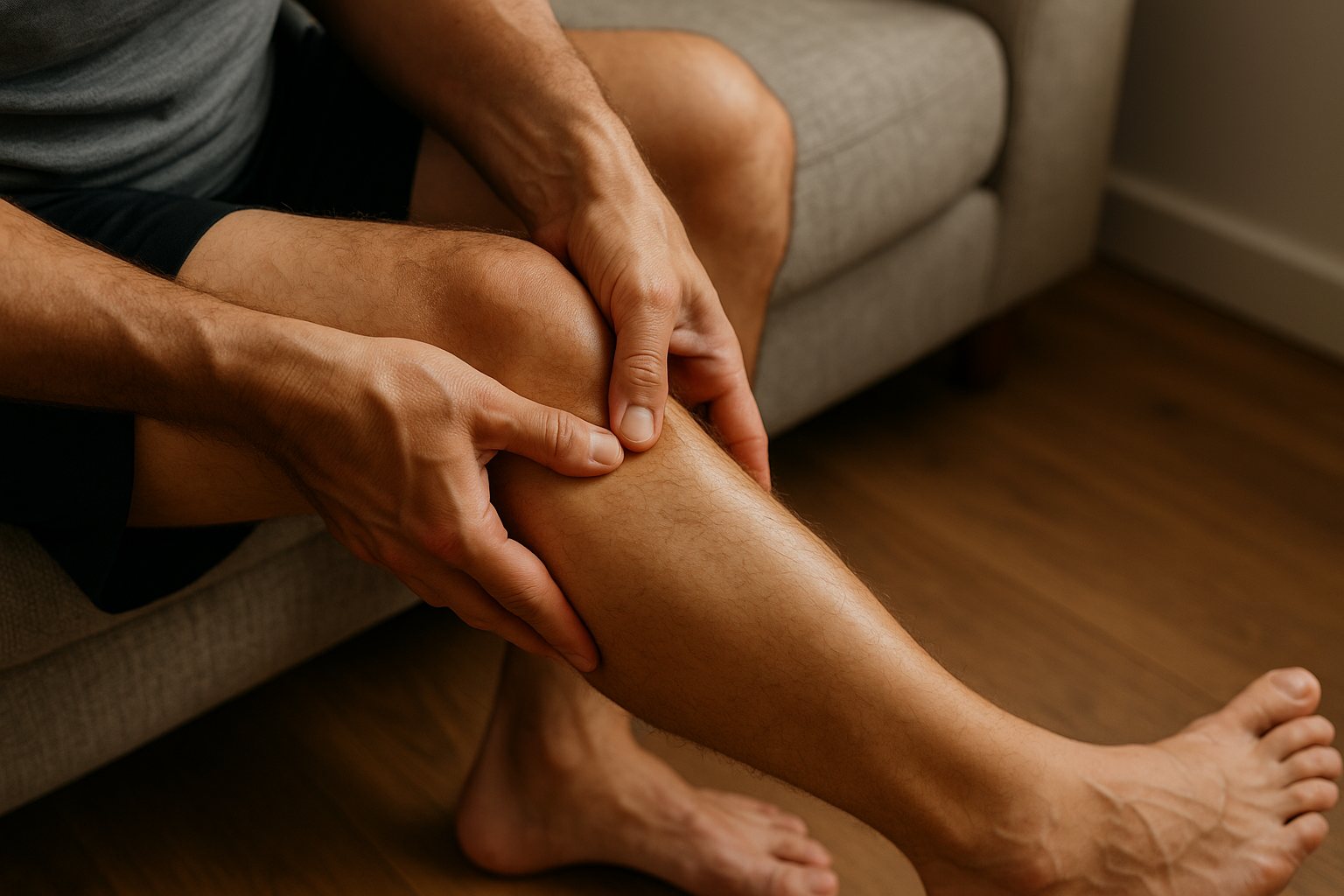
Calf massage is a method where various techniques are used on the muscles in the calf to loosen tension and promote relaxation. It is not about medical treatment, but about creating a pleasant and relaxing experience in everyday life. Calf massage often uses gentle pressure and kneading techniques, which can provide noticeable relief from soreness and fatigue.
Some of the available techniques for calf massage can be described with the following points:
- Gentle circular massage from ankle to knee
- Light kneading of the muscles to loosen tension
- Shaking the sore areas to stimulate blood flow
These movements can help reduce the feeling of tightness and provide a more pleasant sensation in the legs. Many find that a regular massage, performed at home, makes it easy to notice the difference when everyday life becomes busy or the muscles feel overworked. A simplified approach makes it possible to take a few minutes to focus on the body's signals without having to leave the safe surroundings of home.
Calf massage appears as a method that is both easy to learn and practical to integrate into everyday life. By using the mentioned techniques, one can easily relieve minor discomfort and achieve a feeling of calm and well-being that supports the natural balance between relaxation and activity.
How does the need show itself?
The need for calf massage shows itself as soreness, tension, or a feeling of tightness in the lower leg. Some experience local cramps or fatigue after physical activity, while others feel stiffness that comes gradually after long periods of standing or seated work. The symptoms can be experienced differently from day to day and can be described as either sharp discomfort or a more diffuse, pressing sensation.
How frequently is it experienced in everyday life?
It is common for people to feel the need for relief in the calves in connection with daily activities. After a long workday on their feet or after running and cycling, the level of tension can be higher, and many seek simple ways to create immediate relief and well-being. The need can also arise with repeated strain over time, where the calves feel sore without a clear single cause.
Factors that can affect the level of tension
Several conditions can often be related to how much tension you feel in your calves:
- The extent of physical activity such as running, interval training, or prolonged cycling
- The nature of the work, especially long periods of standing or sitting
- Choice of shoes and surface during daily activities
- Stress and sleep quality, which can make muscles more sensitive
- Hydration and nutrition, which can affect muscle comfort
Connection with other body areas
Tension in the calves is often connected with tension in other areas such as the back, neck, shoulders, legs, and feet. When one muscle group is tense, it can change the way one moves and lead to compensatory tension elsewhere. Therefore, a focus on the calves can be experienced as part of a broader feeling of muscular discomfort in the body.
Variations in how the effect is experienced
People experience different degrees of relief after calf massage. For some, quickly noticeable relief and improved freedom of movement come, while others experience a more gradual change over several days. Increased blood circulation and the release of wellness substances in the body can play a role, and how one feels the effect is often connected with the time of day and how tense the muscles were before the effort.
What you can pay attention to in everyday life
During an ordinary day, small patterns can appear that matter for the effect of calf massage over time. Many notice that sensitivity in the calves shows itself as periods of increased stiffness at the end of the day or after prolonged repetitive movements. Others find that one calf muscle reacts differently than the other, which can show itself as uneven tension or differences in the degree of soreness.
There are also daily conditions that can affect how the body experiences massage. Temperature, sleep rhythm, and how much the legs rest during the day can play a role and can over time affect how the muscles feel to the touch. The sensation can shift from mild soreness to a heavier, more widespread feeling, depending on which daily habits are present.
Habits and patterns that may be relevant
Personal habits often influence how the calves react. Repeated movement patterns or strain in specific situations can lead the muscles to get used to a certain tension, which can make changes appear slowly. At the same time, regularity in self-care may differ from sporadic effort, as the body often responds differently to frequency and consistency.
Another factor to be aware of is asymmetry in everyday movements. For example, when one unconsciously favors one leg, this can often be associated with increased local tension in the other calf muscle. Such patterns can be difficult to spot without observing daily movements over time.
Long-term conditions without concrete solutions
Over months, repeated minor strains can change how the calves feel in everyday life. Changes may be experienced as varying needs for relief or as differences in how pleasant massage feels. It is common for family-related and work-related routines to play a role in these patterns, and for the effect of a single effort to be temporary rather than lasting.
If you want to explore products related to calf massage, you can find relevant solutions with us at https://reliefr.dk/collections/leg-massage or in selected product categories at https://reliefr.dk/collections/massage.
Frequently asked questions
How can I perform an effective calf massage at home myself?
Many seek practical approaches to self-massage. In general, it is about adjusting the intensity according to what feels appropriate and paying attention to how the muscles react before and after. Variation in techniques and frequency can make the experience differ from person to person.
Which tools can make calf massage easier?
Different tools are often used to change pressure distribution and contact surface. Some prefer softer surfaces, others use firmer rollers. The choice of tool matters for how pressure and movement are experienced and can be a matter of personal preference.
How long does the effect of a single massage typically last?
The effect of a single massage may be temporary for some and more long-lasting for others. The effect can be experienced differently depending on daily strain and individual differences in muscle response, and how one experiences relief can vary from time to time.
When is it relevant to change your calf self-care routine?
People often consider adjusting their approach when patterns in daily sensitivity change, or when one type of effort no longer produces the same effect. Such considerations are often related to the length and nature of daily strain.
.