Many people experience pain under the forefoot at some point, especially after longer periods of standing work, walks, or physical activity. The discomfort may appear as soreness, a burning sensation, or pressure under the front part of the foot and can affect how one moves during the day. For some, the discomfort develops gradually, while others experience that the pain becomes clear after certain strains. When pain under the forefoot begins to take up space in everyday life, it can make ordinary activities such as walking, shopping, or longer periods on one's feet more challenging.
In many cases, attention is only directed toward the forefoot when the discomfort begins to repeat itself or changes the way one walks. The forefoot plays a central role in the body's movement and weight distribution, and even minor changes in strain can be felt clearly. Therefore, it is natural for an interest in understanding what pain under the forefoot may cover to arise when comfort in everyday life is affected.
What does it mean to have pain under the forefoot?
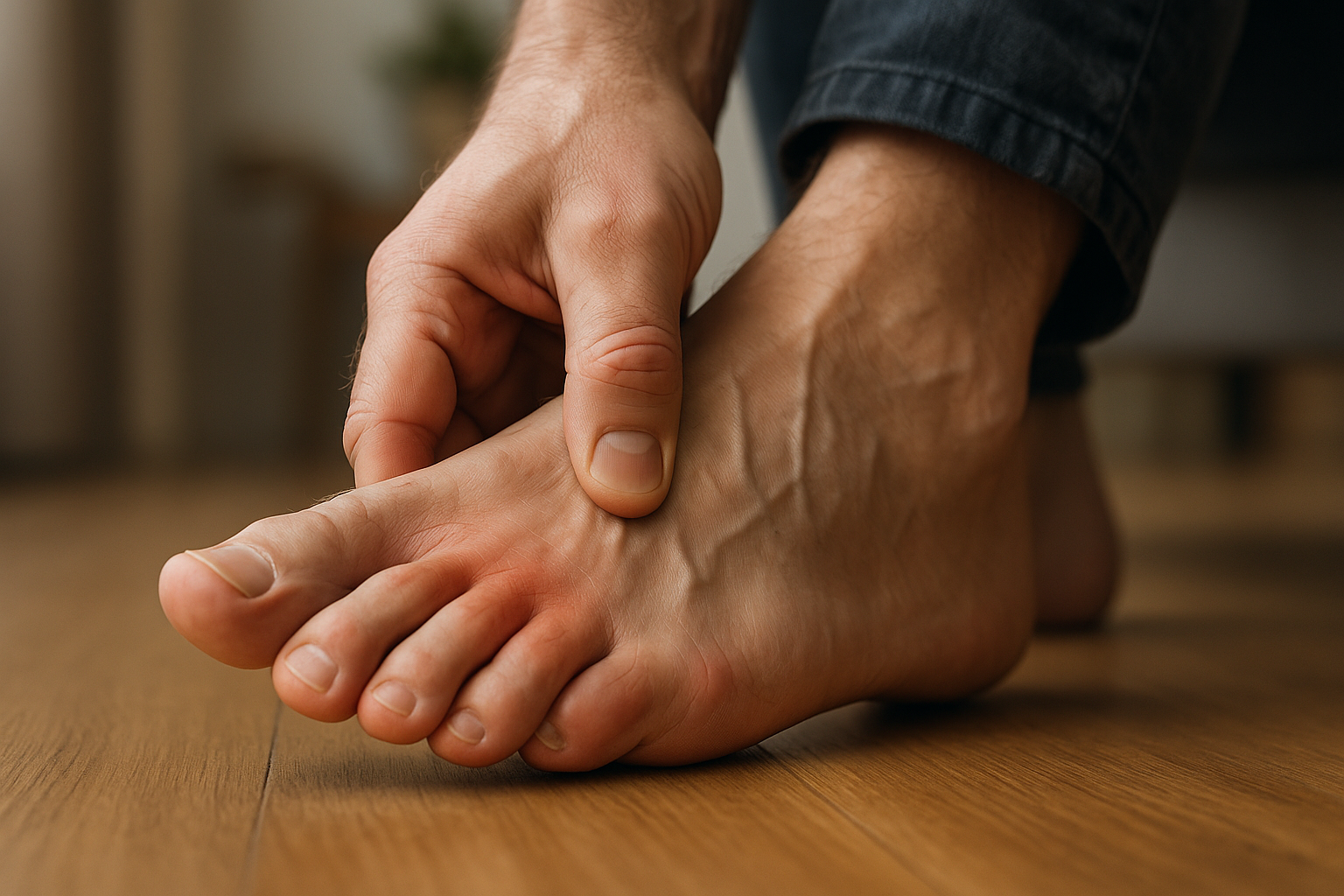
Pain under the forefoot refers to discomfort felt in the area under the toes and the front part of the foot. The pain may be local and concentrated in one place or more diffuse and extend over a larger area. For some, it is experienced as a constant soreness, while others feel stabbing or burning sensations under strain.
The experience varies from person to person and can change depending on activity level, footwear, and surface. The forefoot is in constant use in daily movement, which makes the area particularly sensitive to repeated strain.
How does the discomfort typically present itself?
Pain under the forefoot can present itself in several ways. Some experience pain when pushing off during walking, while others feel the discomfort most when standing still for longer periods. The pain may worsen at the end of the day or after periods of high strain and may subside again with rest.
Differences in the pain experience
For some, the discomfort feels like a pressing sensation, while others describe a sharper or burning pain. There may also be periods when the discomfort almost disappears, only to return again with repeated strain. These variations mean that the experience often changes from day to day.
How widespread is pain under the forefoot?
Pain under the forefoot is a relatively common issue in everyday life and can affect people in many age groups. People who stand or walk a lot during the day are often mentioned among those who experience the discomfort most frequently. Changes in activity level or daily routines can also play a role in when the discomfort occurs.
In everyday language, many experience that the discomfort can creep in and gradually affect freedom of movement, without there necessarily being one clear cause.
What can lead to pain under the forefoot in everyday life?
Several conditions can affect the strain on the forefoot over time. Repeated movements, prolonged standing, and hard surfaces can contribute to increased pressure under the foot. Choice of shoes, especially if fit or support does not match the foot's needs, can also change how the weight is distributed.
In addition, changes in walking pattern, pace, or posture can cause the strain to shift forward toward the forefoot. These conditions often arise gradually and only become clear when the discomfort begins to affect everyday life.
Variations in the discomfort under the forefoot
The discomfort can vary in both intensity and location. Some mainly feel pain under one or two toes, while others experience soreness across the entire width of the forefoot. The sensation can also change depending on the surface, pace, and how long the foot is under strain at a time.
In some cases, altered strain in the forefoot can affect other parts of the body, such as the ankles, legs, or back, if the walking pattern is adjusted to avoid discomfort.
Attention to daily patterns
When pain under the forefoot recurs, it may be relevant to pay attention to daily patterns. Many notice differences in the discomfort depending on the time of day, type of activity, or choice of footwear. These variations can provide insight into how the strain is distributed over time.
Small habits that matter over time
Small changes in everyday life can gradually affect the forefoot. This may be the way one stands, how the weight is distributed between the feet, or how often one takes breaks. Over time, these habits can show themselves as changes in comfort and mobility.
Footwear and surfaces in everyday life
Materials, the structure of the sole, and fit can play a role in how the pressure is experienced under the forefoot. Repeated use of the same type of shoes can lead to uniform strain, while variation can change the experience of discomfort.
Frequently asked questions
When is pain under the forefoot most often felt?
Many experience the discomfort most after prolonged strain, such as standing work or walks. For others, the pain only appears at the end of the day, when the foot is tired.
Can pain under the forefoot vary from day to day?
Yes, the experience can change depending on activity level, pace, and choice of shoes. Some days can feel almost symptom-free, while other days are more marked by discomfort.
Is it normal for the discomfort to come on gradually?
For many, pain under the forefoot develops over time. Small changes in strain or habits can slowly lead to increased attention to the area.
What signs can make one pay more attention to the forefoot?
Signs may include a changed walking pattern, frequent soreness, or a need to relieve the foot during the day. These observations may give reason to reflect on daily strains and routines.
.