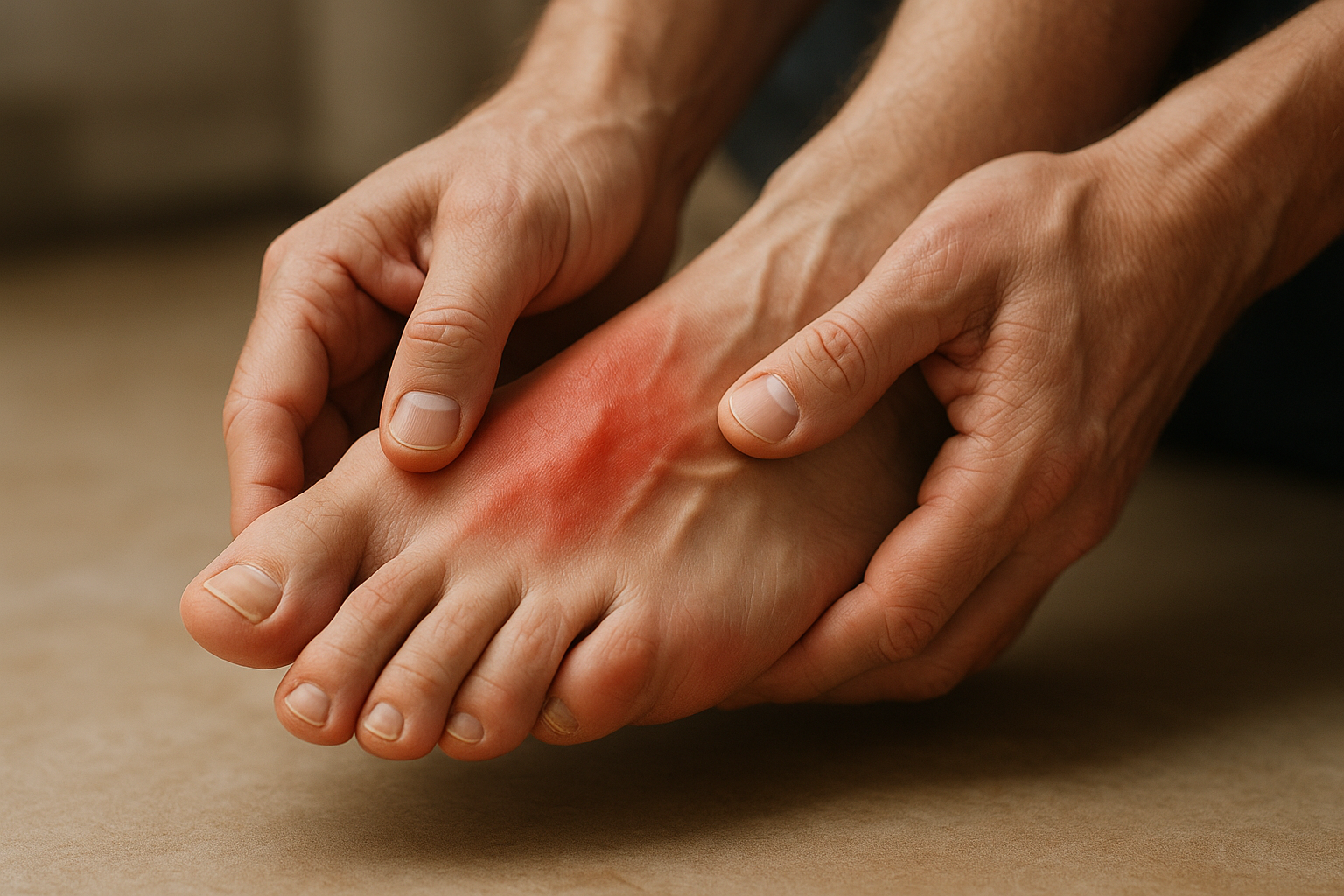
Many experience pain in the feet, and it is not unusual to feel persistent soreness or stiffness after a long day. The pain can manifest itself in different ways and in several parts of the foot – from the heel to the forefoot. Without going into detail about specific causes, this experience often gives rise to a search for information and advice on how best to manage the discomfort in everyday life. It is common that with age or with frequent activity one notices that the foot's comfort can be challenged, which leads to a desire for a simple and practical approach to relief.
What is pain in the feet?
Pain in the feet covers different types of discomfort that can be expressed through soreness, stiffness, or a penetrating, nagging sensation. This form of pain is often experienced when the foot is exposed to repeated strain or when daily activity leads to an unbalanced use of muscles and tendons. Sometimes the pain can be felt most clearly after periods of great activity, while for others it may occur more sporadically, but still affect daily life negatively.
In daily life, foot pain may seem like a result of both physical activity and the choice of footwear one uses. The pain can arise when the foot's natural movement pattern is exposed to extra pressure, which is often experienced as an unstable sensation in the arch of the foot or an immediate discomfort at the start of the activity. Many notice that even a short walk can become a challenge if the pain intensifies, and it can be difficult to find the right balance between activity and rest.
It is common to seek knowledge about the subject, as understanding what foot pain covers can create a reassuring sense of having control over one's own well-being. By knowing the different expressions of pain – whether it is a throbbing feeling, intense pain during certain movements, or a more diffuse discomfort – one can more easily identify which aspects of the daily lifestyle need a little more attention. This insight can provide a good framework for trying self-help methods that support the desire for an easier and more comfortable everyday life.
Causes of pain in the feet
Pain in the feet often shows itself as a result of repeated strain or imbalance in the way the foot is used. Overuse from prolonged standing or many steps, altered gait, and shoes without sufficient support can lead to local soreness and muscle tension. Body weight and changes in activity can also matter, just as natural aging can make tissues and joints less flexible. In some cases, there are local structural changes that alter the load in the heel, forefoot, or midfoot, and this may be a contributing cause of persistent discomfort.
How does foot pain show itself?
The pain can be experienced differently from person to person. Some feel a sharp pain with certain steps, others experience a more diffuse, dull soreness after activity. Typical expressions of pain include stiffness in the morning, increased sensitivity during prolonged walking, and local tension in muscles and tendons. The intensity of the pain can vary throughout the day and is often linked to load patterns and the foot's position during movement. The location of the symptoms may be centered around the heel, forefoot, or toes, but tension may also be related to the legs, back, and shoulders.
How widespread is it in everyday life?
Foot pain is a common problem that many experience to a greater or lesser degree. It is common among people with physically demanding work, people who walk a lot daily, and those who have increased activity levels. Although one rarely talks about numbers, it is common to hear about foot pain in different age groups, from younger active people to older individuals, where comfort and mobility can become more challenged.
What can affect pain in everyday life?
Several daily conditions can affect how the pain is experienced and persists. This concerns:
- use of shoes with poor support or incorrect fit
- the amount and type of physical activity
- the hardness of the surface, for example hard floors at work
- body weight and changes in daily movement
- the presence of muscle tension in the legs, back, or neck, which changes gait and load
These conditions can increase the load on the feet and make it harder to find daily relief and pain relief, especially when several factors occur at the same time.
What to pay attention to in everyday life
In everyday life, it is often the small, repeated patterns that matter for how the feet feel over time. How one distributes weight during standing working hours, variation in movement throughout the day, and the way one relates to fatigue and rest can all affect comfort. There are also a number of practical matters around care and observation that may be relevant to keep an eye on without seeking specific solutions.
A number of elements can be useful to note as indicators of changes in the condition of the foot. The condition of the skin and nails can show signs of pressure or irritation, and changes in sensation in the different parts of the foot can indicate that the load is shifting. At the same time, tension in the legs, hips, or back can influence gait and thereby affect how the load is distributed over time.
- The connection between daily rhythm and foot comfort, for example long periods in the same working position
- Changes in activities from day to day, which alter load patterns
- The condition of the skin and nails as an indicator of local irritation
- General muscle and joint tension in the lower body, which can affect gait and posture
Massage and touch can be experienced as a way to create well-being in the foot and provide immediate relief for many. In an everyday life where time is limited, attention is often about becoming aware of patterns rather than looking for quick solutions. Over time, the way one organizes one's days and which small habits one repeats can be closely linked to the experience of both discomfort and relief.
It can be reassuring to gather information and compare one's own experiences with general descriptions of foot comfort. At Reliefr, one gains insight into how products for massage and support are used in everyday routines, without the focus being on individual measures.
Frequently asked questions
What can provide quick temporary relief?
Immediate measures such as short-term rest, relief from pressure, and gentle massage can provide temporary relief for many. The effect varies according to cause and intensity, and such measures are often experienced as temporary.
What are the most common causes of pain in the feet?
In general, repeated strain, changes in gait, and local structural changes are among the most frequently mentioned causes. These conditions affect how weight and movement are distributed in the foot.
Can pain be prevented without a doctor's visit?
There are many daily habits and choices that matter for the foot's comfort. Being aware of patterns in activity, shoe choice in a broad sense, and regular observation of the condition of the foot can play a role in prevention over time.
.