Many experience heel pain during their lives, and it can be a challenge in a busy everyday life. The pain is often described as stabbing and being most pronounced in the morning or during prolonged strain. Heel discomfort can make daily activities less comfortable and create a feeling of uncertainty when the foot has to bear the body during walking and standing activities. It is common to seek information that provides an understanding of what the pain covers and how one can best achieve relief in everyday life.
Heel pain can be experienced as a burdensome sensation that affects both movement and the general feeling of well-being in the legs. Many find it useful to familiarize themselves with which factors may be related to this pain, so they can make informed decisions about relief and care. It is often about understanding how everyday activities and choice of footwear can influence the comfort and stability of the heel.
What is heel pain?
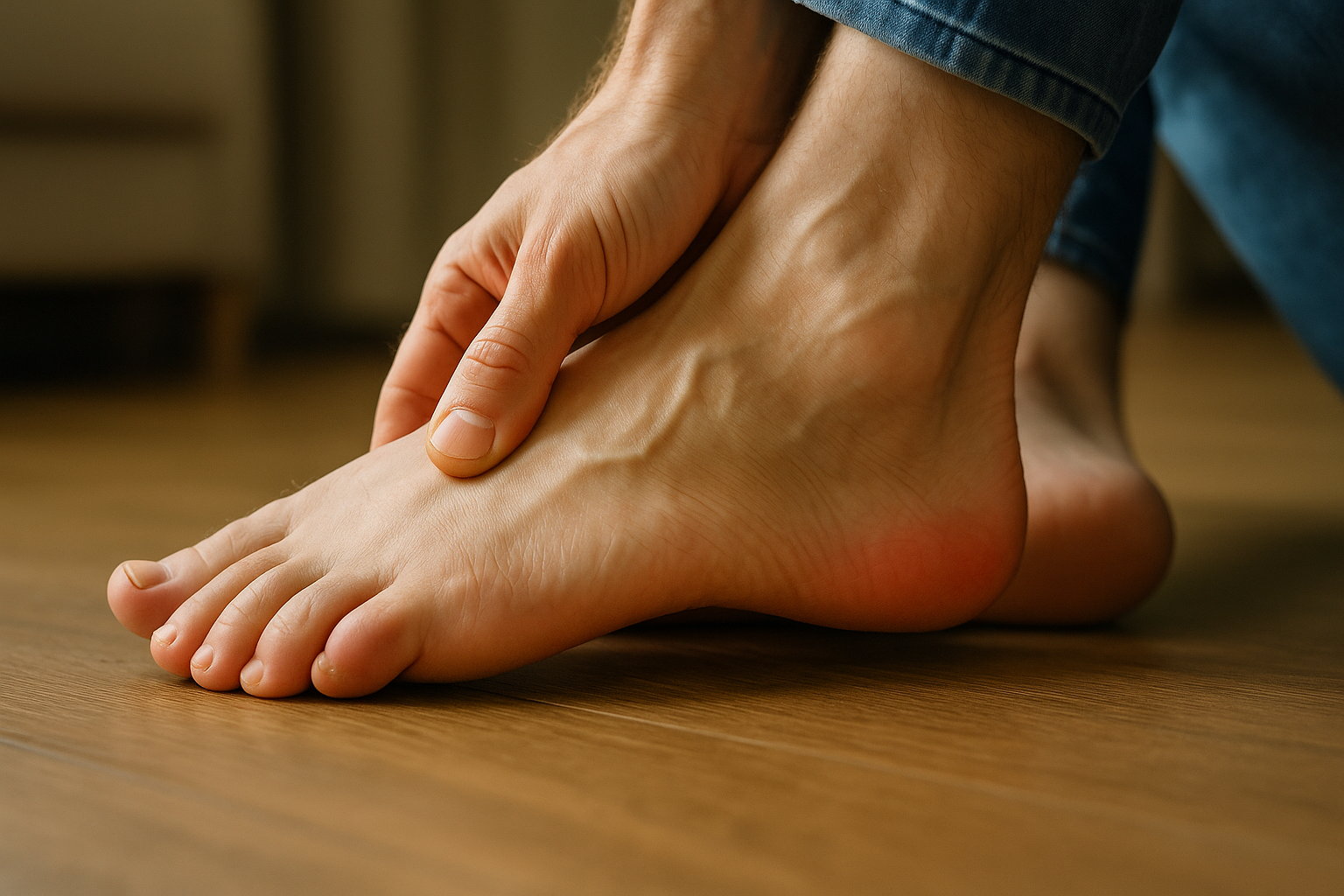
Heel pain is a very common problem that can be felt as a sharp or throbbing pain under the heel. The sensation is often most pronounced when getting up in the morning or after periods of inactivity, and it can intensify with prolonged strain. Many also describe a form of soreness that gives repeated reminders of the heel's vulnerability.
The daily experience of heel pain can vary. Some feel an uncomfortable tightness, while others experience more pronounced pain that makes it uncomfortable to walk or stand for too long. The typical symptoms may include:
- Stabbing or throbbing pain under the heel
- Discomfort, especially after periods of inactivity
- Worsened symptoms during prolonged strain
The focus is often on finding methods that can provide temporary relief in daily life. The topic is perceived broadly, and there is great interest in learning how simple measures can reduce the pain and thereby improve well-being. Many choose to seek information, as a safe and well-informed approach to managing heel pain can help create better balance in everyday life. By gaining a clear understanding of what heel pain involves, it becomes easier to make choices that support a more comfortable everyday life.
How does heel pain present itself?
Heel pain often presents as a sharp or stabbing sensation under the back part of the foot and can be experienced differently from person to person. Typical descriptions include soreness with the first step in the morning, worsening after prolonged standing or walking activities, and a feeling of tightness in the foot. In addition to the heel itself, tension can be felt in the calf, the sole of the foot, and sometimes all the way up into the knee or hip, which makes it relevant to view heel pain in connection with the entire chain of movement.
How often does heel pain occur in everyday life?
In everyday life, heel pain is common among people with varied activity levels. It can be temporary and come in periods of increased strain, or it can recur over a longer period and affect both walks and standing tasks. For many, the problem becomes a factor that affects the choice of shoes, how far they walk, or how they plan daily tasks to reduce discomfort.
Factors that can affect the pain experience
Several conditions in everyday life can often be related to how and when heel pain occurs. The use of shoes without sufficient support, hard surfaces during prolonged standing, and frequent repetitive movements can make the pain worse. Muscle tension in the calf, lower leg, and foot can also affect the sensation in the heel, just as changes in activity patterns can lead to the pain occurring more often or with greater intensity.
Variations in pain and duration
The pain experience can vary considerably. Some notice a short, sharp pain during strain, others experience a more throbbing or persistent soreness. The duration can range from a few days after particular strain to weeks, where the discomfort returns with certain activities. The intensity can fluctuate throughout the day, often most pronounced after rest periods or after repeated strain.
Pain relief and unloading in everyday life
Many seek solutions that focus on pain relief and unloading in everyday life rather than permanent interventions. Common measures that people often mention are about reducing strain on the heel, reducing muscle tension in the foot, calf, and leg, and creating more comfort in daily movement. Massage, gentle treatment of tense muscles, and short-term use of support in the shoe are examples of approaches that can provide temporary relief and make everyday activities easier to carry out.
Everyday attention around the heel
In the daily rhythm, there are several factors that can affect how heel pain develops over time. Small changes in movement patterns, the condition of the shoe, and standing times can appear as variations in pain intensity. Paying attention to how the discomfort appears in different situations gives a clearer picture of patterns and triggers.
Habits and patterns that may matter
Some habits are often linked with prolonged strain on the heel. Excessive one-sided strain in everyday life, repeated short periods of strain without rest in between, and changes in daily routines can affect the condition gradually. In addition, the age of the shoe and the distribution of wear can appear as changes in the foot's strain pattern.
- Wear in soles can change the strain and appear as increased discomfort
- Repeated short periods of strain are followed by soreness in some people
- Switching between soft and hard surfaces can affect how pain is experienced
- Tension in surrounding muscles can spread feelings of stiffness or soreness
Long-term considerations without specific advice
Over time, small, persistent influences can lead to the heel's symptoms changing character. For example, pain that was originally short-lived during strain can slowly become more persistent or appear during other movements. It is also common for discomfort in the heel to be related to tension in the lower leg or changes in gait pattern, which appear as uneven strain.
A calm attention to these patterns can provide insight into which daily factors are related to the discomfort. With us, the focus is on increasing understanding of how ordinary habits and repeated influences can affect well-being in the feet, so that one can better assess one's own experiences.
Frequently asked questions
How can heel pain be relieved?
Relief is often sought through unloading, massage, and treatment of tense muscles. Many find that gentle treatment around the heel and calf can change the character of the pain and temporarily reduce the discomfort.
What are the most common causes of heel pain?
The most common causes are often related to repeated strain or changes in the strain pattern. Conditions related to the plantar fascia and structural changes in the tendon area of the heel are frequently mentioned in descriptions of symptoms.
How can heel pain be prevented?
Prevention is often mentioned in relation to choice of shoes, variation in strain, and attention to daily habits. Being aware of these conditions can affect how the heel responds over time.
When is heel pain different from the usual?
Pain that changes character, comes suddenly with reduced function, or is accompanied by marked swelling or numbness may be signs of an atypical course. Such changes differ from the more common patterns, which often vary in intensity throughout the day.
.