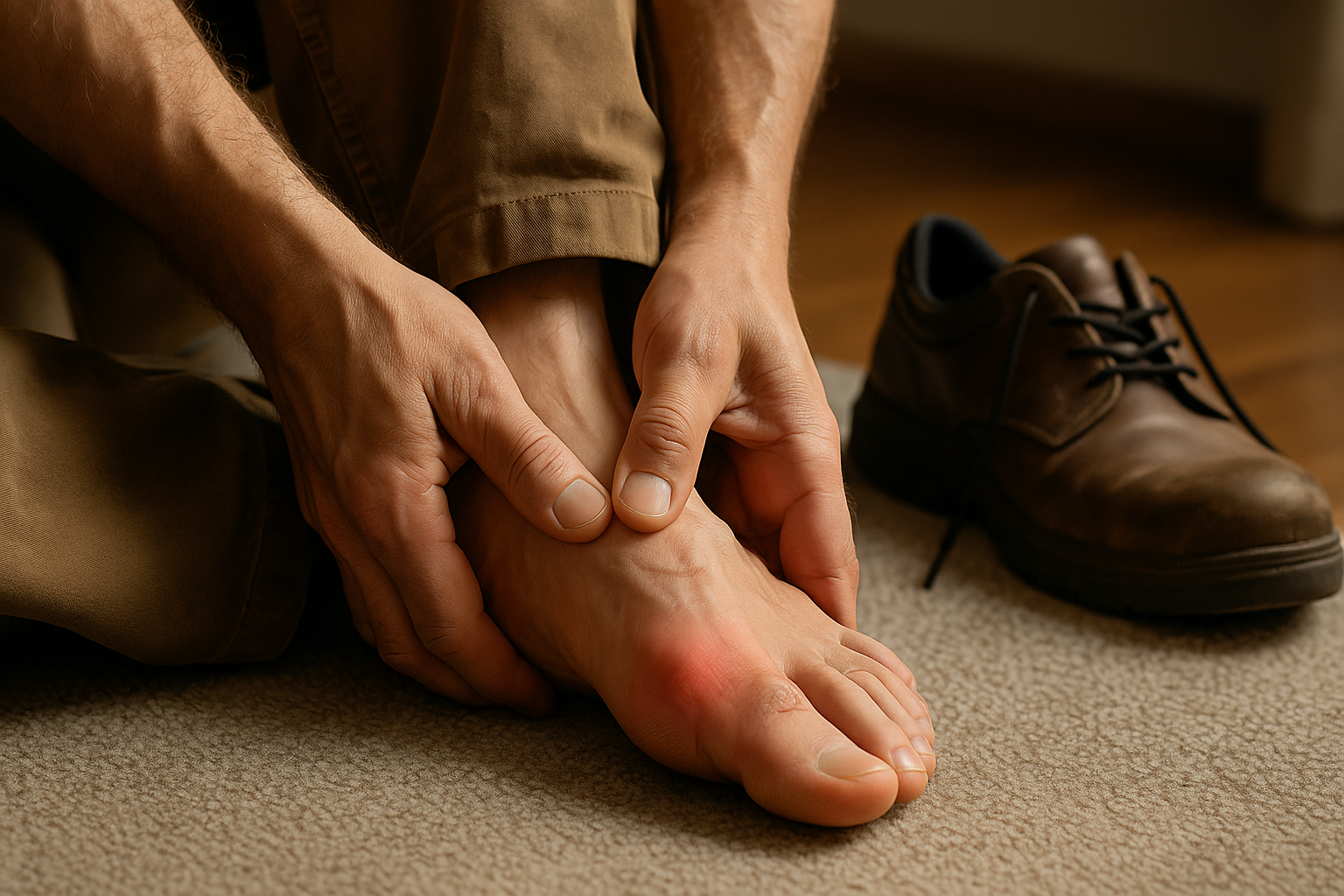
Many experience sore feet after a long day of standing work, walks, or the use of shoes that do not fit optimally. It is common that daily activity with repeated strain and pressure on the feet can lead to a feeling of fatigue and discomfort. The experience of soreness can vary from a slight irritation to more persistent pain that can easily be felt at the end of the day. This condition often arises gradually and can make it difficult to relax, because the feet – which carry the body's entire weight – require special attention and care. It helps to be aware that sore feet are often related to the strains of everyday life and can be relieved with simple measures at home.
Several notice that the daily strain from work or leisure activities can lead to a general fatigue in the feet. It is not unusual that the feeling of soreness gives rise to reflection on how the feet are cared for, and whether the daily footwear meets the demands placed on it. When the fatigue and soreness spread, it can seem as though overall wellbeing is affected, as comfort and relaxation are challenged by the persistent pain in the feet. It is easy to understand why many seek information about what sore feet actually cover and how best to provide relief in a busy everyday life.
What are sore feet?
Sore feet describe a condition where the feet experience a feeling of fatigue or pain after prolonged strain. This sensation can teach itself that the feet have become overstrained, either because of incorrect footwear, a large amount of activities, or a combination of daily strains. Many experience that the soreness can make it harder to enjoy the evening, especially if the feet are not given sufficient rest after a long workday. The feeling of discomfort can sometimes include slight swelling or a penetrating fatigue in both the heel and arch, and it is perceived as a natural reaction to the daily strain.
When talking about sore feet, the focus is on the feeling of pressure and the general discomfort that can arise when the feet are strained repeatedly. It is a common issue that many are familiar with, and which often leads to considering whether there are circumstances one can change in daily life to reduce the discomfort. Sore feet are thus an expression that the body's movable parts require care and adaptation to the strains they are exposed to every day.
How sore feet present themselves
Soreness in the feet can be experienced in several ways. Many describe a general feeling of fatigue after long periods on their feet, while others experience sharper pain with pressure in the heel, arch, or toes. The feeling can also be local soreness in certain areas after repeated strain, or a more diffuse soreness that spreads through the foot's muscles and connective tissue. Some experience slight swelling or stiffness, especially after many hours of activity without a break.
How common is it in everyday life?
Sore feet appear frequently in everyday life, especially during periods of increased physical activity or prolonged standing work. It is common among people who walk a lot in their job, during long walks in their leisure time, or during periods of changed activity level. Age and body weight can affect how often and how intensely the soreness is experienced, and many experience symptoms that vary from day to day.
Factors that can affect soreness in the feet
- Use of shoes without sufficient shock absorption or rygning needs space for the toes can cause increased pressure.
- Long periods of standing work or frequent walks without appropriate rest can lead to fatigue and soreness.
- Poor blood circulation in the feet and legs can make the area more sensitive to strain.
- Overweight and age affect the strain on the foot's muscles and joints.
- Uneven surfaces or repeated movements in the same pattern can put extra pressure on certain areas of the foot.
Variations in pain and connection with muscle tension
The experience of pain can vary from mild discomfort to marked soreness, depending on the duration and character of the strain. The soreness in the feet is often related to muscle tension in the legs and calf muscles, and it can also settle in the back, neck, or shoulders as a result of changed walking or posture to avoid discomfort. Where the pain is localized — for example in the heel, arch, or toes — can affect which muscles become extra strained during walking and standing.
What you can pay attention to in everyday life
In everyday life, soreness in the feet often appears through patterns that can be useful to record. The time of day can be important, as soreness can sometimes be most pronounced in the evening after many hours of standing or walking, while others experience increased sensitivity in the morning. Symmetry between the right and left foot can say something about the distribution of strain, and new sore points that appear suddenly may differ from the more diffuse fatigue one otherwise knows.
Factors that affect over time
Some conditions have long-term significance for how feet feel. The hardness of the surface at work or in daily routines can over time change where the strain is placed on the foot. Temperature and fluid balance can affect the size and sensitivity of the foot, so feet can feel different depending on the season or activity. Repeated movements in the same pattern can cause micro-strains in specific areas, and small changes in the walking pattern can shift the pressure to new places.
Signs in shoes and socks you can notice
- Uneven wear on the front of the sole or the heel area can indicate how the strain is distributed during walking.
- Socks that are tight or have visible folds can be experienced as discomfort, especially if the feet change size during the day.
- Changes in the shoe's support ability over time can appear as increased sensitivity in certain zones of the foot.
Interaction between body habits and the experience of soreness
The experience of sore feet is often related to overall habits such as sleep and stress level, as fatigue and concentrated stress can change the body's sense of pain. Prolonged uniform working positions without variation can create constant pressure zones, while small changes in daily routines can cause the soreness to change character over time. Being aware of these signals can make it easier to understand how the feet react in different situations.
The way forward
Calm attention to patterns, times, and signs in footwear and socks can provide useful knowledge about how the soreness develops. When one notices changes in symptoms or new patterns, it may be natural to seek answers to specific questions. Below are some frequently asked questions that readers typically seek answers to.
Frequently asked questions
Why can the soreness be worse in the evening?
Soreness can be experienced as more pronounced in the evening, as the foot's tissues and joints have been strained throughout the day, and the sensitivity can increase after longer periods of standing or walking.
Can the weather affect how feet feel?
Temperature and humidity can affect tissue volume and comfort in the feet, so both warm and cold periods can change how soreness is experienced.
What do wear patterns on shoes tell about the strain?
Wear patterns can show where the pressure is primarily placed during walking. Unevenness in wear can be related to changes in walking pattern or weight distribution over time.
When are changes in soreness worth noticing?
Sudden new places of soreness or changes in how the pain feels compared with previous patterns are often what people notice first when something has changed in everyday life.
.