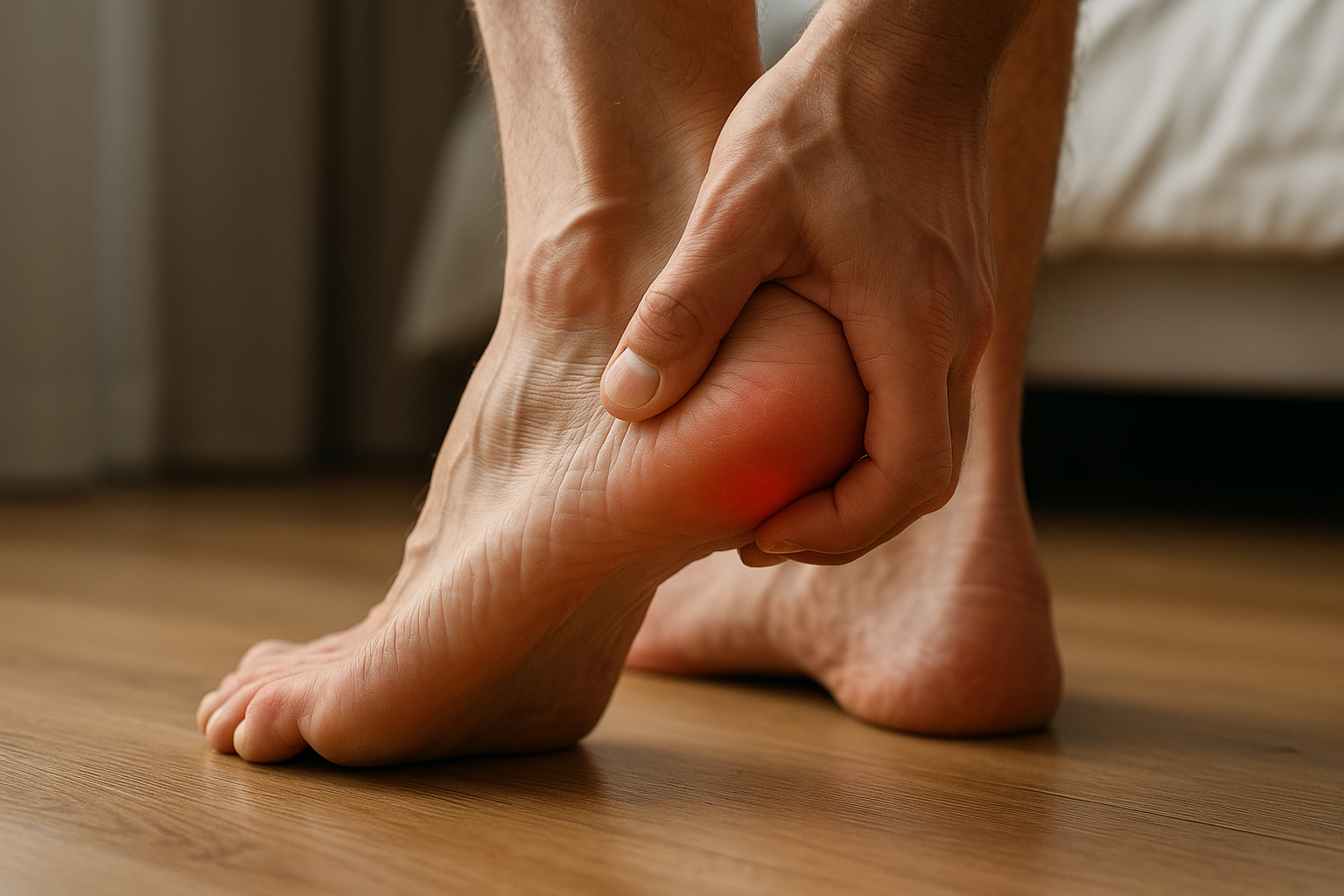
Many experience pain in the heel, which can be part of a daily challenge when the discomfort is felt especially in the morning. It is common for pain under the heel to affect activities such as walking or standing, and many find that the first steps in the morning can feel extra sharp. Although the condition can vary from person to person, it is important to gain a basic understanding of what heel spurs cover, in order to create clarity about how the pain occurs and can be felt in everyday life. A factual approach to the topic can help provide a reassuring framework, where one understands both the origin of the pain and the general characteristics of the condition.
What are heel spurs?
Heel spurs occur as a calcium deposit on the heel bone, which can cause a sensation of sharp or throbbing pain. This calcium deposit is associated with a condition in which the heel experiences repeated strain, which is often felt most clearly in the morning. The pain may subside when the heel is warmed up and in motion, but often returns after longer periods of inactivity. Many experience that heel pain can vary in intensity depending on how much the foot has been used during the day.
Typical signs of heel spurs may be:
- Morning pain with the first steps
- A persistent sharp sensation in the heel during strain
- Pain that returns after rest
It is common to seek information about heel spurs, as many want to learn more about how the condition develops and affects everyday life. For those who often experience pain, an understanding of how heel spurs relate to strain and the subsequent inflammation can help make everyday life more manageable. By taking a closer look at how heel spurs are felt and described, it becomes clear that this is a condition many are familiar with – part of the information that can be useful when managing pain under the heel.
How do heel spurs present themselves?
Heel spurs often present as a sharp or stabbing pain in the heel itself, especially with the first steps in the morning or after a long period of rest. The pain may feel intense during strain, but often milder when the foot is warmed up and in motion. Many also describe a throbbing or tender sensation after long walks or standing work, and irritation can vary from day to day depending on activity and rest.
What can cause heel spurs?
Several factors can contribute to causing heel spurs. Repeated strain on the sole of the foot, prolonged standing, incorrect or hard shoes, and persistent excess weight are often associated with greater strain on the heel. Reduced mobility in the ankle and muscle tension in the calf can also increase pressure on the heel area. Work or leisure activities involving a lot of standing or walking increase the likelihood of problems.
How common are heel spurs?
Heel pain is experienced by many at some point in life, and it is a common problem among people who walk or stand a lot in everyday life. The frequency often increases with age and with lifestyle factors where regular strain on the feet is present. Across the population, there is variation in how often the pain occurs and how long it lasts, but it is common for the symptoms to temporarily affect daily activities.
Differences between heel spurs and plantar fasciitis
Heel spurs and irritation in the plantar fascia can present differently, although they can occur at the same time. A calcium deposit on the heel bone does not necessarily have to be the cause of pain; often it is the surrounding irritation or strain that can be experienced as pain. Therefore, two people with similar imaging findings can have very different degrees of discomfort in everyday life.
How does heel pain affect everyday life?
Pain in the heel can affect movement patterns and lead to increased tension in other areas such as the legs, back, shoulders, and neck when trying to relieve the sore foot. This can cause limitations in walks, work, and leisure activities and lead to more sitting time or avoidance of certain movements. For many, practical relief and a focus on pain relief are important elements in maintaining daily routines without constant discomfort.
What to be aware of
In everyday life, small patterns and repeated strain can matter for how heel pain is experienced over time. It can be useful to notice which activities take place before pain occurs, how the feet rest in shoes and during leisure time, as well as how prolonged standing work affects the feeling in the sole of the foot. Many describe that changes in the surface or the shoe's cushioning can cause variation in the discomfort, and that tension in the calf is often linked to how the strain is distributed.
It is also common for daily routines to play a role in the experience of pain. For some, the symptoms appear more clearly in certain situations during the day, while others experience a more even impact. Being aware of patterns rather than looking for isolated actions can provide a broader picture of what affects the pain experience in everyday contexts.
Habits that can affect over time
Some factors develop gradually and can become significant in a longer-term perspective. Here are examples of factors that are often mentioned in connection with heel pain:
- Prolonged standing or walking activity on hard surfaces
- Wear of the shoe's cushioning and changed support in footwear
- Repeated one-sided strain at work or during leisure
- Persistent muscle tension in the lower leg
- Misalignments in gait pattern or foot position over time
These elements can, individually or in interaction, affect how the discomfort develops. Over time, small changes in habits or daily use can affect how often and how intensely the pain is experienced, without there necessarily being a single explanation.
It can be reassuring to gain perspective on these factors, so that one gets a broader insight into the connections between everyday patterns and the pain experienced. Below you will find answers to common questions that often arise in this context.
Frequently asked questions
Can pain from the heel change from day to day?
Yes, symptoms can vary significantly from day to day. Variations in activity, surfaces, shoes, and rest can all play a role in how the pain is felt. For some, the discomfort will be present for shorter periods, while others may experience more fluctuating patterns over a longer time.
Is there a difference in how massage can be experienced in relation to pain?
People describe different reactions to massage; some experience temporary relief or increased well-being, others notice no change. The effect often depends on massage intensity, area, and individual sensitivity, and the experience can vary from person to person.
How long can symptoms typically last?
The time course of heel pain is very individual. For some, the symptoms are short-lived, while others have experienced longer periods of fluctuating discomfort. The variation depends on daily habits, strain patterns, and the individual's experience of pain.
.