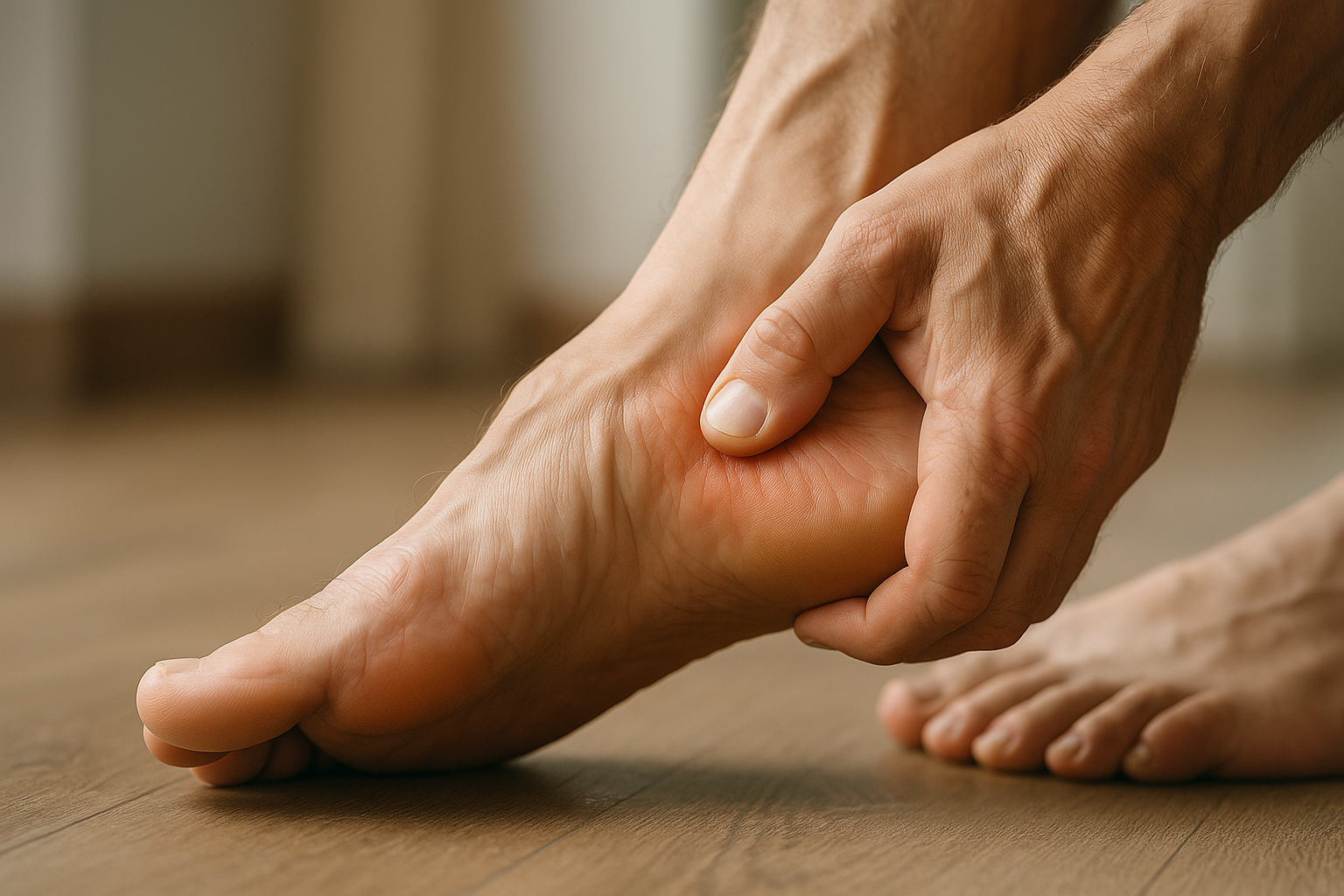
Many experience pain in the foot, especially when it is affected by discomfort in the arch. It is common for the pain to begin in the morning with the first steps and to become accustomed to hurting during prolonged standing or walking. The pain in the arch is most often felt as a sore and stiff sensation that can quickly affect daily comfort and movement. For those who experience these symptoms, it can be reassuring to know that arch tendon inflammation is a widespread condition that is often related to overuse and tight muscles and tendons. This condition can be seen as a natural reaction in the foot when the load becomes too great over time. Many have at some point felt that the foot is not functioning optimally, which can give rise to questions about what actually underlies the pain and how it can be relieved with practical measures in everyday life.
When the foot is exposed to repeated strain, such as during running, long workdays involving standing, or the use of footwear without sufficient support, the natural cushioning in the arch can be challenged. This leads to the arch tendon – the tissue that runs along the underside of the foot – becoming tight and sore. The experience is felt particularly clearly in the morning or after longer periods of rest, when the first load on the foot makes the pain prominent.
What is arch tendon inflammation?
Arch tendon inflammation is a condition in which the part of the foot called the arch becomes sore and inflamed. The condition often arises when the arch tendon is overloaded or affected by tight muscles and tendons. It is typically seen in people who have an active everyday life or who experience long periods of strain, for example during work, sports, and other daily activities. Many find that the pain in the arch can vary from mild discomfort to more intense soreness, which is especially felt with the first steps after a rest period.
Several experiences with arch tendon inflammation may include:
- Pain at the heel and in the arch itself
- Soreness with the first steps in the morning
- Discomfort during prolonged walking or standing activity
It is a condition in which daily routines can be affected, and many therefore seek information on how best to manage and understand this form of foot pain. By focusing on the overall characteristics of arch tendon inflammation, one gets a clear picture of what underlies the discomfort and why the pain can seem so bothersome in everyday life.
How does the pain show itself in everyday life?
The pain in the arch can show itself as recurring stiffness and soreness with the first steps after rest and as a feeling of fatigue in the foot after longer periods of walking or standing. Many experience that the discomfort can change throughout the day: sharper at the start of an activity, more sore after prolonged strain, and often stiffer after rest. The pain can also be experienced as increased sensitivity to pressure under the heel and midfoot, making ordinary tasks such as shopping or walks less comfortable.
Everyday factors that can cause worsening
Several daily conditions are often linked to a worsening of pain in the arch. Long periods on hard surfaces, repeated strain from running, or rapid changes in activity level can cause increased discomfort. Using shoes without sufficient support or with worn soles can change how weight is distributed on the foot and increase the load. In addition, fatigue or too little rest between strenuous activities can cause the pain to become more persistent in daily life.
Muscle tension and which areas are affected
Muscle tension in the calves and Achilles tendon is often linked to increased pressure on the arch and can make the pain more pronounced. Tension can also be felt in the underside of the foot and in the ankle. Altered gait due to pain can affect other areas such as the knees, hips, and back, because the body shifts the load. Being aware of how the calves, feet, and legs feel during the course of a day gives a more nuanced picture of where tension arises.
What can provide quick pain relief in everyday life
Pain relief in everyday life is often seen through targeted offloading of the foot and by reducing repeated strain during periods of increased discomfort. Gentle massage and warmth can reduce muscle tension and provide temporary relief, just as lighter relief from standing tasks can reduce fatigue in the foot. Small changes in movement and short breaks in daily activities can provide better comfort and make it easier to manage everyday tasks without constant discomfort.
Daily habits that matter
Pain in the arch can be affected by repeated daily patterns, and it is useful to be aware of which habits recur in everyday life. Strain related to work or leisure activities is often linked to how the foot is loaded over time. Less visible conditions such as the wear pattern of the shoes, variation in surfaces, and the way weight is distributed during standing tasks can all play a role in how the symptoms develop.
Factors that can affect over time
- The shoe sole and shock absorption can affect where the pressure meets the underside of the foot
- Prolonged standing work or repeated stride pulls significance for fatigue in the arch
- Changes in gait as a result of discomfort can affect other joints such as the knee and hip
- Differences in surface level, for example hard floors versus softer surfaces
- Daily recovery and variation in movement can show themselves as differences in symptom intensity
These conditions describe connections rather than concrete solutions. Over time, persistent influences can change how and when the pain shows itself, and it can be useful to observe patterns rather than seek immediate answers. The variation from person to person means that what is relevant for one person does not necessarily apply to another.
Another aspect is the body's way of reacting to strain. Sensations in the calf and Achilles tendon are often linked to pressure under the underside of the foot, and small changes in daily movement can create differences in perceived discomfort. Sleep, fatigue, and general stress can also affect the pain threshold and how the pain is experienced during the course of a day.
Gaining insight into these patterns can provide a more nuanced impression of everyday life around arch tendon inflammation, without this constituting concrete advice. Below we answer some of the most common questions that often arise when one wants a better understanding of the condition.
Frequently asked questions
Is arch tendon inflammation hereditary?
Some anatomical traits can recur in families, and hereditary differences in the shape of the foot can be linked to how load is distributed, which can affect the risk of symptoms.
Can weight changes affect the pain?
Changes in body weight can change the load on the feet, and such a change can be experienced as a difference in how much discomfort arises during daily activity.
How do symptoms vary with age?
Age-related changes in tissue elasticity and in activity patterns can cause the symptoms to appear differently throughout life and can affect intensity and frequency over time.
.