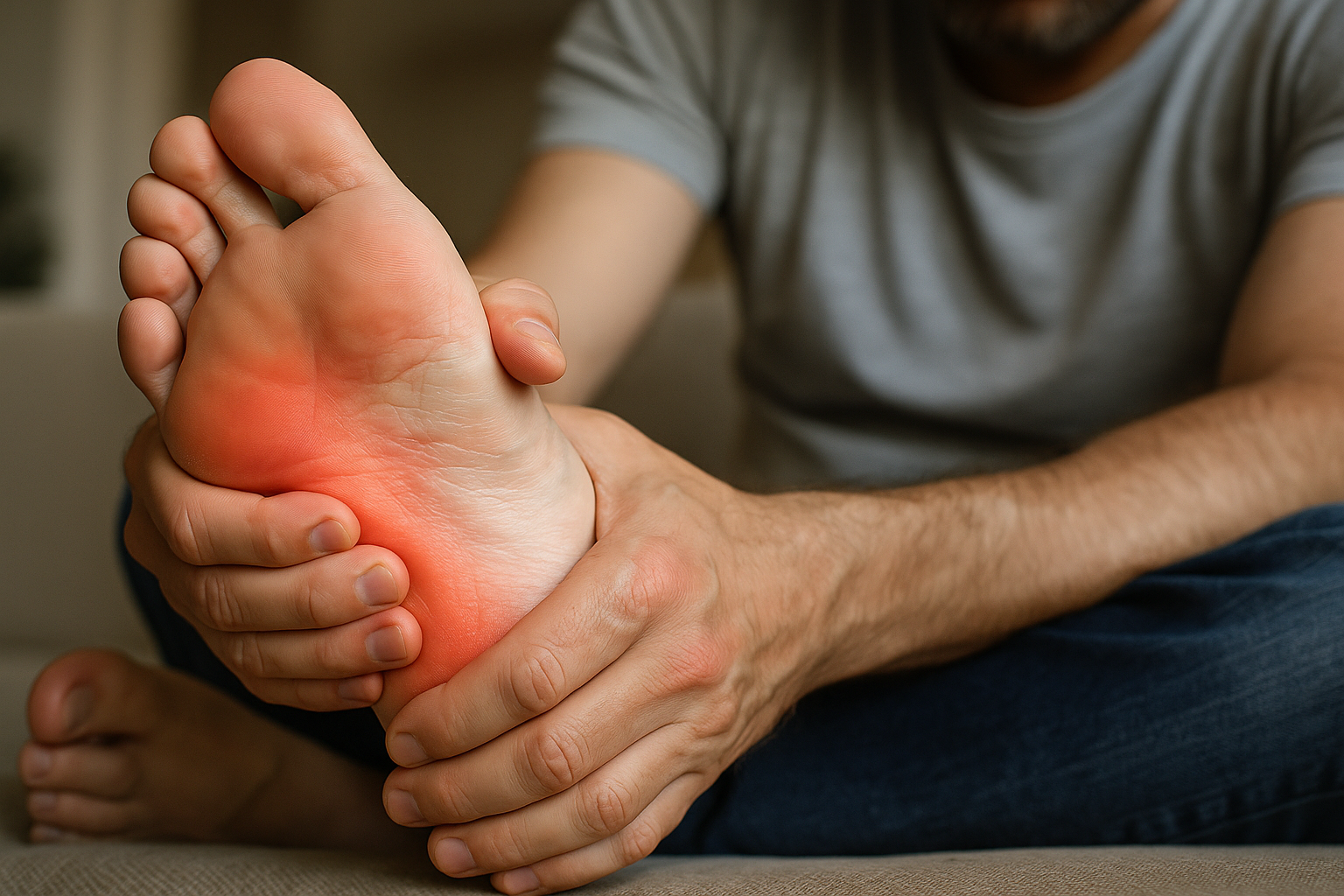
Many experience pain in the heel, which can often be associated with overuse. It is not uncommon to feel soreness and stiffness, especially at the start of the day, when the foot has been resting. Heel pain can affect daily movement, and for those who experience persistent discomfort, it may give reason to seek information on how to best relieve the pain in everyday life. By understanding the common experiences associated with this condition, it becomes easier to assess which simple exercises and massage techniques can relieve the discomfort and provide increased well-being. This knowledge is useful when one wants a safe and informative approach to the problem, so one can better take care of one's heel pain without struggling with uncertainty about what is normal to experience.
When approaching the topic of plantar fasciitis exercises, one encounters descriptions of how individual stretches and massage techniques can help reduce the pain and increase the foot's mobility. It has been noted that many who regularly perform simple exercises experience a gradual improvement, making it easier to manage everyday challenges without constant discomfort. At the same time, an understanding of how overuse can cause pain provides a good starting point for finding relieving methods that suit the individual's needs.
What is plantar fasciitis?
Plantar fasciitis is a condition involving a band of tissue on the underside of the foot that runs from the heel to the toes. This band acts as an important support for the arch of the foot, but with overuse it can become sore and stiff. Many experience that the pain is most pronounced in the morning or after longer periods of rest, when the first steps can seem especially painful. It is common to seek information about plantar fasciitis exercises because these simple techniques can help relieve the discomfort that often comes with the condition.
Typical characteristics of the condition include:
- Soreness in the heel after periods of inactivity
- Stiffness when starting after rest
- Discomfort during prolonged strain
These symptoms lead many to consider how everyday stretches and massage can reduce the pain and strengthen the foot's function. By creating an understanding of what plantar fasciitis involves, a good framework is achieved for working with the exercises that can help reduce heel pain and make everyday life more comfortable.
How does the pain present itself?
The pain in the heel can appear differently from day to day. Many experience the most discomfort with the first steps after rest, while others notice a stabbing or burning feeling during longer walks or longer periods of standing work. The pain may feel localized in the heel area or spread out toward the inside of the foot and up into the lower leg, depending on how tense the muscles around the foot and calf are.
How often is heel pain experienced in everyday life?
Heel pain is common among people who walk or stand a lot at work, as well as among active exercisers. In everyday life, it can affect walks, stair climbing, and longer periods on one's feet, and many often adjust movement patterns to avoid the most intense discomfort. For some, the effect is temporary, while others experience recurring problems with repeated strain.
Common causes that can cause heel pain?
- Frequent or suddenly increased strain from running, walks, or long workdays
- Footwear without good support or with a worn-out sole, which is often related to increased strain on the underside of the foot
- Increased muscle tension in the calf, buttock, and underside of the foot, which can change the movement pattern
- Hard surfaces and long periods of standing work, which can affect the strain on the feet
Exercises and massage for targeted pain relief
Simple stretches and self-massage can relieve acute discomfort by loosening tense muscles in the calf and sole of the foot. A basic stretch consists of pulling the toes and forefoot toward you to lengthen the tissue area under the foot; this can help reduce stiffness. Rolling a small ball or bottle under the length of the foot can provide local relaxation and increased blood flow, which is often experienced as immediate relief.
Muscle tension in other areas of the body
Tension in the back, neck, or shoulders may seem unrelated to heel pain, but posture and gait pattern are often connected with the strain on the feet. Tightness in the hamstrings and hips can change the running or walking pattern, so the calf muscles work harder and the feet receive greater strain. Being aware of several areas of the body can therefore be relevant in relation to how heel pain appears in everyday life.
Everyday awareness for feet
In everyday life, it is useful to pay attention to repeated patterns that can affect the feet's comfort over time. Prolonged standing periods, repeated strain patterns, and variation in surfaces can change how pressure is distributed under the foot. Even smaller changes in gait pattern or the fit of the shoe can have an influence, and it is therefore relevant to notice which situations most often cause discomfort.
Habits that may matter over time
Small daily habits are often connected with how strain is experienced. Routines such as wearing the same type of footwear every day, long periods without relieving the feet, or repeated movements at work can affect comfort. Likewise, tension in the calf and hip can change the strain pattern, which can affect the foot's way of taking load over longer periods.
Surfaces, shoes, and wear patterns
The hardness of the surface and the condition of the shoe can play a role in how the strain is distributed. Wear on the sole and the fit of the shoe can appear as altered strain zones, and different types of surfaces during a day can create variation in how much the foot is exposed to shock and pressure. Paying attention to where and when the discomfort occurs can give perspective on which daily settings matter most.
Experiences with massage and self-care
Many describe that massage and self-massage can feel different from one time to the next. For some it is immediate relief, for others the touch can give temporary soreness. Expectations and previous experiences are often connected with how a technique is experienced, and it is common to notice that the reaction can vary with time and daily strain.
Monitoring patterns without acting immediately
Observing patterns rather than seeking quick solutions can be informative. Making notes of which activities or times often recur can provide a picture of the connections between daily habits and experienced discomfort. Such observations can be useful as background knowledge before deciding on the next step.
Frequently asked questions
How quickly can one typically notice changes?
The time frame varies greatly. Some experience changes within a few weeks, while others see development over several months. How quickly something is noticed is often related to the frequency of the habits that affect the feet, and to how consistent one's daily patterns are.
Can massage feel like increased soreness?
Yes, it can be experienced differently. For some, touch can cause temporary soreness, while others describe relaxing or relieving sensations. Variation in sensitivity and time of day often play a role in how massage feels.
Which daily factors have the greatest effect over time?
Factors such as repeated strain, choice of footwear throughout the day, the hardness of the surface, and general movement patterns all matter. These elements are often connected and can add up to noticeable changes over time.
.