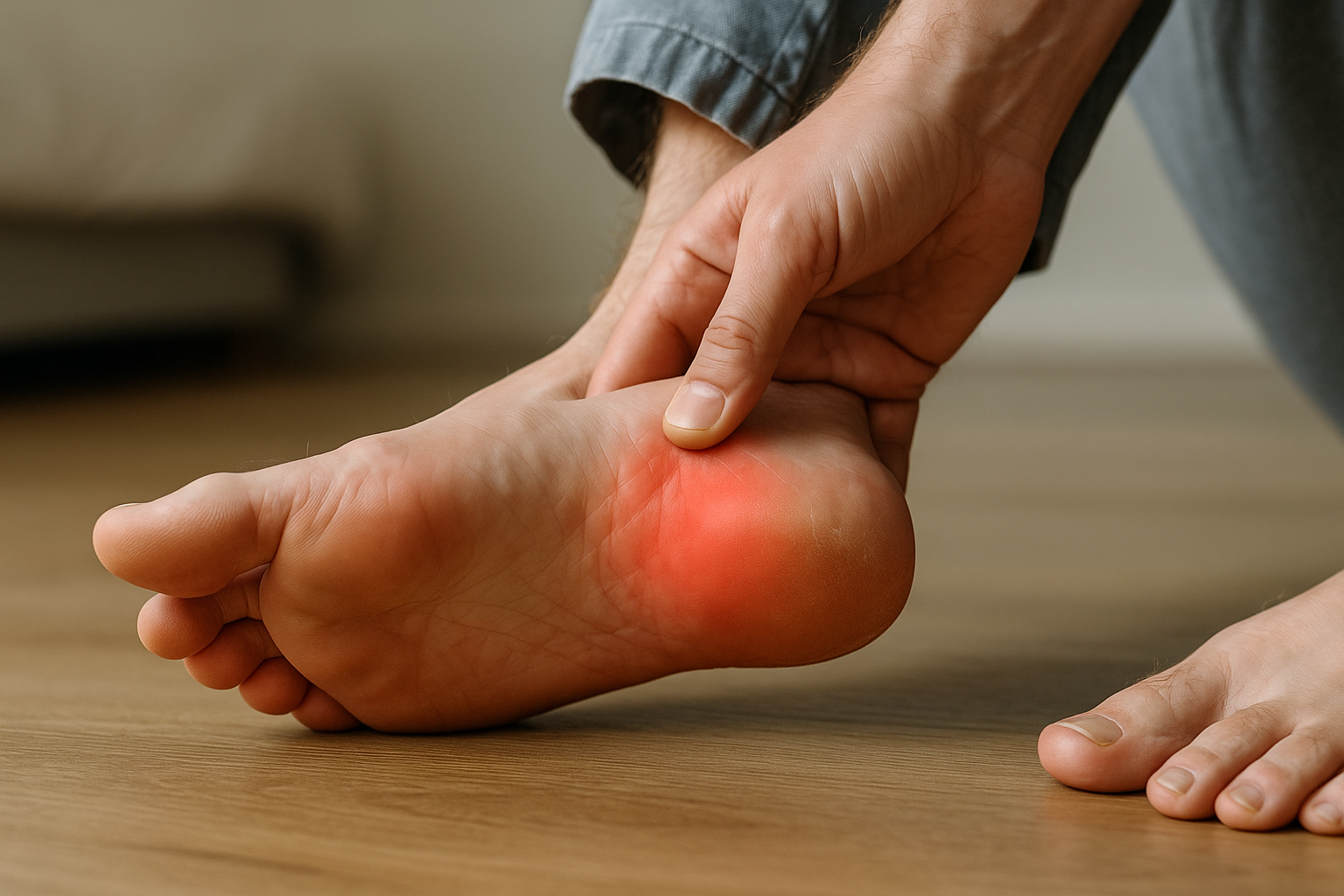
Many experience pain under the heel, and it is a widespread phenomenon that can easily be felt in everyday life. It is common to wake up with soreness in the feet, which can become especially noticeable when you begin to move. Pain under the heel can be felt both when walking and during physical activity, and it can feel unpleasant to start the day when the pain sets in. For many, heel pain can lead to a sense of caution in daily movements, as the discomfort often increases with strain. It is a condition that many seek clarity about, as it can both hinder normal comfort and affect overall well-being. During periods of increased activity or changes in daily life, pain under the heel can become one of the challenges that affects daily quality of life.
Most people have at some point experienced that heel pain appears especially in the morning, but it can also worsen when the foot is exposed to prolonged strain. It can be a reminder of how our body reacts to overuse and changes in daily movement. Many people seek knowledge about what can cause pain under the heel, and why the pain often seems to be most pronounced after periods of rest, for example in the morning, while it may ease somewhat after getting started with the day's activities.
What is pain under the heel?
Pain under the heel refers to a feeling of discomfort that can vary from mild tenderness to more pronounced pain. This condition is often experienced as a dull and persistent pain that makes itself felt when you set the foot in motion. The symptoms may include:
- Pain in the morning with the first steps
- Tenderness when walking or after physical activity
- A persistent feeling of discomfort in the heel area
The phenomenon of pain under the heel most often occurs in connection with overuse or minor irritations that can be felt in the large area under the foot. It is a condition where many find that the pain helps set the pace for the day and changes the way they move. The problem can therefore give rise to seeking clear and fact-based information in a busy everyday life about the causes, and how best to create a feeling of relief in a situation where everyday movement is central. This information can provide better insight into why heel pain occurs and how it affects daily comfort without having to delve into complex treatment methods.
How the pain typically appears
Pain under the heel can appear in several forms. Many experience a sharp stab with the first steps after rest, while others notice a more dull, persistent soreness that worsens with prolonged standing or walking. There may be swelling or stiffness in the area, and the pain can be described as local pressing discomfort under the foot. The symptoms can also vary throughout the day and often feel stronger with repeated strain.
Where in the body secondary effects are seen
Pain in the heel often affects movement patterns, which can create tension elsewhere. Frequently mentioned areas are the feet, legs, and back, but the neck and shoulders may also feel affected if posture or gait changes to relieve the foot. When compensating during walking or standing activities, muscles in the calf and around the hip can become more tense, which can reduce overall movement comfort in everyday life.
How widespread is the problem in everyday life?
Pain under the heel is common among both physically active people and those with daily standing tasks. Many experience periods of increased tenderness after changes in activity level or after longer periods without sufficient rest. In normal everyday life, this pain can be a recurring nuisance that affects the choice of shoes, walking pace, and the general desire to be active.
Everyday factors that can affect the experience of pain
- Prolonged standing or repeated strain on the foot can cause increased discomfort.
- Sudden increases in activities, especially walking or jumping, are often associated with worsening.
- Weight impact and strain from daily tasks can make it harder to find relief.
- Footwear with poor support can make it more challenging to relieve the heel area.
Muscle tension and why relief works
Muscles and soft tissues around the foot can become tense in response to pain. This tension can increase the experience of discomfort and limit mobility. Relief in everyday life is about reducing repeated strain and creating a more even distribution of pressure, which often results in less muscle tension and improved comfort. Pain relief can be achieved by reducing the load over time and by creating better conditions for relaxation in the affected muscles.
Daily patterns and small strains
In everyday life, repeated short movements and small changes in routine can matter over time. This may be variations in surfaces, frequency of stairs, or the amount of carrying during the day. Such patterns affect not only the place where the pain is felt, but also how the body distributes strain to surrounding muscles and joints. Over months, repeated patterns can change the way you move, and in some cases this can cause the experience of pain to arise, and in some cases it can cause the experience of pain to change slowly.
The body's rhythm and perception of pain
The intensity of pain can vary with the body's biological rhythms. Sleep quality, stress level, and general energy patterns can influence how pain is perceived from day to day. It may be experienced as though the same activity feels different depending on whether you are well-rested or tired. Over time, such factors are often linked with changes in both discomfort and in the sensory signals the brain receives from the foot.
Work environment and movement variation
The way a typical workday is structured can affect the condition of the heel. Prolonged monotonous strain on the feet or repetition of certain movements can alter tension patterns in the lower leg and the foot's soft tissues. Variation in movement during a workday can also mean that the pain is experienced in different places or at different times.
Roles of massage and relief in everyday life
Massage can be experienced as a method of affecting local well-being around the heel by increasing the feeling of relaxation and local blood circulation. Relief in daily habits can change tension levels in muscles and soft tissues, which over time can make a difference in where and how the discomfort is felt. These effects are individual and may vary from person to person.
Observing changes without acting immediately
Paying attention to patterns rather than individual events can provide insight into what affects the pain over time. Small fluctuations in intensity, differences between weekdays and weekends, or variations related to sleep and stress are all aspects that can be noticed. This attention can be useful as a basis for asking relevant questions later.
Frequently asked questions
How long can pain under the heel last?
The duration varies considerably from person to person. Some experience shorter periods of fluctuating discomfort, while others see longer-lasting changes in how the pain feels over weeks or months.
Can external conditions such as temperature affect the pain?
Yes, many experience that temperature and weather can change the sensation in soft tissues and muscles. Colder surroundings can often make tissues feel stiffer, while warmth can produce other sensory changes.
Is there a connection between sleep and the experience of pain?
Sleep quality can be connected to the way pain is experienced. Poor sleep can make pain perception more prominent, while good sleep is often associated with a more stable experience of discomfort.
How does pain under the heel differ from other foot pain?
Pain under the heel is typically located locally in the rear part of the sole and can be experienced differently in intensity and character compared with pain in the forefoot or side edges. The pattern of when and how the pain occurs often helps distinguish between different types of foot pain.
.