Many people periodically experience pain under the foot, and it can make everyday life less comfortable. The pain can appear in different ways and arise for several reasons, from overuse to choosing unsuitable footwear. It is common for the problems to manifest after long periods of walking or standing work, where the strain increases and the body reacts in another way. Although the pain is rarely a sign of a serious condition, it can affect comfort in everyday life and make even simple activities challenging. A basic understanding of what lies behind pain under the foot can create a reassuring framework for those experiencing the discomfort and open up a discussion of how simple means can provide relief.
What is pain under the foot?
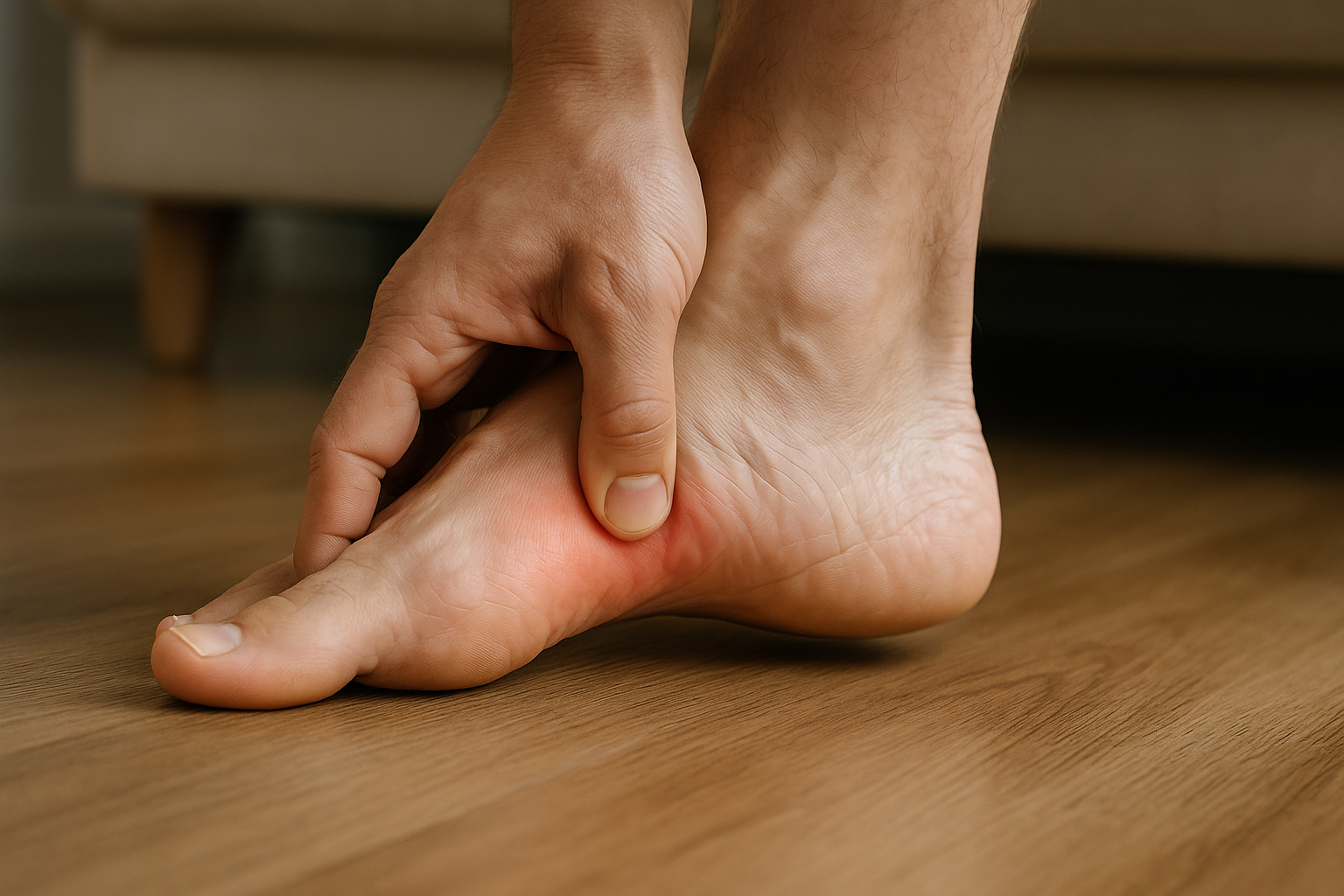
Pain under the foot covers different types of discomfort and pain that typically arise on the underside of the foot. This condition can be experienced as anything from mild soreness to more pronounced pain that makes it uncomfortable to walk or stand for longer periods. Many describe the pain as a sore radiating sensation that either comes gradually or suddenly, and which can vary in intensity depending on activity and rest.
Some of the common causes often mentioned in connection with pain under the foot include:
- Overuse from repeated strain during walking and standing work
- Choice of footwear that does not provide sufficient support or cushion shock
- Misalignments in the structure of the foot that can lead to increased pressure on certain areas
It is common for people to search for information about pain under the foot because it can affect their daily comfort and mobility. Descriptions of the pain vary, but some experience that it begins gradually and intensifies when the foot is exposed to prolonged strain. Therefore, it is important to gain a general understanding of what causes this type of pain and how it is often experienced in everyday life. By taking a closer look at the different aspects of pain under the foot, one gets an overview of the potential causes, without this necessarily involving a closer medical assessment.
The focus here is on creating reassurance and clarity about the topic, so that one can see that pain under the foot is a condition many people experience, and which can vary in its effect on everyday life. A neutral and factual review of the topic helps bring attention to the common experiences, without solutions or treatment recommendations being included in this context.
Common causes of pain under the foot
Pain under the foot often appears after repeated strain or sudden changes in activity level. Frequent causes include using shoes without sufficient support, strong impact from running or long walks, as well as persistent standing work. Overweight and rapid increases in training volume can also contribute, just as small shifts in the foot’s structure can create increased pressure on certain areas. Muscle tension in the calf and the underside of the foot is often linked to increased strain, as tight muscles change the way one walks.
How does the pain typically present itself?
Pain under the foot can be experienced differently from person to person, but some common features recur. Many describe a sharp or stabbing sensation with the first steps after rest, tenderness under pressure beneath the foot, and a feeling of stiffness after prolonged activity. The pain can change character during the day and become more intense after longer periods of standing or walking. Some experience a burning sensation, others a more dull, pronounced soreness.
Variants by location
Pain can be localized in different places under the foot, and the location affects the experience. Pain under the heel, the middle of the sole, or the forefoot can present differently and point to different load patterns. Local pressure-sensitive areas and broader, diffuse sore areas are both common presentations.
Muscle tension elsewhere and the connection with foot pain
Tension in the calf muscles can increase pull on the underside of the foot and thus worsen the experience of pain. Likewise, muscle and tension patterns in the hips, back, shoulders, or neck can alter posture and walking pattern, which can affect the load on the feet. Therefore, foot pain is often linked to the general muscular condition in the legs and upper body, even though the discomfort is felt under the foot.
How widespread is the problem in everyday life?
Pain under the foot is a common symptom that many people experience periodically. It occurs frequently in people with standing jobs, those who walk or run a lot, and in people who experience rapid changes in activity level. The problem affects a broad part of the population and can impact daily comfort, walking, and the ability to be active in everyday life.
What to pay attention to in everyday life
Pain under the foot can be influenced by small habits and repeated patterns that over time change the way the foot is loaded. In everyday life, it can be useful to be aware of how different activities and choices are connected with how the foot feels later in the day. Muscle tension in the legs and changes in walking pattern can play a role, just as prolonged standing on hard surfaces can affect load distribution.
There is often a connection between daily rhythms and the experienced discomfort. The use of support or offloading in the form of cushions, shoes with specific properties, or massage products can for many people be part of a wellness routine, and massage can be experienced as a way to reduce tension and increase blood circulation in local areas. Over time, repeated strain can lead to pain changing character or shifting, especially if the strain is uniform day after day.
- Variation in standing and walking patterns can affect where strain accumulates
- The hardness of the surface is often connected with increased pressure in certain zones
- Long-term use of the same type of shoe can mean persistent pressure on specific areas
- Rest patterns and recovery between activities can matter for perceived soreness
It is also worth noting that the sensation in the foot can change from day to day without a clear cause, depending on activity and general fatigue. Massage, offloading products, and changes in daily habits are often mentioned in connection with well-being and pain relief, but the effect can vary from person to person. Following signs and patterns in one’s own everyday life often gives a picture of which conditions may have an influence over time.
The FAQ below highlights common questions about progression, experiences with the use of massage, and expectations regarding changes in sensation and frequency.
Frequently asked questions
How quickly can pain under the foot change?
It varies greatly. For some, the sensation can change within a few days, while others experience variation over weeks. Changes in activity pattern, recovery, and daily strain are often linked to how quickly the symptoms develop.
How can massage be experienced in relation to pain relief?
Massage can be experienced as soothing and as a way to loosen tension in muscles and connective tissue. Many describe a temporary improvement in comfort and increased mobility after massage, but the effect can vary depending on the cause and frequency.
Which signs indicate that the pain has changed character?
Changes can appear as variation in location, frequency, or intensity. A sensation that becomes more persistent, moves to a new area, or occurs more often during the day are examples of how the character can develop over time.
.