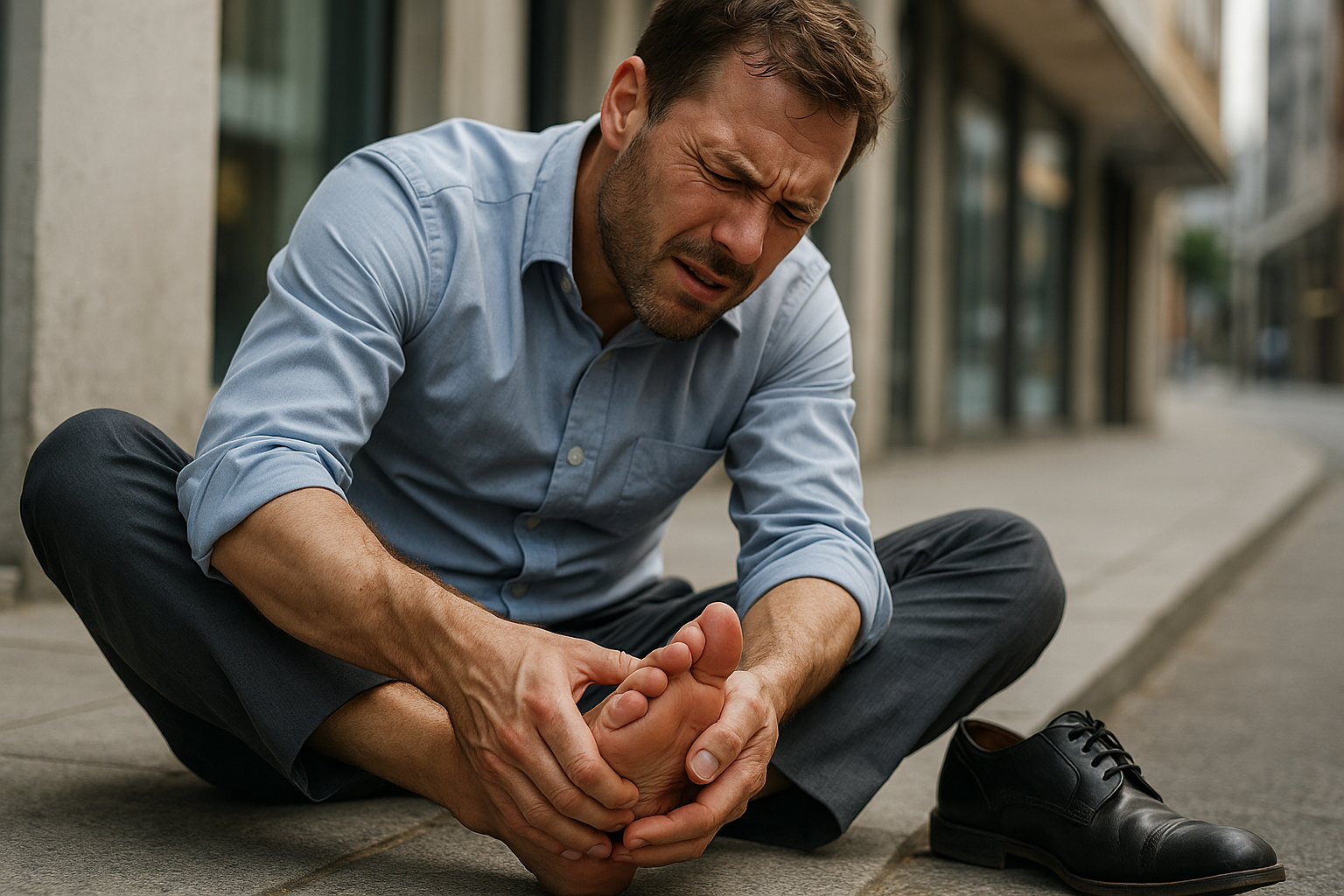
Many experience pain in their feet in a busy daily life, where prolonged periods of standing or walking can cause persistent soreness and discomfort. It is not unusual for the feet to feel tired after many hours of activity, and the experience can vary from slight stiffness to more pronounced pain. Often, it is the combination of daily strain, incorrect footwear, and sudden changes in activity level that triggers the pain. This type of discomfort can be experienced both during and after the workday or leisure activities and leads many to seek understanding and practical advice on how best to manage their foot pain. By gaining an overview of what pain in the feet covers, one can get a better idea of which daily situations can cause the pain and how these affect the general feeling of well-being.
What is pain in the feet?
Pain in the feet covers a range of pain experiences that often arise when the feet are exposed to repeated strain. The pain can manifest in different ways, from a mild soreness in the foot to sharper, more persistent pain that can be felt in the heel, in the middle of the foot, or at the toes. The feeling of soreness and fatigue is often related to prolonged periods without sufficient rest, which can make daily activities more challenging.
Several factors can help cause the discomfort:
- Overuse from repeated movements
- Incorrect or unsuitable footwear
- Sudden changes in activity level
The experience of pain in the feet can vary from person to person, but one thing is common: it affects daily comfort and can make everyday life a greater challenge. Many therefore seek knowledge about how the pain arises and what exactly underlies their experience of discomfort, so they can better adapt their activities and make small adjustments to their daily routine. This understanding forms the basis for being able to manage the type of foot pain that arises as a result of ordinary strains in everyday life.
Where in the foot the pain is felt
Pain in the feet can appear in different areas and often affects daily movement in different ways. Typical places are the heel, midfoot, and toes, but the ankles may also be involved. The location can be important for how the discomfort is experienced: pain in the heel can feel like a deep soreness, while the forefoot or toes often feel more sore with strain or pressure.
How the symptoms typically appear
The pain can appear as a slight soreness, stiffness in the morning, or a sharp, almost shooting sensation during activity. Swelling, a feeling of tension in the muscles, and increased soreness after longer periods of standing are common. Many find that the symptoms vary throughout the day and may be worse after long periods of activity or after rest periods.
How common is pain in the feet in everyday life?
Many encounter foot pain at some point in life, especially those with jobs or leisure habits where many hours are spent standing or walking. It is often related to daily strain and can affect the general feeling of well-being, because pain in the feet can make ordinary tasks more strenuous and limit the desire for activity.
Everyday factors that can cause pain
- Prolonged standing or walking without sufficient breaks
- Use of shoes without sufficient support or cushioning
- Sudden changes in activity level or increased strain
- Repeated strain from work or sport
Variations in time and character
The pain can be short-lived and arise after a single strenuous day, or it can be more persistent and feel like a constant soreness. Some experience particular stiffness in the morning, others feel the most pain after physical activity. Muscle tension in the legs, back, neck, and shoulders can be related to a changed gait pattern or compensation, where the body tries to relieve the feet.
What it means for pain relief and unloading
Different patterns in pain and location affect how one thinks about relief and unloading in everyday life. A clear perception of whether the pain is worst during activity, at rest, or in the morning can help in choosing concrete measures to reduce soreness and muscle tension. The goal in daily life is often to reduce the discomfort that makes movement strenuous, so everyday routines can continue with greater comfort.
Discover patterns in your everyday life
When taking a closer look at the experience of pain in the feet, it can be useful to pay attention to times, repetitions, and changes in daily routines. The pain can appear differently depending on the type of strain, weather conditions, and sleep quality, and these factors can affect how the discomfort is experienced from day to day. Noting when the discomfort is worst can provide a broader perspective on which connections are often associated with changes in sensation.
- The condition and materials of the shoe can change the sensation during standing and walking
- The hardness of the surface in daily surroundings can affect the feeling of strain
- Temperature and humidity can make muscles and connective tissue more or less stiff
- Prolonged sitting periods or altered movement patterns can create variation
Long time perspectives that may play a role
Some factors develop slowly and can affect sensation over months or years. Changes in the foot's support from shoes or inserts, repeated low-intensity strain, and weight variations can gradually affect structures in the foot. These changes can be experienced as a slow increase in soreness or as more frequent episodes of stiffness, and they can change the way one naturally moves.
How massage and relief are experienced in everyday life
Massage and other forms of relief can be described differently from person to person. Some experience a temporary feeling of loosened tension or increased comfort after touch, while others notice smaller changes in muscle tension and sensation in daily life. The effect can vary depending on intensity, duration, and how often it is part of daily habits, and how these elements interact with other daily factors.
Paying attention to these aspects provides a nuanced understanding of what can affect foot pain over time. Below is an FAQ with answers to common questions that often come up when one wants more clarity about these patterns.
Frequently asked questions
What can fluctuations in pain from day to day be due to?
Fluctuations may be due to variation in activity, changes in rest time, weather, or differences in shoe choice. Mental stress and sleep quality can also affect how the body's signals are registered, and therefore the intensity can vary without a single specific cause.
How do the age and materials of the shoe affect the sensation in the foot?
Over time, the cushioning of the sole and the flexibility of the material can change, which can make the pressure distribution different. Materials that retain heat or moisture can also change friction and comfort, and wear on the sole can change the way strain is distributed when walking.
How quickly can changes in daily habits show up in the pain experience?
Some notice a difference within a few days, while others experience slow changes over weeks or months. The speed depends on which habits are changed, how often they occur, and individual differences in bodily adaptations.
.