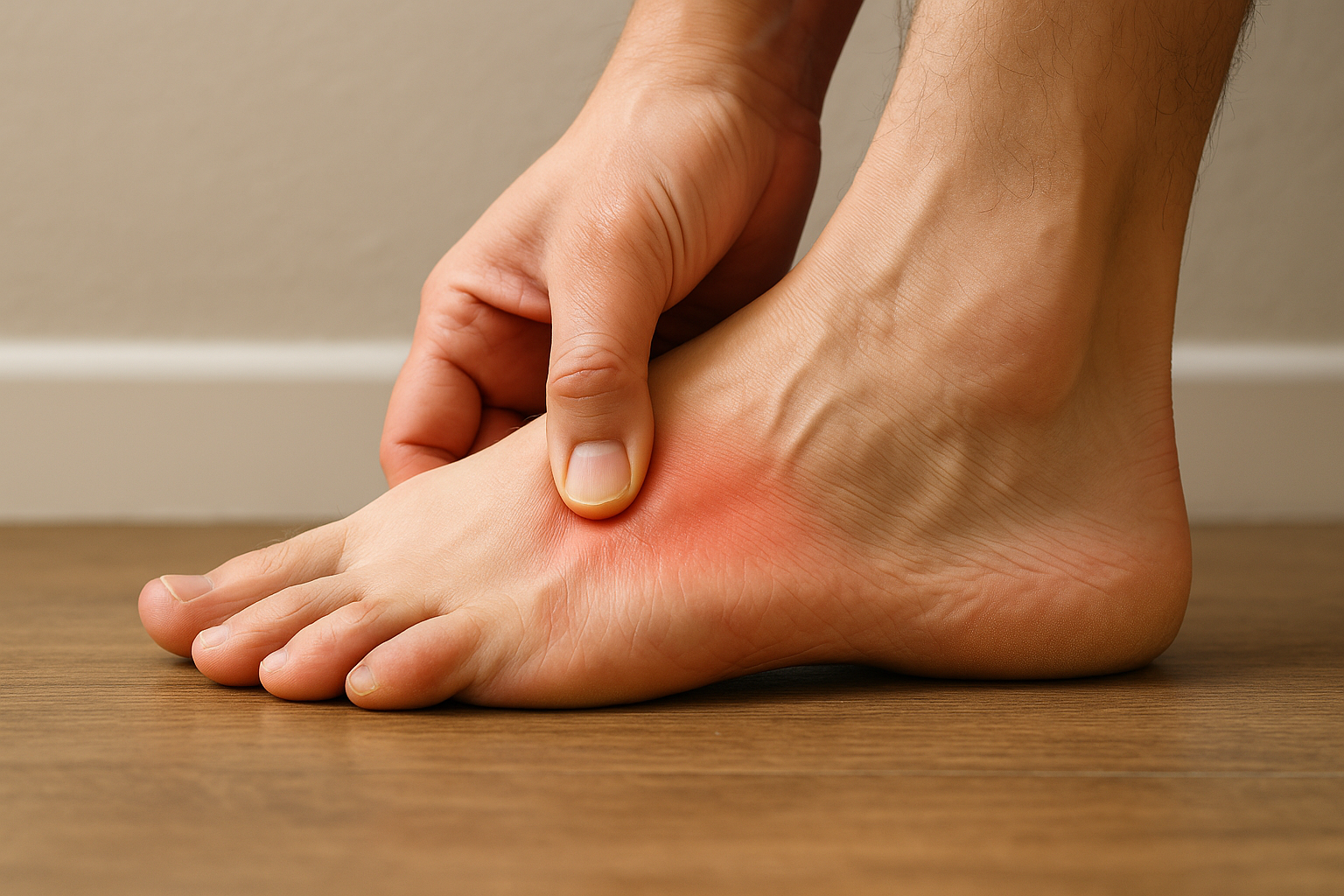
Many people experience pain in the plantar fascia as part of everyday life, either with the first steps of the day, أثناء walking, or after prolonged strain. The pain may appear as a sore, tight, or stabbing sensation under the foot and can affect both walking pattern and general comfort during the day. For some, the discomfort begins already in the morning after rest, while others notice it most clearly after work, exercise, or many hours on their feet. It is common for pain in the plantar fascia to be related to repeated strain and the way the foot is used in daily life.
Several describe that the pain can be mild and temporary, while others experience more persistent discomfort that affects daily routines. The plantar fascia plays a central role in the foot’s function and stability, and when it begins to send signals, attention is often directed toward strain, footwear, and movement. Therefore, many seek knowledge about what pain in the plantar fascia may be related to and how it is typically experienced in everyday life.
When taking a closer look at the experience of pain in the plantar fascia, many point to factors such as:
- Repeated strain from walking, running, or standing work
- Lack of variation in daily movements
- Increased strain after changes in activity level
What is pain in the plantar fascia?
Pain in the plantar fascia refers to pain and tenderness located along the underside of the foot, often from the heel area toward the forefoot. The pain can develop gradually over time or become apparent after periods of increased strain. For many, it is a sensation that is especially noticeable during movement, but that can also be present at rest.
The pain is often related to the body’s response to repeated movements, where the plantar fascia is exposed to pulling and strain throughout the day. When this repeats over time, the area can feel more sensitive and cause discomfort in everyday life.
Common mechanical factors around the plantar fascia
The plantar fascia is exposed to daily strain when the foot bears the body’s weight. Repeated movements such as walking and running can increase tension in the fascia, especially if the strain is one-sided or lasts a long time. Over time, this can lead to tenderness and a feeling of tightness under the foot.
The foot’s mobility and tension in surrounding muscles can also play a role. Tightness in the calf or limited movement in the ankle can increase the pull on the plantar fascia and make the area more sensitive under strain.
How does the pain typically present itself?
Pain in the plantar fascia can be experienced in different ways. Some notice a sharp or stabbing sensation with the first steps after rest, while others experience a duller and more persistent soreness that develops during the day. The sensation may be most obvious under strain, but may also appear as tension or fatigue under the foot.
For some, the discomfort decreases when the foot becomes warm and in motion, while for others it worsens after prolonged activity. In some cases, the area may feel tender to pressure, which can affect the choice of footwear and walking comfort.
How common is pain in the plantar fascia in everyday life?
Pain in the plantar fascia is relatively common and occurs in both active people and those with more sedentary work. The condition is seen across age and activity levels and is often related to changes in strain, routines, or daily movement patterns.
Many find that the pain can come and go, depending on how much the foot is strained in everyday life and how recovery is between active periods.
Variations in pain from the plantar fascia
Pain in the plantar fascia can vary in both intensity and location. Some experience the discomfort close to the heel, while others feel it more in the middle under the foot or as a pulling sensation along the arch. The pain can be experienced as sharp, pressing, or burning and can change character over time.
These variations mean that the experience of pain in the plantar fascia is not the same for everyone and can change depending on daily habits, strain, and movement. Over time, many become aware of patterns in when the pain arises and when it subsides, without there necessarily being one clear explanation.
.