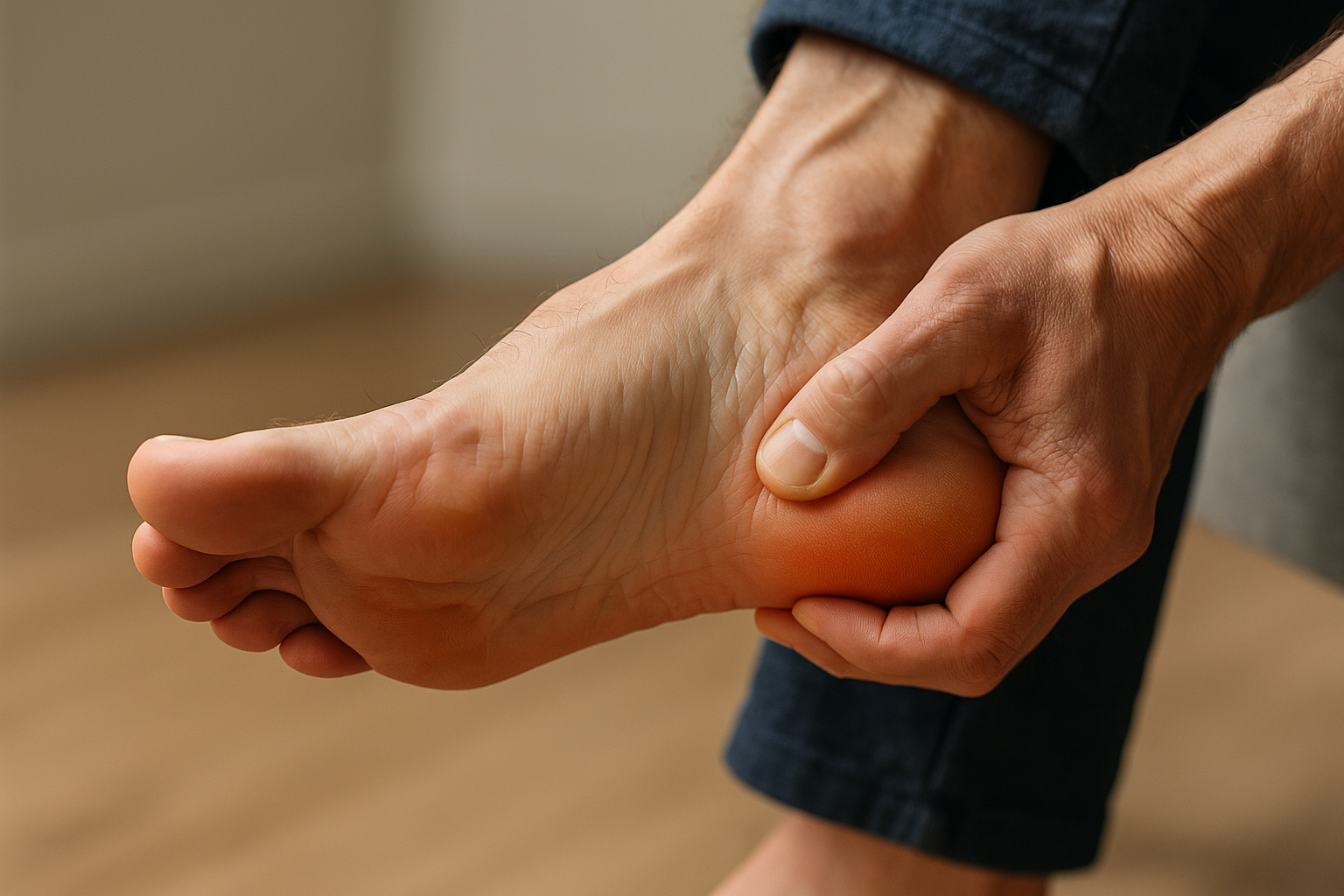
Many experience pain under the foot in everyday life, where completely ordinary activities such as walking, work, and exercise can gradually become characterized by soreness and a stabbing sensation in the arch or heel area. Inflammation of the plantar fascia is a common cause of this type of foot pain and often occurs during periods of increased or uniform strain. For some, the discomfort begins discreetly and develops over time, while others experience that the pain suddenly becomes clear after changes in activity level. The condition can affect both comfort and movement patterns and create a natural need to understand what lies behind the pain and how it can be managed in everyday life.
It can be challenging to find the balance between remaining active and at the same time taking the body's signals into account. Inflammation of the plantar fascia is often associated with repeated strain on the foot, which over time can lead to irritation in the tissue. Therefore, many seek knowledge about what the inflammation entails and which factors in everyday life may matter for how the pain develops.
What is inflammation of the plantar fascia?
Inflammation of the plantar fascia, also known as plantar fasciitis, describes a state of irritation in the tendon that runs along the underside of the foot from the heel toward the forefoot. The plantar fascia plays a central role in supporting the arch of the foot and absorbing shock when standing and moving. When this tendon is subjected to repeated strain without sufficient recovery, small overloads can occur, causing pain and soreness.
The condition is often associated with:
- Pain under the heel or along the arch
- Soreness under strain
- Stiffness after rest, especially in the morning
- A tense or tight sensation in the foot
Inflammation of the plantar fascia usually develops gradually and is rarely related to a single event.
How inflammation of the plantar fascia often shows up in everyday life
Pain from the plantar fascia is often felt most clearly during the first steps of the day or after long periods of sedentary work. Many experience that the discomfort subsides somewhat when the foot warms up, but returns after longer periods of standing or walking. In some cases, the pain can change the walking pattern, which can create a feeling of fatigue or tension in the lower leg, knee, or back.
How common is inflammation of the plantar fascia?
Inflammation of the plantar fascia is seen in both active and less active people. It often occurs in people with jobs that require a lot of standing or walking, as well as in people who run or walk a lot in their free time. Age, the structure of the foot, and daily strain patterns can affect how frequently the condition occurs and how long the symptoms last.
Everyday factors that can worsen the discomfort
Several daily conditions can affect how pronounced the pain becomes. Prolonged strain on hard surfaces, footwear with limited support, and sudden changes in activity level can increase the strain on the plantar fascia. Repetitive movements without variation and lack of breaks can also play a role in the development of the discomfort.
Variations in pain and tension in the foot
The experience of pain varies from person to person. Some feel a sharp, stabbing pain under the heel, while others experience a more diffuse soreness along the arch. Muscle tension in the calf and foot may occur at the same time, as the body often compensates for the strain. Over time, this tension can affect both comfort and endurance in everyday life.
Situations where the need for relief becomes clear
Discomfort from the plantar fascia often becomes most noticeable during long workdays on your feet, after walks on hard surfaces, or with repeated strain without sufficient rest. In such situations, many experience a clear need to reduce the strain in order to regain more normal comfort.
Be aware of patterns over time
Instead of focusing on individual pain episodes, it can be useful to observe the development over a longer period of time. The pain can vary in intensity and location depending on daily routines and strain. These repeated patterns can provide insight into which conditions play a role in the discomfort.
Habits and daily choices that often matter
Uniform working positions, use of the same type of footwear, and repeated strain can over time change how the plantar fascia reacts. Small variations in everyday life can matter for how the pain is experienced from week to week.
Factors outside the foot itself
The strain on the plantar fascia is often connected to the movements of the rest of the body. Changes in walking pattern, posture, and weight distribution can affect where the pressure accumulates in the foot. Over time, these conditions can change where and how the discomfort appears.
What shoes and surfaces can reveal
Wear on the shoes and changes in the comfort experience can provide an indication of strain patterns. Hard surfaces and shoes with limited cushioning can intensify the impact on the plantar fascia, especially with repeated use.
Frequently asked questions
Can inflammation of the plantar fascia change over time?
Yes, many experience that the pain varies depending on activity level, surface, and daily habits. The discomfort can come and go or change character over weeks and months.
Why is the pain often worst in the morning?
After rest, the plantar fascia can feel stiff, and the first steps put more direct strain on the area. This makes the pain more noticeable until the foot is in motion again.
Can the pain move around in the foot?
Pain can change location as a result of altered strain or compensation in the walking pattern. This is common and is often connected with variation in daily activities.
.