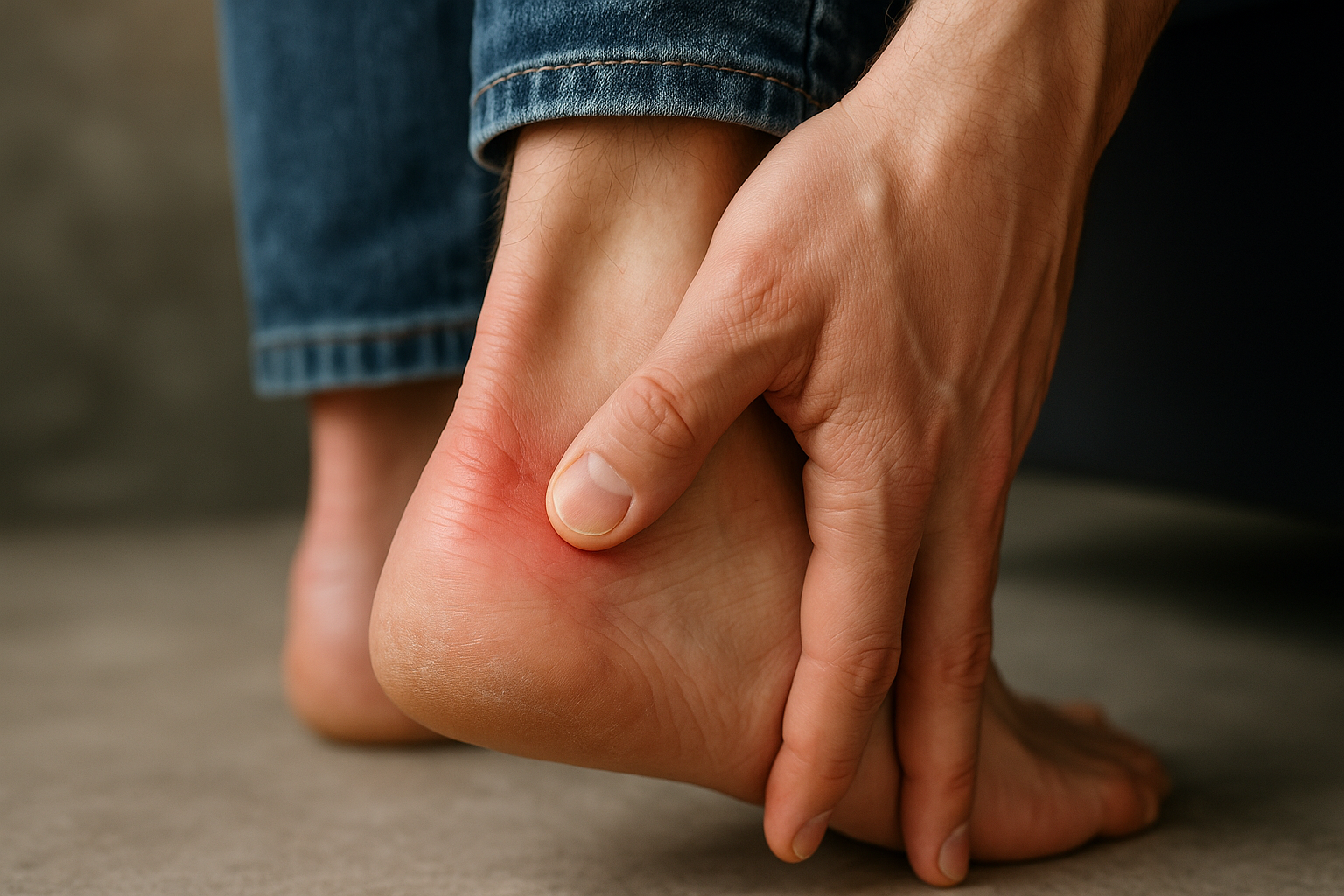
Many experience pain at the back of the heel, especially when everyday life includes both physical activity and prolonged standing work. It is common for both active people and those with a sedentary job to feel an uncomfortable soreness that can make everyday life less comfortable. Pain in the back of the heel can arise as a result of the constant strain, where the heel receives a large amount of pressure from repeated movements. The pain is often felt as a creeping irritation that draws attention every time you move or walk. This discomfort can both affect the enjoyment of daily activities and reduce the desire to be active, which makes it important to gain insight into what underlies the pain. When the heel feels sore or painful, it can be experienced as a gradual irritation that gradually disrupts both walking and ordinary movements. Many find that the pain intensifies when switching from rest to activity, and it can be particularly bothersome when wearing shoes with stiff heel counters. This form of discomfort typically appears during periods of increased strain, for example after a long walk or an intense run.
What is pain at the back of the heel?
Pain at the back of the heel may be due to irritation or inflammation in the area where the Achilles tendon meets the heel bone. It can occur when the structures behind the heel are exposed to repeated pressure or overload. Most often, the pain is felt as an uncomfortable soreness that worsens during walking or when using certain types of footwear, especially those with a firm heel counter. Some describe the pain as both sharp and throbbing, and it may appear when the heel has to bear a lot of weight during the day. If you experience this type of pain, it can help to pay attention to when and how the pain occurs. This can provide a better understanding of how everyday activities and strains are connected to the discomfort, and what relationship there is between repeated movements and the increased irritation at the back of the heel.
Having knowledge of how the pain manifests itself can be an important part of daily awareness of the body's signals. By observing which activities trigger the discomfort and how the pain progresses, you gain a clearer understanding of the issue surrounding pain at the back of the heel.
How the pain typically presents itself
Pain at the back of the heel often appears as local soreness precisely at the back of the heel, which can feel both sharp during certain movements and more dull and throbbing during prolonged activity. Many describe stiffness in the morning or after rest that subsides when they walk around a little, but that can return during running or longer walks. Swelling, slight redness, and increased sensitivity to pressure from shoes may be present, especially when the area is exposed to repeated strain.
How common is pain at the back of the heel in everyday life?
Pain at the back of the heel is a common problem among people who often strain their feet through running, walking, or prolonged standing work. It is also seen in people who suddenly increase their activity level. In daily practice, many active people and those with stationary or physically demanding workdays report that this type of pain is often linked to their activities and can affect their desire to move. Its occurrence makes it a frequent topic in conversations about everyday well-being.
Factors that can affect the pain
Several factors can make the pain worse or change its character. Repeated strain from repetitive movements, use of shoes with stiff heel counters, or lack of shock absorption can cause increased pressure on the area. Hard surfaces and sudden changes in activity volume are often associated with increased irritation. Overweight and muscle tension in other parts of the body can also affect the strain on the heel: tension in the back, neck, or shoulders can change posture and gait pattern, which in turn affects the feet and legs.
Variations in pain and daily impact
The pain can vary greatly from person to person. For some, it is a short-lived sensation during specific movements; for others, it is a persistent bothersome soreness that makes normal walking and climbing stairs more troublesome. The intensity may fluctuate throughout the day and be most pronounced at the start after rest or after prolonged standing. Variation in how the pain is experienced and how much it disrupts everyday life means that several different situations — from work to leisure activities — can be affected.
What to pay attention to in everyday life
In everyday life, small repetitive patterns can affect how pain at the back of the heel develops over time. In addition to isolated incidents, it is worth paying attention to long-term factors such as how the shoe's shock absorption changes, variation in standing and walking patterns throughout the workday, and whether the strain shifts due to heavy bags or awkward walking when tired. Changes in surfaces and daily routines can gradually alter the way the load is distributed on the heel.
- The shoe's shock absorption can become less effective over time and affect the pressure against the back of the heel
Massage is often mentioned in connection with pain relief and well-being. In everyday life, touch and gentle grips around the calf and heel can change how tension is experienced, and many find that this affects the perception of soreness in the area. At the same time, wear on shoes and insoles over months can shift pressure points, which makes it useful to pay attention to patterns rather than individual episodes.
It may also be relevant to note how changes in other parts of the body affect walking and posture. Tension in the lower leg, altered body angle when tired, or uneven footwear are often associated with changed strain on the heel. Keeping brief notes on when the pain occurs and how it feels can provide a clearer picture of patterns in everyday life.
Frequently asked questions
What can cause pain at the back of the heel to change over time?
Pain can change in character due to wear on footwear, altered strain patterns in everyday life, variation in surfaces, and gradual muscle fatigue. Small, repeated influences over weeks or months can change where and how the discomfort is felt.
Can massage and relief affect the experience of pain?
Many describe that massage and gentle touch around the calf muscles change the feeling of tension and thus the experience of soreness. Relief in everyday life is experienced by some as a factor that can change how pain is registered.
How long can pain at the back of the heel last?
The time course varies greatly from person to person. For some, symptoms may be short-lived in connection with increased activity, while others experience fluctuating discomfort over longer periods. Frequency and duration often depend on repeated strain and daily habits.
.