Many experience pain that often occurs in the heel area, and this can make everyday life more challenging. The pain can show itself both at the start of activity and after longer periods of rest. This type of discomfort leads many to search for effective, non-invasive methods that can relieve and create a more comfortable everyday life. In a time when everyday stress and physical strain often go hand in hand, the desire for simple and practical solutions to reduce pain from heel spurs has become a topic that many notice. It is common to hear that adjustments in daily routines together with selected treatment methods can lead to remarkable results. The pain from heel spurs can be experienced as stubborn and disruptive, and therefore there is a strong focus on finding methods that can quickly provide relief without the need for invasive intervention.
Some experience that the pain is overshadowed by a general feeling of discomfort that affects both mobility and quality of life. The daily strain – such as during walks, standing, or simply being in constant motion – can make such a condition a persistent challenge. This is why many turn to treatments that focus on reducing the local pain and at the same time promote a more functional and comfortable everyday life. Named methods include, among other things, massage and various adapted exercises, all of which are intended to create a freer feeling in the foot.
What is heel spur treatment?
Heel spur treatment covers a range of approaches aimed at reducing the pain that occurs with heel spurs and thereby easing everyday life. The treatment methods are often non-invasive and focus on relieving pain and promoting better blood circulation flow. Common measures include:
- Massage, which relieves tension and increases blood flow in the foot
- Light adapted exercises that can strengthen the foot’s muscles and create increased mobility
- Use of ice or heat, which can help reduce the discomfort
These methods are often experienced as a help in dealing with the daily challenges that come with pain from heel spurs. It is therefore important to focus on how simple changes in everyday life can be combined with treatment methods to achieve a more balanced feeling in the heel area. This approach provides a reassuring and manageable understanding of what heel spur treatment involves and how it can function as a practical solution in everyday life.
How does it show itself?
Pain in the heel area can show itself in several ways. Many experience a sharp or stabbing sensation on the first step in the morning, while others feel a more throbbing pain after longer periods of standing or walking. There can also be a feeling of loose or tight connective tissue around the heel, which can make movement less comfortable. The pain can vary in intensity throughout the day and change depending on activity and rest.
How often does it affect everyday life?
Heel pain is common in everyday life and can affect short walks, work that requires standing, and daily chores. For many, the pain acts as a limitation on pace and willingness to move freely, which can lead to changes in walking pattern and choice of activities. The experience is often that the symptoms return with repeated strain or with insufficient recovery between activities.
What can affect the intensity?
Several conditions are often related to how and how strongly the pain is felt. Shoe choice and surfaces can change the strain on the heel, weight and physical activity level can affect the pressure on the foot’s structures, and prolonged standing or a rapidly increased activity level can worsen the discomfort. Furthermore, tension in surrounding muscles can make movement less smooth and thereby increase local strain.
Muscle tension in related areas
Tension can be found in several familiar areas such as the back, neck, shoulders, legs, and feet. When muscles in the calf or hip are tense, the walking pattern can change, which is often felt in the heel. Over time, persistent muscle contractions can create a feeling of stiffness and make it harder to get immediate relief after rest.
Massage and how it relieves
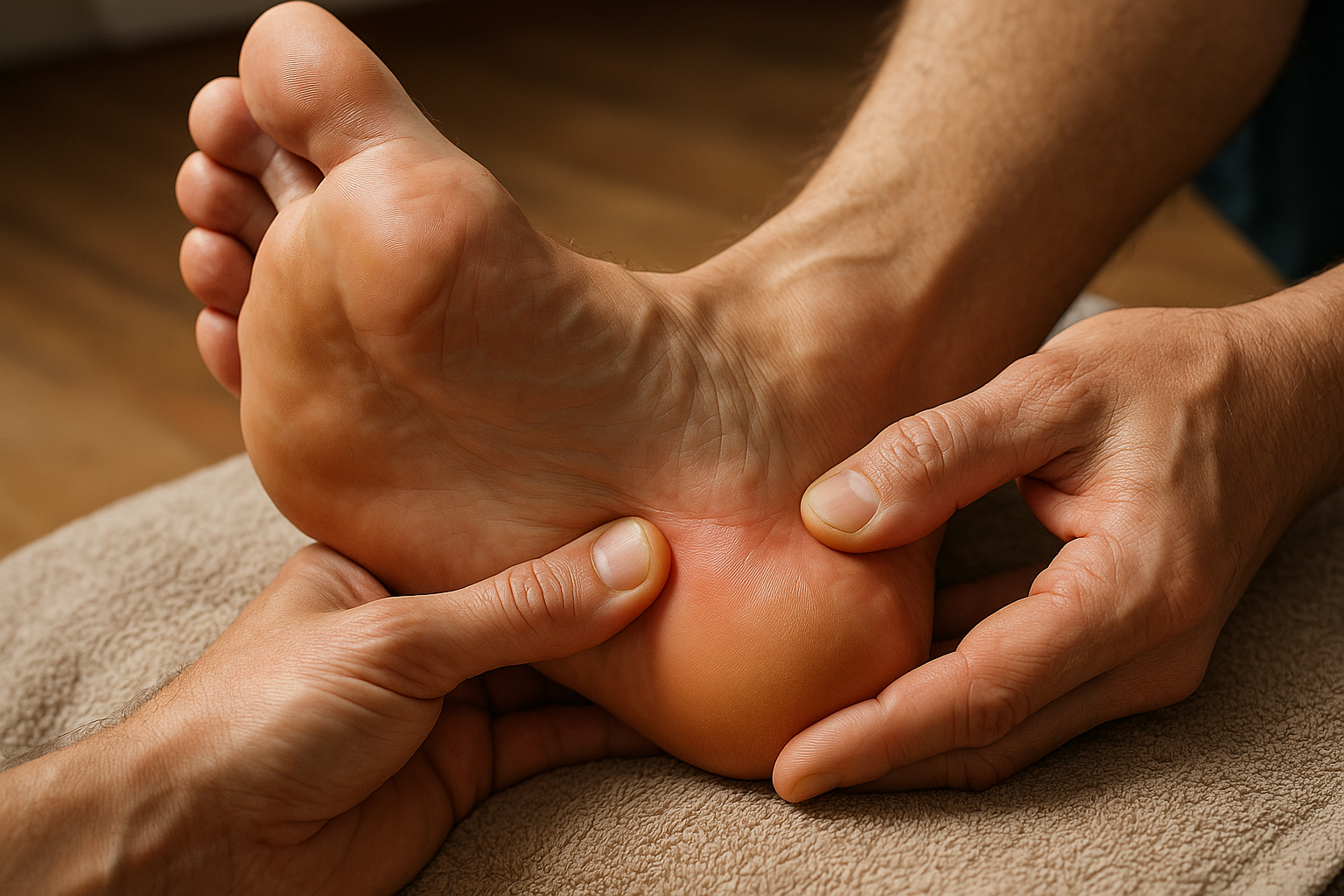
Massage functions as a commonly used measure for pain relief and relaxation. With massage, local blood flow increases, which can make the tissue more supple and reduce muscle tension. Stimulation can also lead to the release of endorphins, which can make the experience of pain more moderate. Different forms of massage, from gentler strokes to deeper pressure in trigger points, show themselves as useful for loosening tense muscles around the heel and in adjacent areas.
On a daily basis, regular use of massage as part of the routine can help reduce stiffness, improve mobility, and create a more comfortable feeling in the foot and lower leg.
What you can pay attention to in everyday life
In daily life, there are several conditions that over time can affect the experience of pain from heel spurs. Small changes in movement patterns, repeated strains, and choice of footwear can each have an influence on how the pain feels from day to day. Paying attention to these patterns can provide a better understanding of which situations often cause increased discomfort.
Part of the attention concerns the feeling in the foot in different situations. Morning stiffness, increased soreness after longer standing periods, or variation in pain intensity on different surfaces show themselves as indicators that can repeat. Over time, persistent imbalance in walking or compensation from other muscles can lead to the strain being shifted and thereby change the experience in the heel area.
Habits and conditions that can matter over time
Some habits are often connected with changes in the pain picture. For example, prolonged standing work, frequent short walks on hard surfaces, or constant use of worn shoes can change the daily strain. Attention to how the foot reacts to different daily activities can help identify patterns without pointing to specific solutions.
- Variation in surfaces can make the pain feel different from day to day
- Regular use of massage can show itself as a way to reduce stiffness in the foot and calf
- Changes in type of activity can result in altered strain, which is often felt in the heel
It can also be useful to note how recovery is experienced after activity. Some report that short-term relief can provide temporary improvement, while others find that stiffness returns with repeated strain. At Reliefr, the importance of observing patterns rather than seeking quick solutions is often highlighted.
Frequently asked questions
How can heel spurs be prevented?
Prevention is often about paying attention to daily habits and choices, such as variation in activities, wear on footwear, and the way strain is distributed in everyday life. Preventive effort can show itself as a change in how and when strain occurs.
Can massage alone relieve heel spurs effectively?
Massage can be experienced as an important factor for pain relief and relaxation in the area, but results vary. For some, massage shows itself as part of a relieving routine, while others experience that the effect is temporary.
How long does it take to recover from heel spurs?
The time frame varies greatly from person to person. Factors such as repeated strain, daily habits, and how quickly changes in the routine are noticed can affect how symptoms develop over time.
.