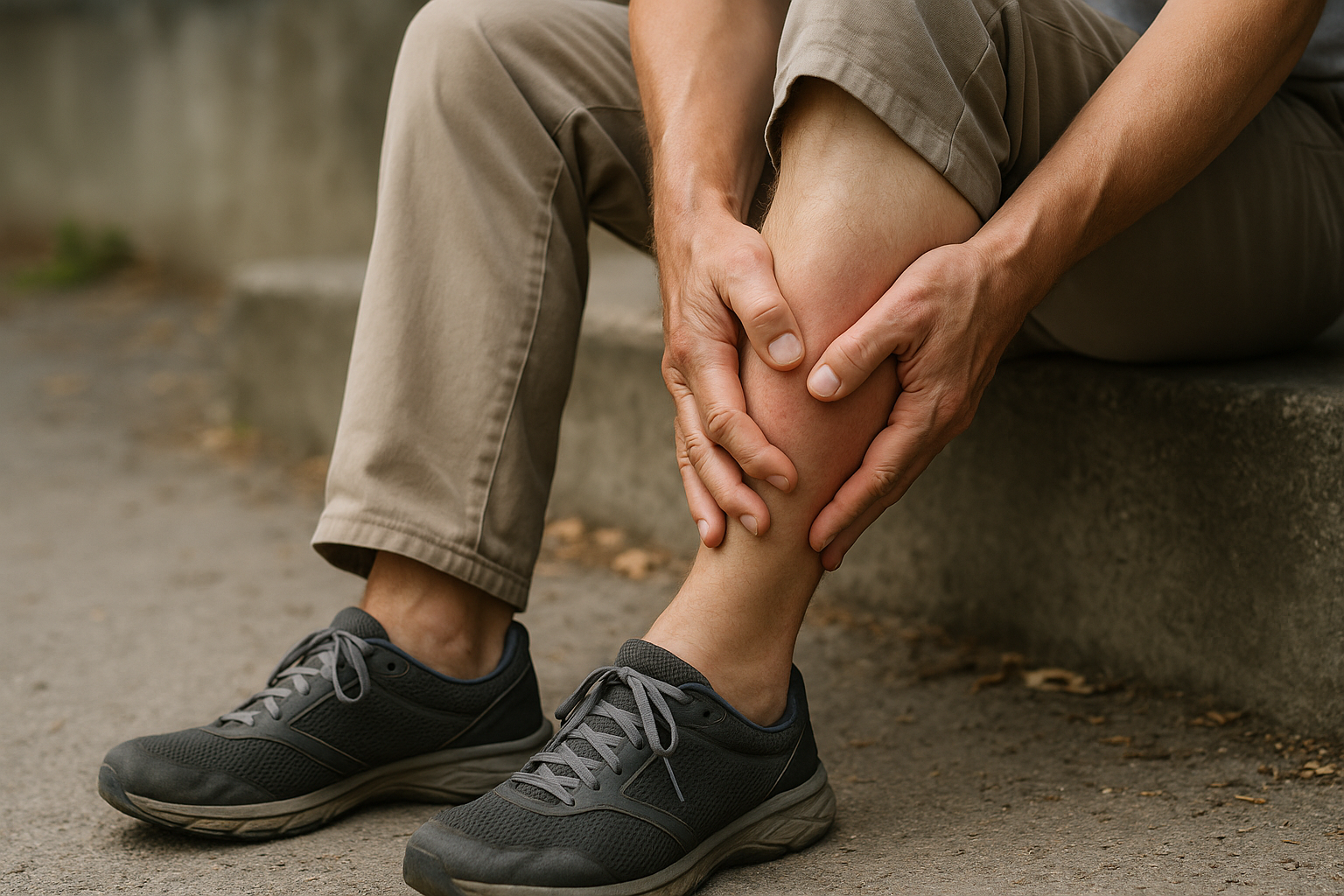
Many experience that their legs eventually become tired and feel heavy during the day. It is a common sensation that can make both daily activities and exercise more challenging. The feeling of tired legs can arise after many hours at work, long periods of sedentary behavior, or after physical activity that has led to overexertion. It is important to understand what normally underlies the heavy sensation, as it can help create a reassuring understanding of why the legs react as they do. This condition is often noticed when one has had a long day, and it can make daily movement less comfortable. That is why many seek knowledge and practical advice on how to manage the feeling of tired legs in everyday life.
The experience of heavy legs is not uncommon and can be felt in different ways. Sometimes the feeling may be accompanied by slight soreness in the muscles, while at other times it may be perceived as a general fatigue without a clear cause. The strain that is often seen is associated with prolonged strain on the leg muscles, either from standing work, long walks, or periods of minimal movement that make it harder for the body to maintain good blood circulation. The experience varies from person to person, and it is not uncommon to feel both a certain discomfort and a natural tiredness at times, which can affect both mood and energy level.
What are tired legs?
Tired legs refers to a condition in which the legs experience a sensation of heaviness and discomfort. This condition can be described based on a number of characteristics, such as:
- A feeling that the legs are overworked and heavy
- Slight soreness in the leg muscles that can be felt with extra strain
- An overall tiredness, especially after long periods of activity or stationary work
The feeling of tired legs is often connected to the demands of everyday life, where many experience that periods of intensive activity are followed by the need for recovery. Most notice that their legs feel heavier in the evening or after longer periods of standing or sitting work. This topic is of particular interest because it affects everyday life and can make even daily walks a challenge. By understanding that tired legs arise as a natural reaction to physical strain and reduced movement, a framework is created for taking the necessary steps without feeling alone with the problem.
How tired legs manifest
The feeling of tired legs often manifests as a persistent heaviness in the lower legs, but can also include soreness and muscle tension. The symptoms can be felt during ordinary walking, during longer periods of standing, or after physical activity, and the intensity can vary from slight discomfort to a pronounced feeling of tiredness. In addition to the legs, the experience may be associated with tension in the back, neck, and shoulders, and some also experience an increased feeling of tiredness in the feet.
How widespread is the feeling of tired legs
Tired legs are a common everyday challenge based on experience and are seen in many age groups. The frequency often increases with longer workdays, sedentary work, or repeated strain, and many notice a marked difference in how their legs feel in the evening compared with in the morning. The occurrence also varies with activity level and daily habits.
Everyday factors that can affect tired legs
Several daily conditions can affect when and how often the tiredness occurs. Prolonged standing or sitting work is often associated with a feeling of heavy legs, just as footwear without sufficient support can create increased strain. Changing working positions, weight distribution during standing tasks, and the frequency of short breaks can all affect how muscles and blood flow react in the legs. General tiredness in the body can also intensify the experience of discomfort in the legs and feet.
Variations in how the tiredness manifests
There are clear differences between tired legs after physical activity and tired legs after prolonged inactivity. After physical strain, the symptoms often appear as localized soreness and muscle tension, while inactivity more often causes a diffuse sensation of heaviness and stiffness. The time of day and the duration of the strain matter for whether the discomfort is short-lived or persistent. Some experience fluctuating symptoms from day to day, others have a more constant feeling, depending on routines and workload.
Relation to pain relief, muscle tension, and relief
Tired legs are often associated with increased muscle tension and a need for relief in order to regain well-being in everyday life. Pain relief in a broad sense relates to reduction of tension and improved comfort in the legs, feet, and surrounding areas such as the back and shoulders. Relief may be necessary during periods of persistent strain to reduce the daily feeling of discomfort and maintain energy level throughout the day.
What one can pay attention to in everyday life
In daily life, it often appears that certain habits and surroundings influence how the legs feel over time. Prolonged periods in the same working position, repeated movements, and the type of footwear are often associated with the experience of heavy or tired legs. At the same time, general tiredness in the body and sleep quality can color the way the legs are experienced during the day.
- Working positions with prolonged standing or sitting work
- Footwear without support or with uneven strain
- Frequency of short breaks in movement patterns
- Daily strain that varies from day to day
Work role and daily strain
The role one has at work or the fixed daily tasks can gradually affect the well-being of the legs. Over time, many find that repeated strain in specific movements or prolonged standing can change the experience of comfort in the legs and feet. The hardness of the surface and how many hours on average are spent in one position are factors that are often mentioned in connection with changes in the condition.
Long-term patterns that may be relevant
Some conditions develop slowly and can affect how the legs feel after several weeks or months. For example, persistent uneven strain in the walking pattern or wear on footwear may play a role. Other elements, such as daily tiredness and fluctuating energy level, can affect the symptoms and make them more pronounced at times.
Notice signals that point to change
It is useful to pay attention to patterns in the symptoms without interpreting them as a conclusion. Signs such as worsening discomfort in the evening, new variations in how sluggish the sensation is, or changes in the spread of the feeling of heaviness may show that everyday patterns have changed. These observations naturally lead to questions that often arise among people with tired legs.
Frequently asked questions
What are common causes of tired legs?
Many experience that the combination of sedentary periods, prolonged standing, and repeated daily movements is often mentioned as the background for the feeling of tired legs. For some, footwear and surfaces also play a role.
Can daily habits affect how the symptoms develop over time?
Yes, repeated patterns in everyday life can change how the legs feel from day to day. Duration of strain, changes in work rhythm, and fluctuations in general tiredness can all be associated with variation in symptoms.
When are changes in the symptoms noteworthy?
Changes that are experienced as new patterns in the intensity or distribution of discomfort, or when symptoms deviate markedly from previous habits, are signals that many will notice and seek answers to.
.