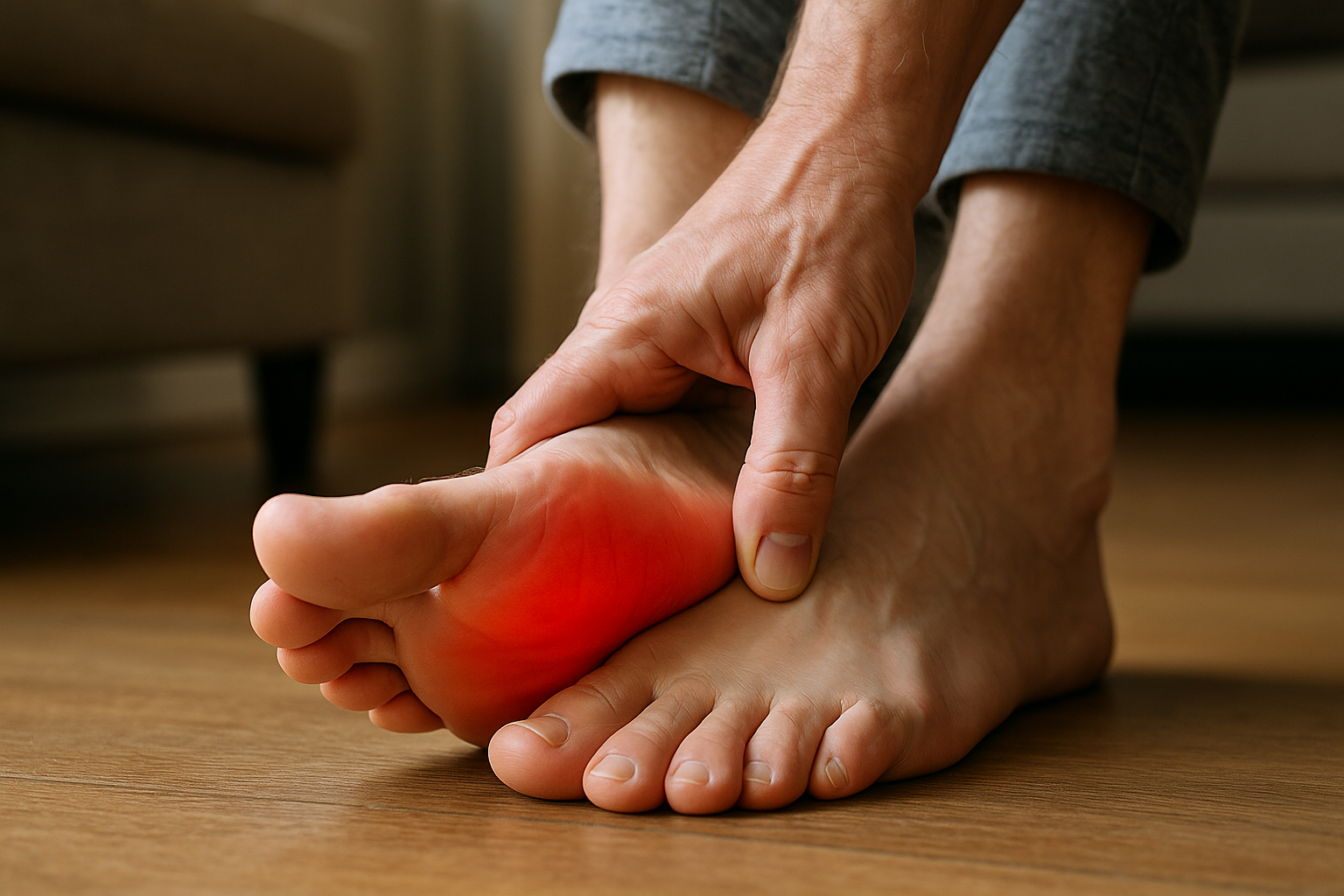
Many experience pain in the heel, which can affect daily comfort and mobility. It is common to feel a sharp or sore sensation, especially when getting up in the morning or after a period of rest. Plantar fasciitis is a condition that is often mentioned in connection with heel pain, and many therefore seek practical treatment options that can be used at home. In everyday life, this often means that the first pain upon waking or after longer periods of sitting can create both discomfort and concern. The result is a natural search for methods that can ease the daily load and provide a feeling of pain relief without involving invasive clinical treatments.
The approach to treatment of plantar fasciitis usually focuses on conservative methods, where relieving the heel and regular exercises are often mentioned as key elements. Many describe that giving the heel a break from daily strain can help reduce the painful sensations that often arise after periods of inactivity. It is therefore not surprising that there is great interest in treatments that can easily be implemented at home, with a focus on a gradual improvement in quality of life.
It is also common for people to experience challenges in relation to daily movement when the pain is prominent. Part of the pain may be felt as a tight and sore sensation in the heel area, making even short walks exhausting. This merging of symptoms often leads to a natural search for well-tested methods that can provide quick and effective relief. The following points illustrate how the pain can manifest itself in everyday life:
- Pain during the first steps in the morning
- Discomfort after longer periods of rest
- Increased pain during prolonged standing or walking
This overview provides a framework for the challenge that many experience in relation to heel pain. It is therefore natural that there is a great need to understand what plantar fasciitis treatment involves, and how the individual methods relate to one another to create relief in an everyday life where the pain has a noticeable impact.
What is plantar fasciitis treatment?
Plantar fasciitis treatment covers a range of conservative methods aimed at relieving pain in the heel and arch. The treatment often includes a combination of relief and targeted exercises that help reduce the daily load on the heel. The approach can thus be seen as a way to address the discomfort that is often experienced in the early morning hours or after longer periods of inactivity. By using practical, home-based methods, a safe and familiar treatment is achieved that can be adapted to the individual’s needs in a busy everyday life. By combining relief with specific exercises that focus on loosening and supporting the plantar fascia, there is the possibility of pain relief, which many experience as an important improvement in their daily quality of life.
How do the symptoms appear in everyday life?
The pain often appears as soreness or a sharp sensation in the heel area during the first steps in the morning or after a long time at rest. Many find that the discomfort gets worse after standing or walking for longer periods, and that it can make short walks or daily tasks more strenuous. In addition to the local pain, muscle tension and stiffness may arise, which can be felt in the calf, foot, and sometimes higher up in the body.
How widespread is the problem in everyday life?
Pain in the heel and foot appears in many age groups and in varying degrees of intensity. For some, the symptoms are mild and only bothersome during certain activities; for others, there is daily limitation in movement. When the discomfort persists, it is often associated with an altered walking pattern, more frequent breaks, and a need for more relief in everyday life. This also means that other areas such as the knees and back may feel increased load and tension.
Which factors can affect pain and muscle tension?
Several conditions can affect how much pain and tension one experiences. Overweight and high strain in everyday life can cause increased pressure on the heel and the foot’s tissues. The use of shoes without sufficient support or walking on hard surfaces can increase the discomfort. Age and reduced flexibility in muscles and tendons can also play a role. In addition, prolonged standing work or sudden changes in activity level can make the pain more pronounced.
Everyday methods for relief and pain alleviation
Simple measures in everyday life can provide noticeable relief without clinical interventions. Relief in the form of more breaks, temporary reduction of strenuous activities, and the use of supportive shoes can reduce pressure on the heel. Gentle massage of the foot and calf can loosen muscle tension and increase local blood flow, which often feels relieving. Regular, gentle movement and stretching of the calf muscles prove useful for many because it can improve mobility and reduce stiffness.
Variations in the symptom picture
Some experience primarily morning pain, while others have pain after activity. The intensity can fluctuate from day to day and is often associated with activity level, footwear, and rest. Understanding these patterns can help in choosing relieving habits in everyday life and reduce both pain and associated muscle tension.
Everyday circumstances to be aware of
In the daily context, it is often small, repeated circumstances that can play a role. The use of shoes without sufficient support and prolonged walking on hard surfaces can appear as factors that affect how pain is experienced over time. Likewise, changes in activity patterns, for example sudden increases in load, can often be associated with variation in the symptom picture.
Habits around rest and movement also matter. Many describe that stiffness and soreness appear during the first steps in the morning, while others experience worsening after longer periods of standing. Such patterns can give indications of which daily situations trigger the discomfort the most.
Long-term conditions and wear
Over time, repeated strain can affect both tissue and movement patterns. Wear on footwear, changes in the support of the sole, or changed weight distribution can slowly alter how the foot’s structures are loaded. These conditions may be experienced as gradual worsening or fluctuating symptoms, depending on daily habits and type of activity.
In addition, the level of tension in the calf and foot can affect daily comfort. Massage and gentle manipulation of muscles can in some cases be seen as a way to increase local blood flow and reduce tension, which for some feels relieving. It is important to distinguish between what feels temporarily relieving and what changes a pattern over a longer period of time.
Attention to patterns rather than immediate solutions
A calm focus on which situations repeatedly trigger discomfort can provide perspective on long-term effects. Small repetitions in everyday life can over months make a difference in symptom intensity. Being aware of these patterns is often about observation rather than immediate measures.
When observing changes in symptoms or daily function, questions often arise about the cause and further course. The next section contains answers to some of the most common questions people search for in connection with plantar fasciitis treatment.
Frequently asked questions
How long can pain from plantar fasciitis last?
The pain can vary greatly from person to person. For many, there will be periods of improvement and worsening, and the course can extend over months. Variation in activity level and daily habits can affect how quickly changes are noticed.
Can massage have an effect on the pain experience?
Massage can be experienced as relieving by affecting muscle tension and local blood flow. For some, it appears as short-term pain relief, while others notice less effect depending on the individual situation.
How does the choice of shoes affect daily load?
The choice of shoes can be associated with the distribution of pressure on the foot’s structures. The condition of the sole and the support of the shoe can over time change which areas are loaded the most, and thereby affect how symptoms appear in everyday life.
.