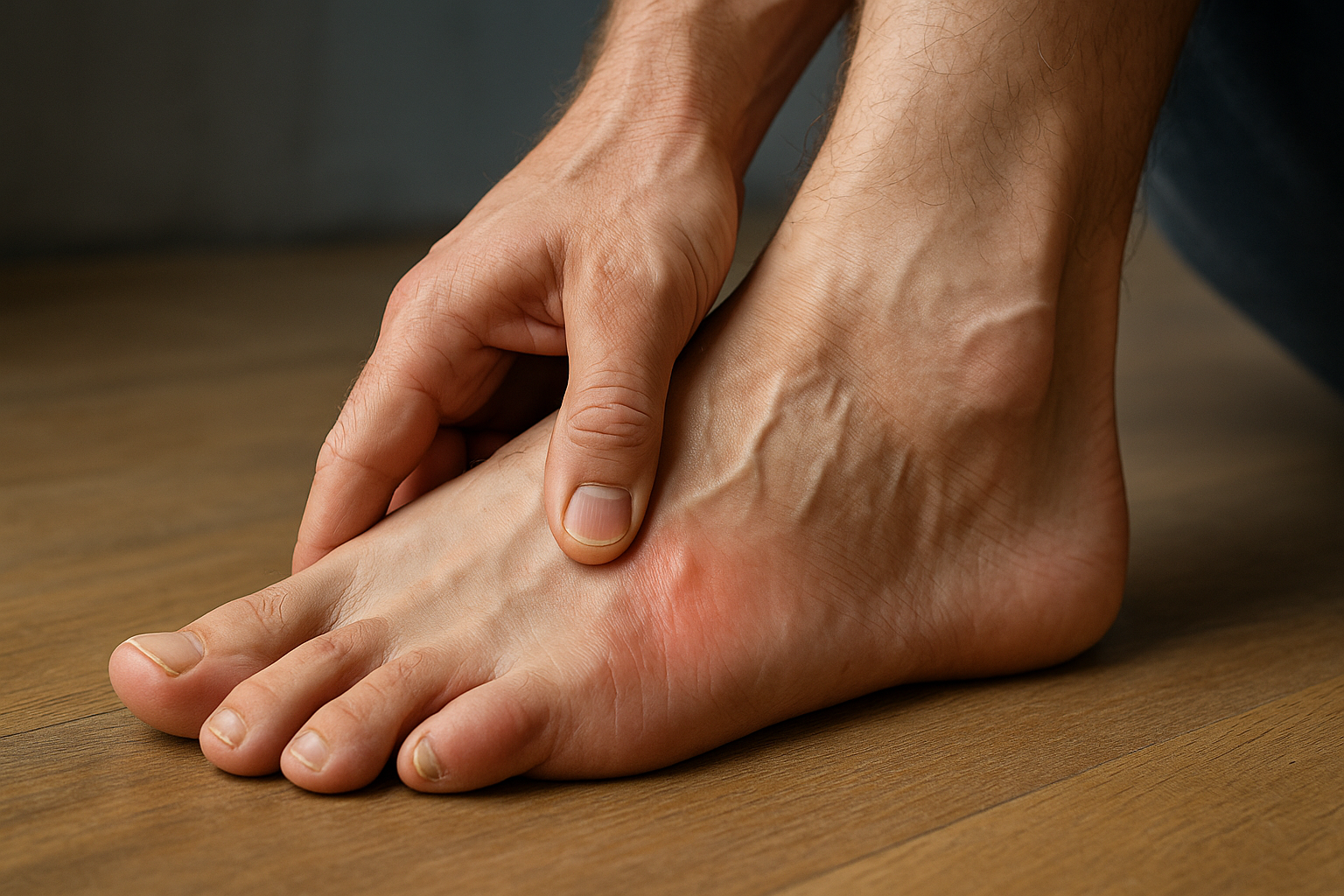
Many people experience pain on the outer side of the foot, and it is not unusual for the pain to affect daily activities. It is common to feel soreness or slight swelling, especially after periods of intense walking or physical activity. The pain may appear as a mild irritating sensation or develop into something more pronounced, so that even a simple movement may require extra attention. The discomfort that arises is often a sign that the structures of the foot have been strained over time. This form of pain naturally raises curiosity about what lies behind the discomfort and why it occurs in so many people in everyday life.
Increased focus on the pain arises when one begins to adjust daily activity to reduce the symptoms. Many find it important to gain a better understanding of what pain on the outer side of the foot actually entails, so that one can confidently assess whether and how everyday life should be changed to avoid further discomfort. When the pain appears, it can create uncertainty about which activities may need to be reduced and how best to ensure that the foot gets sufficient rest and recovery.
What is pain on the outer side of the foot?
Pain on the outer side of the foot typically refers to pain that occurs in the outer part of the foot. The experience can vary and is often described as a combination of soreness and a feeling of pressure accompanied by slight swelling. The pain can be experienced during activities that strain the foot, for example during longer walks, running training, or when standing for longer periods. For many, the discomfort arises as a result of repeated strain on the foot’s tendons and joints, and an unstable ankle or previous injuries can intensify this problem.
- Soreness and slight swelling in the affected area
- Discomfort on touch and under strain
- Reduced mobility, especially after physical activity
For many, the pain is linked to overuse, where repeated movements strain the structures of the foot. The pain often arises when the activity level suddenly changes, or when prolonged demanding activities have been carried out. An understanding of what lies behind the occurrence of pain on the outer side of the foot can provide a reassuring and manageable framework for handling the discomfort in everyday life, so that one can more easily assess which measures to take to reduce the pain and support the foot during a period of recovery.
How does the pain typically present itself?
Pain on the outer side of the foot can be experienced in different ways and varies in intensity. A sharp pain is often felt with lateral loading or when walking on uneven surfaces. After activity, the pain may feel more throbbing or like persistent soreness, and mobility in the ankle may be reduced until the area has had time to rest. Many also describe tension in the lower leg, which may be felt in the calf and ankle in addition to discomfort in the foot itself.
How often does it occur in everyday life?
The problem is frequently seen in people with repeated movements in work or leisure activities. Prolonged standing or frequent walks on hard surfaces can cause the pain to appear in everyday life. Older people may experience increased stiffness and weaker tendons, which is often associated with increased vulnerability in the foot. For many, this means reduced comfort during ordinary activities such as shopping, climbing stairs, or using public transport.
Factors that can affect the pain
- Use of shoes without sufficient support, which increases the strain on the outer side of the foot
- Sudden increases in activity or intensity, which can cause irritation in the tendons
- Previous sprains or injuries in the foot and ankle that make the area more sensitive
- Hard surfaces and prolonged standing work, which increase pressure and strain
- Muscle contractions in the calf and lower leg, which change the load pattern in the foot
Variations in the extent and consequences of the pain
Pain by the outer side of the foot can vary from mild irritation soreness to such severe discomfort that walking and ordinary movement are limited. In some cases, the pain appears primarily during activity, while others experience recurring stiffness in the morning or after rest. Muscle tension around the ankle and in the calf can make the foot less flexible, and persistent discomfort can change the way one walks, which can cause increased strain in the foot, ankle, and knee.
Which areas of the body are often involved?
In addition to the foot itself, effects are often seen in the ankle, calf/lower leg, and sometimes in the knee or back when the walking pattern changes. Tension and reduced mobility in these areas are often linked to how the pain is experienced in everyday life.
Observations in everyday life
In the daily routine, there are several small patterns that often go unnoticed but may be relevant to note. The intensity of the pain and the time of day can vary, and some experience that the discomfort changes in relation to the type of activity or how long one has been sitting or standing. Just as changes in walking pattern or how weight is distributed between the feet can appear gradually, it is worth paying attention to patterns rather than isolated episodes.
Habits and conditions that can have an influence over time
Some daily habits affect how the strain is distributed in the foot over time. Prolonged one-sided strain, frequent lateral movements, and repeated short periods of strain can affect the foot’s response. Also, small changes in footwear, the profile of the sole, or how the shoe fits can change pressure distribution. Psychological factors such as stress and sleep can affect muscle tension and thereby the perception of discomfort in the foot.
- Variation in pain during the day without a clear cause
- Differences in strain between the right and left foot
- New or changed movement patterns in daily activities
- Changes in the fit of the shoe or the condition of the sole
Massage and offloading in an everyday perspective
Massage is often mentioned as part of daily well-being and relaxation. In everyday life, brief touch or light massage may be experienced as a way to create increased attention around a sore area and can be part of ordinary recovery routines. Offloading in the form of changed habits in everyday life can also be perceived as a way to create better comfort during periods of imbalance, without there necessarily being a need for major lifestyle changes.
Frequently asked questions
Can sleep affect how pain is experienced?
Sleep quality may be linked to muscle tension and pain threshold, which can cause discomfort in the foot to feel different from day to day.
Is weather or temperature relevant to the experience of pain?
Some people report that cold or damp conditions can change the sensation in the feet, which can affect the experience of discomfort in everyday life.
How does wear on the shoe sole typically appear?
Uneven or marked wear on the outer side of the sole may in some cases reflect changed strain under the outermost edge of the foot, and thus be an indicator of how weight distribution has been over time.
Can changes in posture affect the foot?
Small changes in posture or in how one carries weight in everyday life may be linked to how the strain is distributed to the feet, and can therefore matter for the experience of discomfort.
.