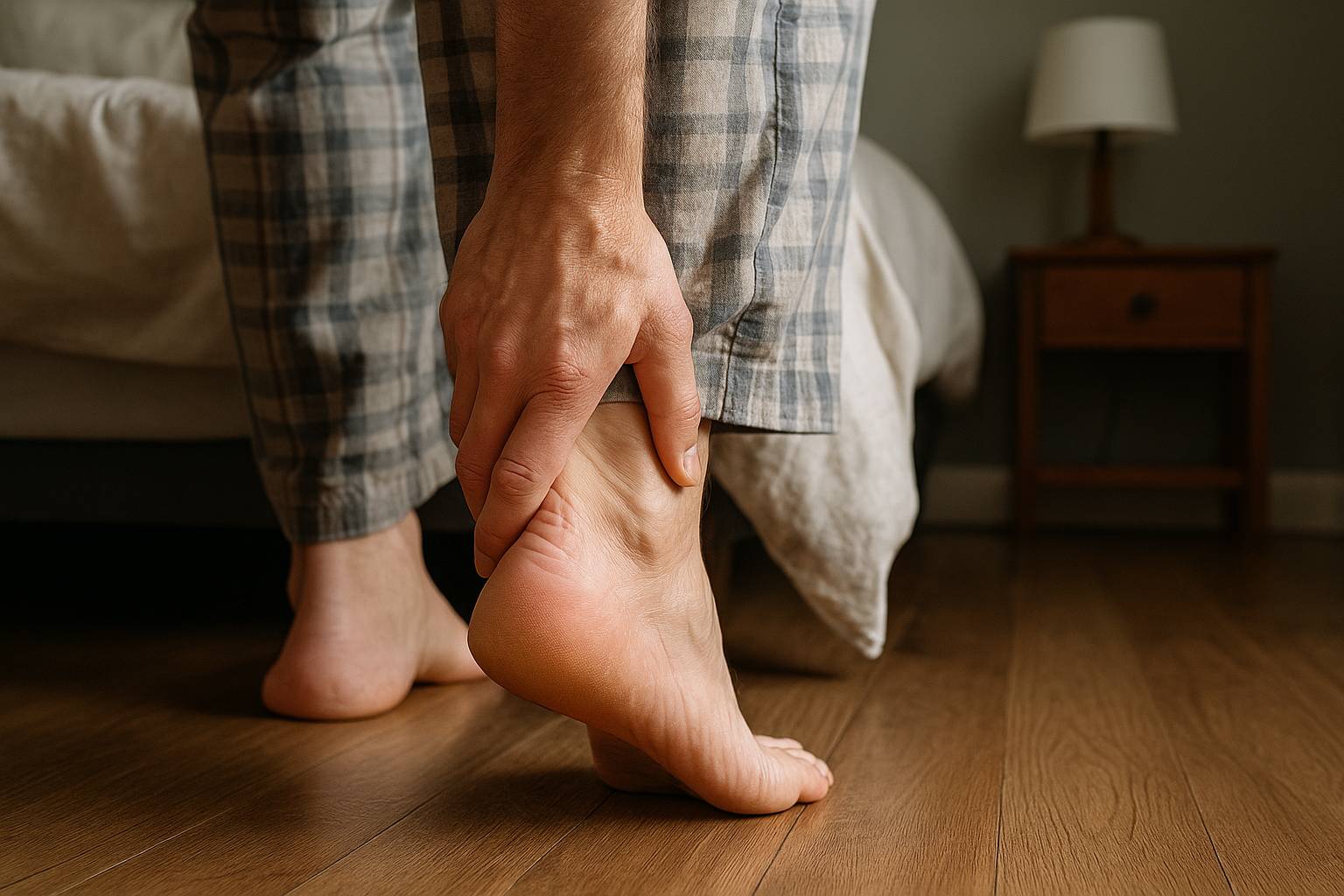
Many experience that heel pain is especially noticeable in the morning. After a whole night of rest, the first steps can feel both stiff and painful, which often affects the morning and the daily rhythm. It is common for the pain to occur when ligaments and tendons have had longer time to become stiff, and that therefore increased discomfort is felt upon waking. Heel pain in the morning can vary in intensity, but is experienced as a clear and at times obstructive sensation that can affect both movement and well-being at the start of the day.
The experience of pain can range from slight stiffness to a more pronounced and persistent discomfort that makes the first steps challenging. Many search for information about this topic, as daily strain, a busy everyday life, and prolonged sedentary behavior can give rise to painful sensations in the heel. It is important to have an overview of what this type of pain involves in order to understand how it affects one's mobility and daily activities. Changes in habits, correct footwear, and simple home-based methods can indeed influence how the pain is experienced.
People who experience heel pain in the morning often describe a combination of stiffness and a throbbing sensation in the heel. This condition can seem surprising, as the pain often becomes milder over the course of the day, as the foot warms up, but the initial sensation can be both uncomfortable and demotivating.
What is heel pain in the morning?
Heel pain in the morning refers to pain that becomes apparent when one gets up after a night of inactivity. The pain is often highlighted with the first steps, while the foot prepares for daily activity. Many experience that the heel feels tight and sore, and that there is a need for a few minutes during which the pain gradually begins to give way as blood circulation increases. This condition is related to the fact that the tissues in the foot – including tendons and muscles – can become stiff with inactivity and therefore require time to "warm up".
Some typical experiences with heel pain in the morning may include:
- Stiffness and soreness in the heel upon waking
- Pain that becomes noticeable with the first steps
- A feeling that the foot needs to be "woken up" to achieve normal mobility
It is a condition that often arouses curiosity, as it can occur despite an otherwise healthy lifestyle. Many therefore become aware of how daily movements and choice of footwear can influence the discomfort in the morning, which makes the topic relevant for those who experience repeated episodes of heel pain at the start of the day.
Typical causes of heel pain in the morning
Morning heel pain often appears as a result of overuse and irritation in the tissues under the foot. A common cause is plantar fascia problems, where the tissue along the sole of the foot becomes strained over time and can be sore after rest. The pain is often related to repeated strain from walks, working positions, or prolonged standing, and it can appear more clearly after longer periods without movement.
How does the pain typically present itself?
The pain can be experienced as a sharp or stabbing sensation with the first steps in the morning, or as a more diffuse soreness in the heel area. Many describe that the foot feels tight and that it takes a few minutes to regain normal mobility. The intensity can vary from mild irritation to marked discomfort, and the pain may subside during the day as the foot becomes warm and moves more.
How widespread is the problem in everyday life?
Morning heel pain is common and affects people of different ages and with different levels of physical activity. In everyday life, it can affect both those who have an active working life with a lot of standing and those with sedentary work, because lack of movement and strain patterns can change how the tissues respond. Muscle tension and discomfort in other areas such as the back, neck, shoulders, and legs can also be present at the same time and change the overall sense of mobility and well-being.
Factors that can affect how strongly the pain is experienced
Several factors can affect the pain experience. Excess weight places extra pressure on the foot's structures and can make morning pain more apparent. The use of shoes without sufficient support or shock absorption in everyday life is often related to increased strain on the heel. Rapid changes in activity level, such as increasing walking distance or training intensity, can also make the pain more pronounced during periods.
Variations in heel pain
Heel pain can appear in different forms. Some experience a focused, sharp pain under the heel itself, while others have a broader, more diffuse soreness along the underside of the foot. Morning stiffness is a common feature, but how long the pain lasts, and how it feels during the day, can vary considerably from person to person. The existing tension in muscles and tendons around the foot is often part of the picture.
What to be aware of in everyday life
In everyday life, small, repeated factors can play a role in how heel pain in the morning appears. Variation in surfaces, frequency of standing work, and how the foot rests throughout the night can all affect how the tissues respond after inactivity. Observing patterns over time often gives a clearer picture of connections between daily habits and the pain experience.
- Wake-up pattern: how stiffness changes from morning to evening can appear as an indicator of persistent irritation.
- Work strain pattern: repeated strain in the same working position can be related to increased soreness.
- Foot position during rest: the way the foot lies at night can affect the level of tension in tendons and soft tissues.
Habits that may matter over time
Long-term habits often shape daily strain. Frequent use of hard surfaces or uniform shoes can over months appear as increased sensitivity in the heel area. Likewise, changes in activity patterns — both increasing and decreasing movement — can affect how the tissues adapt and how pain may be experienced over time.
Relief, massage, and daily attention
The use of massage and various forms of relief can in practice be experienced as contributing to better comfort in everyday life, but the effect varies from person to person. Massage can appear as a way to reduce tension in surrounding tissues, and regular touch of the area can make it easier to detect changes. At the same time, the use of supportive elements in shoes can lead to a change in the strain pattern, which over time can affect how pronounced the morning stiffness is.
At Reliefr, it is often seen that small adjustments in daily routines give a different course of the pain experience without there being quick solutions. It is useful to note which days and situations where the heel pain is most pronounced, so that any patterns become visible.
Frequently asked questions
Can working on hard floors affect heel pain?
Working on hard floors can be related to increased strain on the foot's structures, which sometimes appears as more pronounced soreness after periods of standing activity.
Does sleep pattern affect where the stiffness appears?
Sleep pattern and how the foot rests at night can affect how stiff the foot feels upon waking and to what extent the tissues have had an opportunity to become less tense.
Can changes in shoe use show up over several weeks?
Yes, gradual changes in shoe use can lead to changes in the strain pattern, and the effect of such changes may only be felt after a few weeks, when the tissues adapt.
When does pain change character over time?
Pain can change character with variation in activity level, footwear, or daily strain. Changes in the pattern can appear as differences in intensity, spread, or how quickly the pain subsides during the day.
.