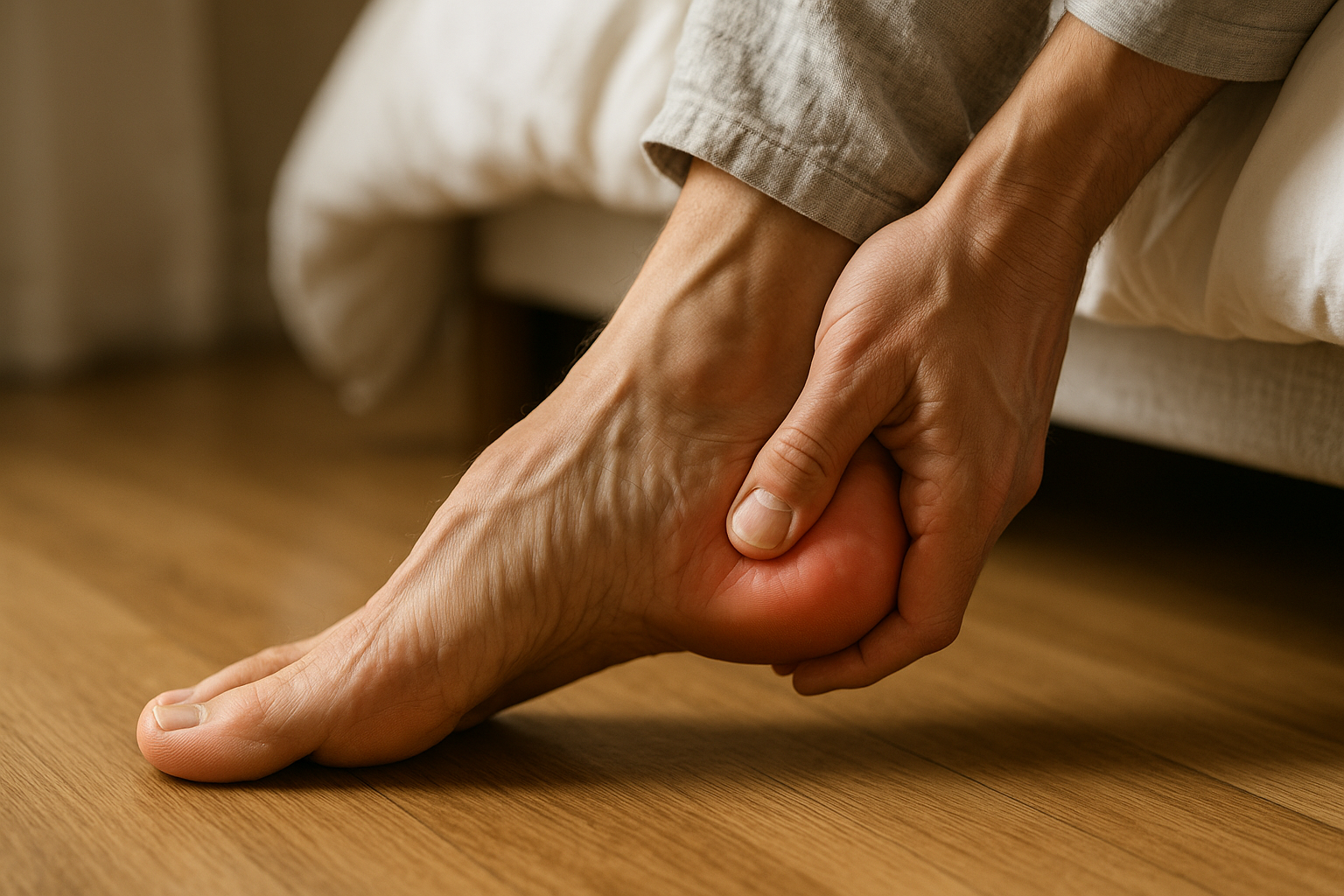
Many experience pain in their feet after rest, especially in the morning or after longer periods of inactivity. It is common for the pain to appear as a sore, at times stabbing sensation in both the heel and arch, while slowly getting started with the day's activities. The feeling can be disruptive, as the first steps are often accompanied by an uncomfortable stiffness that can feel limiting at the start of the day. In everyday life, these pains are often felt when the body has just woken up or after long periods of sedentary work. Many therefore seek information because they want an understanding of why the pain occurs and what generally characterizes the way it is experienced.
The pain often occurs because periods of rest can lead to a temporary reduction in blood circulation and a buildup of tension in the foot's muscles and tendons. This can lead to a sore and stiff sensation, which typically changes as the body starts moving. The pain can vary in intensity and feel more pronounced at certain times, which explains why many experience difficulties in the morning or after longer periods of inactivity. This topic has become a central point for those who want to gain an overview of how the feet are affected during and after rest.
What is pain in the feet after rest?
Pain in the feet after rest describes the uncomfortable sensation that is often felt immediately after periods of inactivity. It can manifest itself as a stiffness that makes the first steps more difficult, and the pain usually gradually subsides when you begin to move. The experience of the discomfort is connected to how the body functions during rest, as reduced blood circulation and a buildup of tension in the muscles of the feet can give rise to painful sensations. In addition, minor strain, such as a couple of hours in the same position, can cause an accumulated discomfort that makes the start of the day challenging for many.
It is important to be aware that these symptoms are often seen in everyday life, and they can affect daily comfort. Many therefore seek knowledge about the subject with the aim of finding an understanding of what exactly manifests as pain in the feet after rest, and how one can easily notice an improvement in the sense of well-being. The text provides an overall framework that sheds light on how the pain is experienced in daily life and why it is a topic that arouses interest among many who want a more comfortable start to the day.
Typical causes of pain after rest
Pain in the feet that appears after rest is often connected to several mechanical and physiological conditions. Prolonged inactivity can lead to reduced blood flow and a buildup of tension in muscles and tendons, which can make the first movements especially sore. Repeated strain over time, for example through a lot of standing or walking activity, can lead to local overuse in the foot's connective tissue. Nerve involvement in the area can also contribute, just as stiff joints and tight muscles in the lower leg can cause the foot's structure to feel sensitive after rest.
How does the pain typically show itself?
- Soreness or stiffness with the first steps after resting.
- Sharp or shooting pain in the heel area or under the arch, which often subsides with movement.
- Pain that can be felt with pressure or when putting weight on the foot after sitting still.
- Varying intensity throughout the day; worse after longer rest periods or after exertion.
In addition to the feet, altered movement patterns as a result of foot pain can create increased strain in the legs, knees, or back, so the discomfort is sometimes seen as spreading to nearby areas.
How widespread is the problem in everyday life?
Many experience periods of soreness in the feet after rest, especially in connection with the morning or after prolonged sedentary work. In everyday life, this means that the start of the day can be marked by careful steps and reduced comfort during walking and standing activities. For those who often stand up at work or walk long distances, repeated episodes of post-rest pain can affect well-being and sleep through concern about the next day's activity.
Factors that can affect how strongly the pain is felt
Several conditions can affect how clearly the pain is experienced: choice of footwear and insoles, the surface you walk on, the amount of physical activity, and the length of rest periods. Weight distribution and strain patterns in everyday life also matter, just as previous overuse or prolonged one-sided strain can make the foot more sensitive after rest.
Different variations in the pain experience
The pain can present itself very differently from person to person and from episode to episode. Some experience a short-lived stiffness that quickly goes away, while others feel persistent soreness or sharp stabs when they put weight on the foot. Time of day, activity level, and how long the rest period was can all affect the nature of the pain.
.