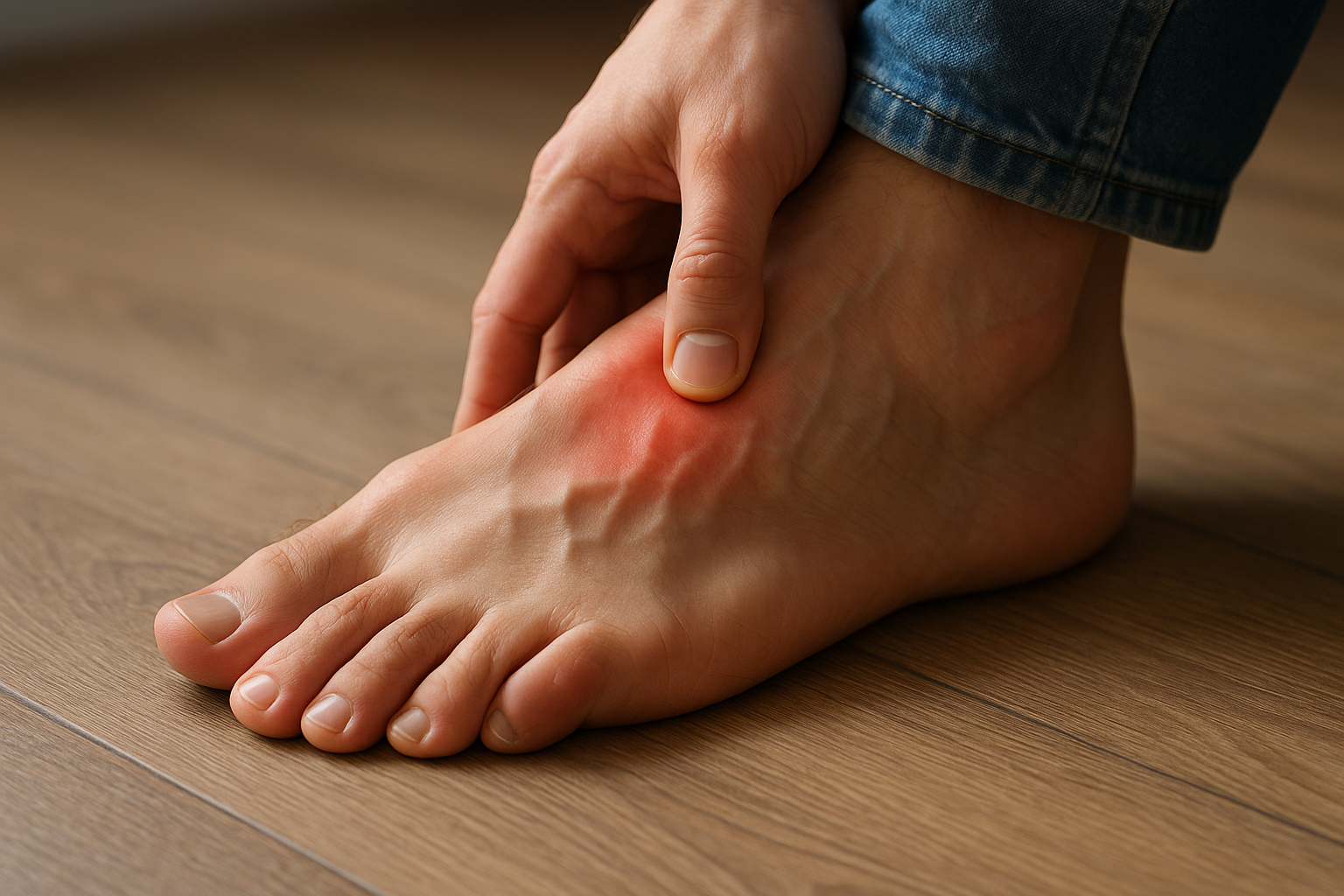
Many experience an unpleasant soreness or pain developing on the top of the foot, which can disrupt their daily activities. This discomfort is often seen when the foot is loaded carelessly or when the footwear does not provide sufficient space and support. It is common to feel some degree of swelling or stiffness after long days, and the discomfort can affect both walking and activity level. In everyday life, the pain can appear when one has been on one's feet for a longer time or after activities where the foot has been strained. It is therefore important to have knowledge of what may underlie the discomfort and how one can generally take care of one's feet to reduce the irritation.
Whether one is active and plays sports or has sedentary work, many find that pain on the top of the foot can arise suddenly or develop over time. Sometimes the daily strain, for example from the wrong shoe size or insufficient foot strength, can lead to increased soreness and at times swelling in the area. A factual understanding of how these signals from the foot arise can help reduce the general feeling of discomfort and ensure better daily comfort.
What is pain on the top of the foot?
Pain on the top of the foot refers to a condition where the area on the upper part of the foot experiences soreness, swelling, or pain with movement. The symptoms can vary from mild discomfort to more pronounced pain felt when walking or bearing weight. Many find that the pain subsides with rest, but that it returns as soon as the foot is used again. The discomfort can often be linked to everyday activities where the foot runs into problems due to incorrect loading or unsuitable footwear.
It is common for the pain to be experienced in the area on top, where muscles and tendons lie close to each other. When these structures are exposed to repeated loads or pressure, they may experience symptoms such as soreness and swelling. This type of pain often arises as a result of the foot's natural mobility and balance being disturbed by overexertion. At the same time, the discomfort can make daily activities more challenging, which leads many to seek knowledge about how they can best remedy the problem.
By having a basic understanding of what underlies pain on the top of the foot, a safe framework is created for how one can navigate one's own everyday life with the discomfort. This knowledge makes it easier to take the necessary precautions so that one can both prevent and relieve the type of pain that occurs with overloading of the foot.
Causes of pain on the top of the foot
Pain on the top of the foot often appears as a result of irritation processes in tendons and tension in the muscles located on the foot and the front of the shin. Pressure from shoes or laces that are too tight can create localized discomfort, and repeated movements when walking or running can increase the load on the top of the foot. Nerve pressure between tissues or from shoes can also cause a stabbing or tingling sensation, while swelling in the tissue can make it difficult to put on shoes without extra pressure.
How does pain on the top of the foot present itself?
The pain can be experienced as soreness, local warmth, and a feeling of stiffness, especially after periods of strain. Some find that the pain is felt more clearly when the toes are bent upward or when the lacing on the shoes is tight. Others may notice an incipient soreness after rest, which then worsens with use. Changes in sensation, for example tingling sensations or reduced feeling, can occur when there is pressure on nerves.
How common is it in everyday life?
Many encounter pain on the top of the foot during life, both among people with a high activity level and those who stand a lot at work. It is common for the condition to arise during periods of changed activity or changes in footwear. The age distribution is broad; young active people can feel pain after sports, while adults with prolonged standing work often describe soreness after the workday.
What can affect the intensity of the pain?
Several everyday factors are often related to how the pain feels: uniform movement patterns without variation, sudden increases in activity level, weight changes, and shoes with stiff materials can all affect the extent of the pain. Muscle tension in the calf and foot can pull on the tendons on the top side and thereby intensify the discomfort. Environments with many stairs or uneven surfaces can increase the load on the instep.
Variations in where and how the pain is felt
The pain experience can vary from sharp pinpoint soreness near the toes to diffuse pressure in the middle of the instep or along the inside toward the ankle. Tenderness to touch, a feeling of tightness, and reduced mobility can occur in the feet, ankles, and legs at the same time. In some cases, the discomfort is most evident during activity, while others experience constant tension that affects daily movement and well-being.
What one can be aware of in everyday life
In daily routines, small details can matter for how discomfort on the instep develops over time. Materials in shoes and socks, seams, and pressure points from laces or buckles can create local irritation, while wear patterns in soles gradually change the distribution of load. Temperature and humidity in shoes can affect tissue comfort and sensory experience, and work or leisure environments with many hard surfaces can cause more repeated strain than softer surfaces.
Habits that can play a role
Repeated movements in everyday life are often related to how the discomfort develops. One-sided ways of standing or carrying weight can change the load over time, and frequent use of the same pair of shoes day after day can reduce variation in the load. Mental tension can present itself as increased muscle tone in the lower leg, which in some cases can contribute to a feeling of tightness on the top of the foot.
- The shoe's inner finish and seams can create local irritation or pressure
- Wear patterns in the sole often change contact points and pressure distribution
- Frequent standing work or repeated movements without variation can affect the load
- Changes in weight distribution from bags or work tools can affect the foot's load pattern
- Temperature and humidity in footwear can change comfort and sensory experience
Overall considerations without concrete advice
It can be useful to pay attention to patterns rather than individual incidents. Long-term habits and small repeated influences can change how the area is experienced, and variation in daily relations to footwear and the surface can make a difference to how symptoms develop over time. With us, many notice that observing patterns in discomfort gives a clearer picture of the connections in everyday life.
Frequently asked questions
Why can pain in the instep come and go without an obvious reason?
Pain can vary in intensity depending on daily fluctuations in load, footwear, and the body's own state of tension. Small changes in daily patterns can make the discomfort be experienced differently from day to day.
What can a tingling sensation on the top of the foot indicate?
Tingling sensations can be related to pressure on nerves or changes in tissue irritation. How the sensation is experienced can vary with pressure, contact points, and materials in the footwear.
When is it normal to notice changes in pain through the week?
Variations during the week can appear in connection with differences in activity, changes in footwear, or work routines. Patterns in when the discomfort occurs can help understand which daily conditions play a role.
.