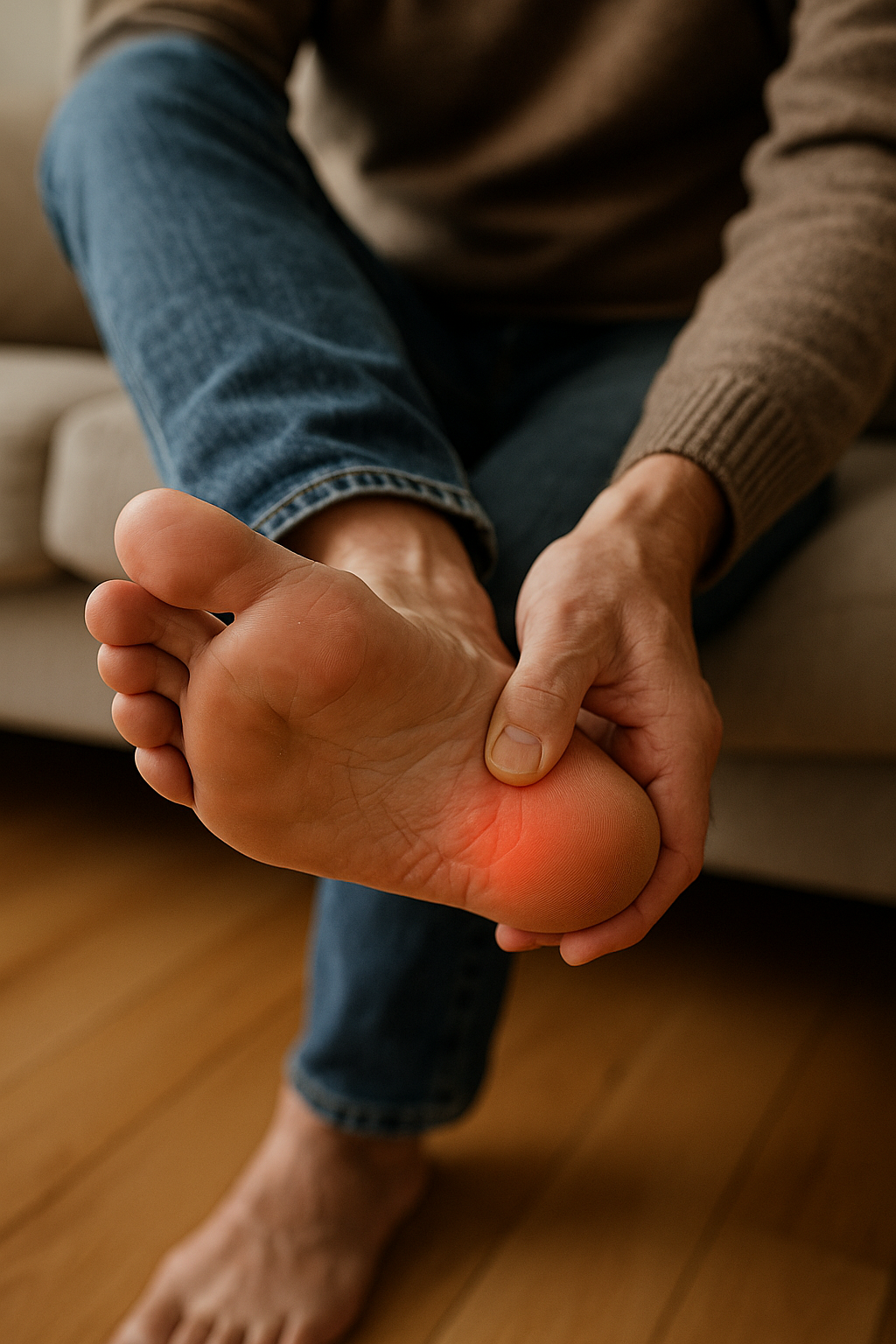
Many experience pain in the heel, which can affect everyday life, especially after long periods of standing or walking activities. Heel spurs are a condition that often presents as a shooting pain that can be felt under the heel. It is common to feel a soreness that can vary in intensity, depending on how much the foot has been strained. The pain typically develops gradually, and for some the pain may feel most pronounced in the morning, while for others it may worsen with prolonged activity. Regardless of the cause, it is natural to seek knowledge about heel spurs when the discomfort is felt and when it affects everyday life in the form of fatigue or reduced comfort.
In everyday life, the strain on the foot can be expressed in several ways. Heel spurs are experienced by many as a form of soreness and stabbing pain that makes it challenging to perform even the simplest movements. Many who stand or walk a lot feel a sensation of pulling in the heel, which can create a feeling of instability and discomfort. This painful condition is often associated with overuse of the foot, where the part that bears most of the body weight can no longer handle the strain without showing signs of irritation. That is why more and more people seek information about what heel spurs involve and how best to manage the daily strain on the foot.
What are heel spurs?
Heel spurs are a condition that occurs as a result of overuse of the connective tissue that runs from the heel to the toes. This strain can lead to a range of symptoms, the most pronounced of which are persistent soreness and a shooting pain under the heel. The pain can vary from a mild uncomfortable sensation to a more intense stabbing pain that makes it challenging to walk or stand for longer periods.
The condition often appears in the form of localized tenderness at a specific spot under the heel, where the persistent strain has left its mark. It may involve a small calcium deposit on the heel bone, which is typically experienced as part of the overall pain picture. Many who experience these symptoms find that the pain is especially bothersome when heel spurs develop, which makes it important to understand what the condition involves and how it can be felt in the daily routine.
The basics of understanding heel spurs are to see them as a result of persistent strain that over time can lead to irritation of the connective tissue in the foot. This insight provides an overview of how daily strain can affect comfort and well-being, which can help identify ways to relieve the pain and have a better everyday experience.
How to recognize pain in the heel
Heel spurs often appear as a sharp or shooting sensation under the heel with the first step after rest. Many may find that the pain is most intense in the morning, when the connective tissue has been at rest. During the day, the pain may decrease as the connective tissue becomes warmer and more flexible, but with prolonged standing or walking activities the soreness can return.
Repeated strain in daily activities
Daily movements, such as going for long walks or standing in the kitchen for hours, can cause overuse of the plantar fascia. Hard surfaces such as concrete or tiles increase the pressure under the foot, and repeated movements in the same direction can lead to small micro-injuries in the connective tissue. The experience of fatigue in the heel is often linked to the intensity and duration of the strain.
Load patterns in everyday life
- Standing work on a hard floor increases pressure under the arch
- Long walks on uneven surfaces can create uneven strain
- Heavy lifting without relief puts extra pressure on the heel
How widespread are heel spurs?
Experiences resembling heel spurs affect around 20 % of adults over the course of a year. The condition is seen most often in people between 40 and 60 years old, but can occur at all ages. Among people with an active everyday life, e.g. teachers, waitresses, and shop employees, up to 15 % report pain under the heel related to overuse.
Factors that affect the pain experience
Several factors can change how strongly the pain is felt:
- Being overweight increases pressure under the feet and can cause greater strain on the connective tissue
- Improper footwear is often associated with lack of support and uneven distribution of body weight
- Lack of warm-up before physical activity can lead to stiff muscles in the calf and foot
Differences in pain intensity
The intensity of the pain can vary from mild soreness to a sharp, shooting sensation. When the connective tissue is warmed up through movement, it becomes more flexible, and the pain may ease temporarily. Conversely, long periods of rest may be followed by renewed pain when the tension in the tissue increases with the first step.
Muscle tension in the legs, back, and feet
With repeated overuse, tension can spread from the heel to nearby areas. The calf muscles may become tighter, which can alter the gait and place extra pressure on the underside of the foot. Tension in the hamstring or lower back can arise as compensation for an altered gait pattern, and the feeling of pulling can be felt in both the legs and back.
Possibility of heel spurs without pain
It is possible to have a small calcium deposit on the heel bone without feeling discomfort. Many only discover the deposit on an X-ray, even though they have never had pain. Pain only occurs when the connective tissue around the deposit becomes irritated through repeated strain.
Variations in symptoms and discomfort
Each person’s experience may vary. Some will experience a constant, low intensity of soreness, while others may get sudden shoots of pain with certain movements. The intensity can change throughout the day and from day to day, depending on activity, rest, and the foot’s history of strain.
Pay attention to load patterns in everyday life
In everyday life, small repeated strains can accumulate over time and appear as persistent discomfort in the heel. Variation in movement and surfaces is often linked to how pain develops over weeks and months. Paying attention to when the discomfort arises during the day can provide insight into which activities contribute to the symptoms without pointing to concrete solutions.
Connection between footwear and long-term impact
The fit and wear of the shoe can affect the pressure distribution under the foot and thereby change the load over time. Some materials prove to be more supportive at first, but can lose their properties with frequent use. The wear pattern under the shoe can be considered together with where the load is concentrated, and this may be experienced as increased soreness during repeated activities.
Compensatory movement patterns and consequences
When the heel hurts, people often change their gait without thinking about it. These compensations can affect the calf muscles, hamstrings, and back and may be felt as pulling or tightness. Over time, altered movement may be associated with new areas of tension, which can change the overall feeling of comfort in the lower body.
Typical mistakes
- Using worn shoes
- Uniform strain day after day
- Ignoring early pain signals
- Keeping the same gait pattern despite discomfort
- Inappropriate distribution of standing and sitting periods
Overall, it is useful to pay attention to patterns rather than isolated episodes. Noting when and how the heel reacts can provide a clearer picture of which factors interact over time. This knowledge can create a more nuanced basis for asking questions and seeking answers.
Frequently asked questions
How can massage affect the experience of pain?
Massage can be experienced as a way to affect muscle tension and local circulation, and many describe temporary relief or a feeling of increased mobility in the foot after treatment. The effect can vary from person to person and often depends on frequency and intensity.
Can heel spurs go away on their own?
There are examples of symptoms decreasing over time, while calcium deposits may be present without pain. The course varies greatly and depends on individual load patterns and changes in daily habits.
How long does it typically take before symptoms change?
Changes in symptoms can occur over weeks to months. The long-term history of strain and repeated patterns often plays a role in how quickly changes are seen.
.